Kenya’s grid-connected electricity capacity stands at 3,236 megawatts, with the total installed generation capacity (both captive and off-grid) hovering at about 3,812 megawatts. So-called peak demand was reported to have breached 2,439 megawatts at the end of last year, growing year on year by about 78 megawatts between 2019 and 2024, with the single-year record increase of 139 megawatts in the financial year 2025. Interestingly, between 2023 and 2024, no new power plants were commissioned, and about 60 megawatts of diesel capacity were decommissioned during that financial year.
It has been reported that we created approximately 716,800 new jobs in 2025, the majority of which were in the informal sector, where employment rose by 4.1% to 18.1 million workers, while wage employment grew by a slower 2.8% to 3.3 million. Retail trade, that is as plug-and-play as it can get, was the dominant informal employer at 10.7 million workers, and though some manufacturing of the goods reports absorbing 3.6 million people informally, without a corresponding and visible increase in electricity demand, this is dubious.
Others report that high electricity costs have actually suppressed manufacturing. Its share of GDP has fallen from 11.5% in 2009 to 7.1% in 2025, reducing demand for agro-processing investment and leaving farmers vulnerable to external fuel price volatility.
The little powered post-harvest loss mitigation infrastructure we have has been decimated. In 2024, for example, 30 to 40% of all agricultural produce (worth Ksh. 150 billion) was lost. Amid the current state of the global economy, god knows what 2026 will look like once the numbers are crunched.
Also Read: Can Siaya Nuclear Plant Solve Kenya’s Growing Energy Crisis?
Social disparities are writ large all over these issues as they cascade. The ultimate victims of the vicissitudes that come with energy poverty and volatility are the vulnerable and historically marginalized communities. Women, who account for the majority of smallholder farmers, bear post-harvest losses most directly and shoulder the health burdens of biomass smoke. Lack of an industrial base optimized to drive down the costs of supplying piped water to every rural household, for example, means that schoolgirls already navigating structural barriers to their education have to cut short their school days to go fetch water from rivers several kilometers away. The few who are able to get a basic education, given the circumstances, have to face an economy in which manufacturing, agro-processing, and industrial construction never scaled up.
Nuclear Energy and Equal Rights
You cannot talk about equal rights for girls and women and join a pro-poverty riot.
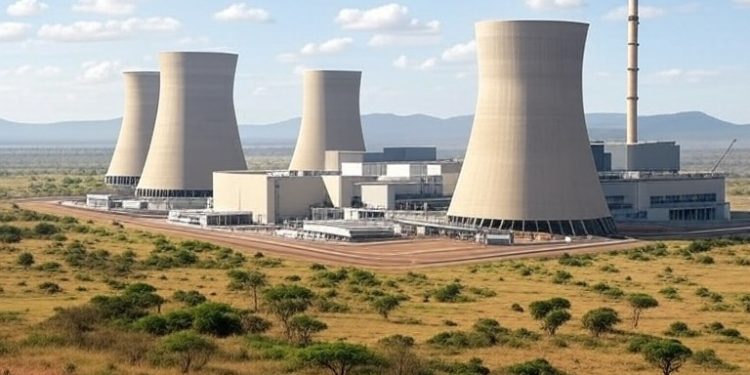
It is impossible to meet the responsibilities spelled out in Article 43 of the Constitution without talking about Kenya’s ability to power its factories. This has been done before. When South Korea began its journey in 1965 under the late President Park Chung Hee, its per capita electricity consumption was 200 kilowatt-hours, much lower than Kenya’s current 270. Thanks to nuclear power and technology, this rose by 2,000 kWh per generation, driven by state-directed energy investment coordinated with industrial-policy sophistication under public institutional direction.
Agriculture can be reorganized around food sovereignty, expanding irrigated land. Post-harvest can fall below 8%, and domestic processing of agricultural output is optimized so that instead of grain, raw milk, and fresh fruits, Kenya will export flour, processed dairy, and packaged fruit products, respectively. This translates to about 2,500 kilowatt-hours for each of us.
Also Read: Can Kenya Finally Get Reliable, Affordable Power Without Repeating Costly Mistakes?
The Kenyan Constitution is aware of the food, energy, and water nexus, our 21st Century Gordian Knot, and that energy poverty stifles human development, productivity, and sustainability. Article 43 identifies the state’s role in guaranteeing every person’s access to essential economic and social rights for a dignified life, as well as access to primary and secondary education. The Energy Act 2019, passed by the people’s representatives, names nuclear power as a key part of the diverse energy generation mix we need.
It is thus the functional illiteracy we saw on display by goons for hire cosplaying as “activists” in Siaya and Kilifi that is unconstitutional and not nuclear power. South Africa and Sweden operate their own nuclear plants. If nuclear technology is as bad as they preach it, let charity from imported Malthusian zealots begin at home.
Follow our WhatsApp Channel and X Account for real-time news updates.