Nuclear energy has always attracted strong opinions, even in countries like France, which has operated 56 reactors supplying more than half of its electricity since the 80s. In Kenya, the recent brief by the Nyanza Professionals and Business Caucus rejecting nuclear power is the latest in a string that goes all the way back to 1965, when Kenya joined the International Atomic Energy Agency (IAEA).
Parts of the document raise legitimate concerns, while others rest on assumptions that don’t necessarily hold up. The IAEA SSG-92 addresses the potential risk of radionuclide accumulation in fish. However, this is only relevant to accident situations. During normal operations, the contamination of fish, even if some find their way into the isolated loop that contains water from the lake, is practically impossible.
Even with the brief’s use of a contamination pathway that assumes a large-scale accident like Chornobyl, modern Gen III+ nuclear reactors like Korea’s APR1400 and Russia’s VVER-1200 have passive safety systems that prevent core damage and subsequent radiological release. Defense-in-Depth Engineering philosophies require all nuclear reactors to have a containment building to mitigate potential releases to the atmosphere or the water table.
The Fukushima comparison needs correcting. Fukushima’s damage was a consequence of decisions made decades earlier that culminated in ground-level backup diesel generators being flooded by a 9-meter-high tsunami. Such a failure doesn’t apply to a lakeside site.
Also Read: Opinion | Nuclear Energy Debate: An Invented Crisis with billions of casualties
Reactors are designed to sit above maximum water levels. Cooling intake loss triggers automatic shutdown, not meltdown. This 1.5-meter seiche oscillation mentioned in the brief is a design consideration for water intake systems, which is a different category of hazard entirely.
Addressing Nuclear Misconception
The Seiche is a design input for cooling water intake systems, thus not an analog for a station blackout caused by ocean inundation, as was the case in Fukushima in 2011. Engagement with local fishing communities to address this misconception is already part of NuPEA’s Stakeholder Engagement strategy.
The strategy shows fishing communities the 440 nuclear plants currently operational around the world that have had little to no adverse impact on fisheries in their vicinity.
There are more factual liberties that the Nyanza Professionals and Business Caucus takes. For example, Kenya is yet to choose a reactor technology, let alone a vendor, and a small modular reactor like NuScale’s Voygr requires a significantly smaller emergency planning zone than a large boiling water reactor because the source term, meaning the inventory of radionuclides that could be released during an accident, is different. EPZ sizing and the development of disaster management protocols follow reactor design, not the other way around. Demanding a detailed, specific EPZ analysis before selecting reactor technology literally puts the cart before the horse.
Shared-water concern
Kenya is not the first country to consider nuclear generation adjacent to a shared water body. France’s Bugey Nuclear plant operates on the Rhone, a river that flows into Switzerland and eventually Germany. Locally, Ethiopia is currently evaluating Lake Tana, the source of the Blue Nile that feeds Sudan and Egypt, as a potential site for two Russian reactors, while Uganda is evaluating a potential site at Buyende. The shared-water concern, though real, requires treaty ratification rather than site rejection.
Also Read: Why Kenya Needs Multiple Nuclear Power Clusters Built Back-To-Back in Coordination With Uganda
Buoyed by population growth and urbanization, Kenya’s power demand is outpacing the capacity of our current mix. Geothermal has geographical limits, while both solar and wind need dispatchable backup to run industrial loads, let alone ICU units reliably. Hydro will gradually become unreliable as the effects of anthropogenic climate change begin to bite.
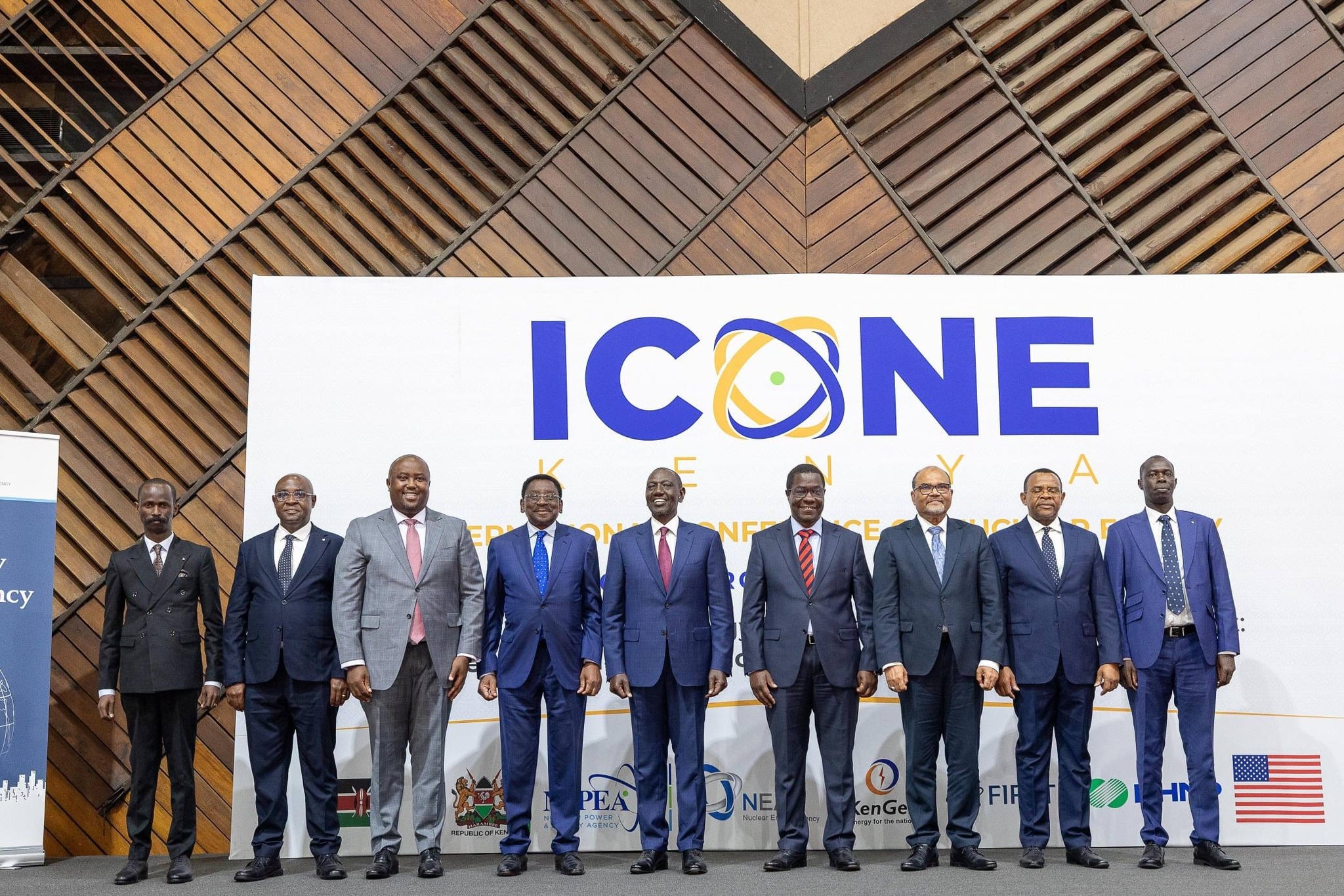
When South Korea signed its first reactor contract in 1977, it had far weaker domestic technical capabilities than Kenya does today. It now has a domestic supply chain capable of exporting its indigenous APR1400 units to the Barakah Nuclear Power Plant in the UAE, where four units currently operate at capacity factors above 85%. As mentioned by the President at the recent International Conference on Nuclear Energy (ICONE), a couple of thousand megawatts of clean, safe, and practically renewable nuclear power at such capacity factors is what Kenya needs to power our journey to Canaan through Singapore.