Thursday, October 15, 2026
  • News
    • Latest News
    • Breaking News
    • Fact Check
    • Investigations
    • Explainers
  • Politics
    • Global Politics
    • Elections
    • Government & Policy
    • Diplomacy
    • Conflicts & Security
    • Political Analysis
  • Business
    • Global Economy
    • Markets
    • Technology
    • Startups
    • Energy
    • Finance
  • World News
    • Americas
    • Asia
    • Asia Pacific
    • Africa
    • Europe
    • Middle East
  • Africa
    • Central Africa
    • East Africa
    • West Africa
    • Southern Africa
  • Health
    • Global Health
    • Public Health
    • Health Policy
    • Medical Research
    • Diseases & Conditions
    • Mental Health
    • Nutrition
    • Climate & Health
    • Health Explainers
  • Sports
    • World Cup 2026
    • Athletics
    • Basketball
    • Boxing
    • Cricket
    • Football
    • Formula 1
    • Golf
    • Rugby
  • Weather
    • Climate Business
    • Climate Change
    • Climate Solutions
    • Living Green
  • Culture
    • Arts
    • Film & TV
    • Food and Recipes
    • Music
    • Lifestyle
    • People
    • Travel
  • Opinion
    • Editorials
    • Letters
  • Behind The Brand
REGISTER
LOGIN
No Result
View All Result
The Kenya Times
  • News
    • Latest News
    • Breaking News
    • Fact Check
    • Investigations
    • Explainers
  • Politics
    • Global Politics
    • Elections
    • Government & Policy
    • Diplomacy
    • Conflicts & Security
    • Political Analysis
  • Business
    • Global Economy
    • Markets
    • Technology
    • Startups
    • Energy
    • Finance
  • World News
    • Americas
    • Asia
    • Asia Pacific
    • Africa
    • Europe
    • Middle East
  • Africa
    • Central Africa
    • East Africa
    • West Africa
    • Southern Africa
  • Health
    • Global Health
    • Public Health
    • Health Policy
    • Medical Research
    • Diseases & Conditions
    • Mental Health
    • Nutrition
    • Climate & Health
    • Health Explainers
  • Sports
    • World Cup 2026
    • Athletics
    • Basketball
    • Boxing
    • Cricket
    • Football
    • Formula 1
    • Golf
    • Rugby
  • Weather
    • Climate Business
    • Climate Change
    • Climate Solutions
    • Living Green
  • Culture
    • Arts
    • Film & TV
    • Food and Recipes
    • Music
    • Lifestyle
    • People
    • Travel
  • Opinion
    • Editorials
    • Letters
  • Behind The Brand
  • News
    • Latest News
    • Breaking News
    • Fact Check
    • Investigations
    • Explainers
  • Politics
    • Global Politics
    • Elections
    • Government & Policy
    • Diplomacy
    • Conflicts & Security
    • Political Analysis
  • Business
    • Global Economy
    • Markets
    • Technology
    • Startups
    • Energy
    • Finance
  • World News
    • Americas
    • Asia
    • Asia Pacific
    • Africa
    • Europe
    • Middle East
  • Africa
    • Central Africa
    • East Africa
    • West Africa
    • Southern Africa
  • Health
    • Global Health
    • Public Health
    • Health Policy
    • Medical Research
    • Diseases & Conditions
    • Mental Health
    • Nutrition
    • Climate & Health
    • Health Explainers
  • Sports
    • World Cup 2026
    • Athletics
    • Basketball
    • Boxing
    • Cricket
    • Football
    • Formula 1
    • Golf
    • Rugby
  • Weather
    • Climate Business
    • Climate Change
    • Climate Solutions
    • Living Green
  • Culture
    • Arts
    • Film & TV
    • Food and Recipes
    • Music
    • Lifestyle
    • People
    • Travel
  • Opinion
    • Editorials
    • Letters
  • Behind The Brand
No Result
View All Result
The Kenya Times ~ Trending, Breaking News and Videos
No Result
View All Result
ADVERTISEMENT

South Africa’s biggest Cities Are Out of Water, But The Dams are full: What’s Gone Wrong

Anja Du PlessisbyAnja Du Plessis
October 21, 2022
Reading Time: 8 mins read
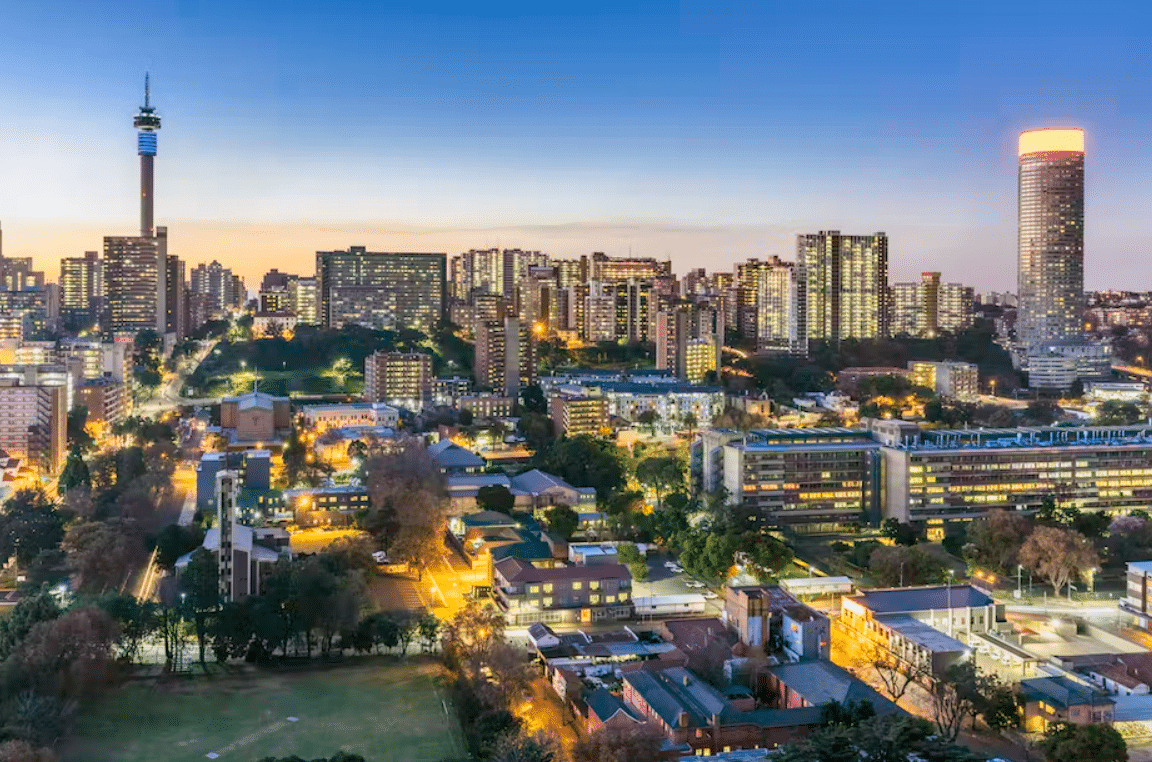
Johannesburg Cityscape Panorama Sunset |  Thegift777/Gettyimages

Johannesburg cityscape panorama sunset | THEGIFT777/GettyImages

FacebookTwitterLinkedInRedditWhatsApp
Advertisement

South Africa’s major cities in the Gauteng Province – the country’s economic heartland – are experiencing major water shortages. In Johannesburg and Tshwane taps have run dry, with numerous areas experiencing intermittent supply while some areas have no water at all.

The province has metropolitan areas – the City of Johannesburg, Tshwane and Ekurhuleni. All are affected. Rand Water, the water authority for the region, has imposed restrictions of 30%.

This will be revisited when the system recovers.

The last water shutdown was in November 2021 when Rand Water cut off water for 54 hours so that it could do infrastructure maintenance. There were also restrictions during the drought in 2015-2017.

The province serves as a perfect example of how an area can experience water shortages and intermittent supply even though dams are full.

The biggest problem lies with decaying infrastructure. This includes water storage, water supply and treatment.

ADVERTISEMENT

In addition, water resources are poorly managed. And there’s been poor planning, a lack of financing to maintain ageing infrastructure and to keep up with rapid urbanization.

The crisis in Gauteng has been developing over many decades. The water and sanitation infrastructure in Johannesburg is old – some water pipes were installed nearly a century ago. In addition, there’s been exponential growth – in businesses and the population.

Gauteng is South Africa’s smallest province but contributes 45% to the country’s total economic output. All economic sectors have expanded in the past decades.

The province’s population has also increased to just over 16 million – up from 12 million in 2011.

Rand Water has indicated that high water consumption is to blame for the current shortages. Estimates suggest that water consumption in Gauteng per person per day is over 300 litres, well above the global average of 173 litres. Importantly, this estimate includes non-revenue water – water that’s lost before it reaches the consumer.

The Gauteng Province is unfortunately finding itself in a perfect storm of major intermittent water supply due to continued power blackouts, high temperatures leading to above average water use as well as major continued water losses through bursting pipes and major leaks due to dilapidated infrastructure.

ADVERTISEMENT

There’s an urgent need to put water higher on the country’s agenda. Various water problems are escalating at a rapid rate. 

The Decline

The quality of water infrastructure in South Africa is deemed to be below average and deteriorating in comparison to comparable countries such as Nigeria and Zambia.

A number of factors have contributed to the current state of affairs.

Firstly, the poor quality of infrastructure. This is attributed to insufficient long-term planning, poor construction techniques and materials as well as the poor maintenance of existing infrastructure.

South Africa’s infrastructure is mostly aged (more than two decades old), in a state of decay. In its 2017 infrastructure report card the South African Institution of Civil Engineering concluded that the country’s infrastructure was at risk due to its low overall grade of D+.

Secondly, the management of consumption has been poor. South Africa is a water scarce country. Yet the average domestic water use is estimated at 237 litres per person per day, 64 litres higher than the international benchmark of 173 litres per person per day.

High consumption is partly attributed to high municipal non-revenue water.

This stands at 41%; This means that 41% of water is lost due to leakages owing to poor operation and maintenance of existing aged water infrastructure, commercial losses caused by meter manipulation or other forms of water theft and lastly, unbilled authorized consumption such as firefighting. Global best practice is 15% .

Thirdly, a lack of institutional capacity at a local level has limited the capability of local governments to provide infrastructure. Low expenditure levels on infrastructure investment are evidence of these capacity deficits despite the national government continuously emphasizing the need for more investment.

Fourthly, there has been massive under funding for decades. This has led to decay and in some instances a collapse of infrastructure. Government spending on infrastructure reached its peak in the 1960s to late 1970s. There was then a steady decline from 1977. In 2000, the country’s per capita spending on infrastructure reached a 40-year low and warnings were issued about the condition of bulk water and sanitation infrastructure.

By 2002 the country’s infrastructure stock was at similar levels to that of 1973.

Other factors contributing to the current crisis include poor management (at national and local level), delays in implementation, insufficient institutional capacity and competence and a lack of political will.

Fifth, a multi-layered and complex system of managing water resources.

Numerous stakeholders at different levels of government play a role in the management of water resources.

The Department of Water and Sanitation is the custodian of the country’s water. It is ultimately responsible for ensuring that water resources are protected, used, developed, conserved, managed and controlled effectively. The development and management of national water resource infrastructure also forms part of the department’s functions.

Other managing agents include catchment management agencies (managing water resources at a regional or catchment scale), water user institutions (providing the institutional structure) as well as water service authorities which include local government and municipalities, water utilities and private firms responsible for governing domestic water supply services.

Johannesburg Water therefore sources water from Rand Water, which supplies potable water to the Gauteng Province and other areas. The City of Johannesburg and Johannesburg Water, for example, are responsible for dealing with growing demands and the management of the delivery and services. 

What’s needed

The following steps should be considered to try and ensure continued suitable water supply within the Gauteng Province as well as other areas experiencing the same issues:

  • A suitable budget needs to be made available immediately to address priority
    areas. Proper planning and informed actions, not just promises, is a major
    requirement. Johannesburg Water estimated in 2020 that R88 billion was required for the replacement of infrastructure with a total renewal backlog of R20.4 billion.

The entity has been allocated a R3.3 billion multi-year capital budget aimed at replacing water and sewer pipes, upgrading water storage infrastructure, a wastewater treatment works programme and lastly, repairing and maintaining outdated
infrastructure.

A further R2.3 billion has also been allocated to address burst pipes across the province.

This amount of money might be a suitable investment to address the dilapidated state of infrastructure. But it should have been assigned much sooner.

  • Dilapidated infrastructure needs to be upgraded and properly maintained. The lack of maintenance has contributed to leaking pipes and faulty infrastructure which now needs to be fixed as a matter of urgency as it contributes to major physical water losses. This won’t solve the problem overnight given that there have been decades of neglect. But a start needs to be made.
  • Capacity constraints or lack of skills need to be identified and addressed.
  • Private sector investment in water infrastructure needs to be incentivized
    together with the promotion of private-public partnerships.
  • Implementation of water conservation and demand management.
  • Political will to move away from simply providing infrastructure to
    maintenance, rehabilitation and upgrading of existing infrastructure.The Conversation

Anja du Plessis, Associate Professor and Research Specialist in Integrated Water Resource Management, University of South Africa

This article is republished from The Conversation under a Creative Commons license. Read the original article.

Tags: African WaterEkurhuleniGautengSouth AfricaTshwaneWater infrastructureWater Restrictions
Anja Du Plessis

Anja Du Plessis

Prof Anja du Plessis is a recognized Y2 NRF-Rated Researcher, specializing in integrated water resource management specifically within the South African context.

Related Posts

Binge-Eating Among College Students With Abundant Junk Food, A Common Setting Linked To Binge-Eating Risks.

How Globalization and Food Insecurity Fuel Disordered Eating Behavior in Young Adults

October 14, 2026
From Knowledge To Impact: A New Era Of Kenya–Uk Science Diplomacy

From Knowledge Sharing to Innovation: A New Chapter in Kenya–UK Science Diplomacy

October 10, 2026
Kenyan Teaching And Teachers Received Awards For Outstanding Contributions On October 5, At The Kasarani Indoor Arena During National World Teachers’ Day.

What Would a Truly Professional Teaching Profession Look Like in Kenya?

October 7, 2026
Beyond Borders: Why Science Diplomacy Must Drive The Next Era Of Development

Why Science Diplomacy Must Drive the Next Era of Development

October 5, 2026
ADVERTISEMENT

The Kenya Times Facebook

LATEST NEWS

  • Win for Sifuna as Equitable Party Becomes Linda Mwananchi
  • Mystery Surrounds Control of Murang’a Health System After Ministry’s Revelation
  • New Bolt Plus Subscription Offers Customers Cashbacks and Free Deliveries from KSh 280 Per Month
  • India Offers to Supply KDF New Armoured Military Vehicles
  • KNEC Withholds Teacher Training Exam Results for Some Students
  • Several Kenyans Abducted in Congo Prompting Urgent Alert
  • Matatu Owners Announce New Fares With Immediate Effect
  • New Fuel Prices Across Towns Ranked From Highest to Lowest
  • Uhuru Revisits Handshake and Endorsing Raila for President in Emotional Tribute
  • Linda Mwananchi Furious as Natembeya’s Security is Withdrawn
  • Parliament Approves New Fuel Tax Move That Could Affect Kenyans for Six Months
  • 12 Companies Face Charges Over KSh. 3.9 Billion VAT Fraud Scheme
  • Ida Odinga Breaks Silence on Raila’s Final Hours in India
  • Trans Nzoia Power Projects Target Nearly 11,000 Homes
  • Court Clears Path for Dangote’s Lamu Oil Refinery
ADVERTISEMENT

Company

About Us

Our Authors

Our Experts

Social Media

Policies

Privacy Policy

House Rules

Standards and Policies

Terms and Conditions

Subscription

My Account

Contact Us

Contact Us

Join Our Team

Advertise With Us

© Copyright 2026 | The Kenya Times | All Rights Reserved

Welcome Back!

Sign In with Facebook
Sign In with Google
Sign In with Linked In
OR

Login to your account below

Forgotten Password? Sign Up

Create New Account!

Sign Up with Facebook
Sign Up with Google
Sign Up with Linked In
OR

Fill the forms below to register

All fields are required. Log In

Retrieve your password

Please enter your username or email address to reset your password.

Log In
Your Privacy and Cookies
We use cookies on our website to give you the most relevant experience by remembering your preferences and repeat visits. By clicking “Accept”, you consent to the use of ALL the cookies.
Do not sell my personal information.
Cookie settingsACCEPT
Privacy & Cookies Policy

Privacy Overview

This website uses cookies to improve your experience while you navigate through the website. Out of these cookies, the cookies that are categorized as necessary are stored on your browser as they are essential for the working of basic functionalities of the website. We also use third-party cookies that help us analyze and understand how you use this website. These cookies will be stored in your browser only with your consent. You also have the option to opt-out of these cookies. But opting out of some of these cookies may have an effect on your browsing experience.
Necessary
Always Enabled
Necessary cookies are absolutely essential for the website to function properly. This category only includes cookies that ensures basic functionalities and security features of the website. These cookies do not store any personal information.
Functional
Functional cookies help to perform certain functionalities like sharing the content of the website on social media platforms, collect feedbacks, and other third-party features.
Performance
Performance cookies are used to understand and analyze the key performance indexes of the website which helps in delivering a better user experience for the visitors.
Analytics
Analytical cookies are used to understand how visitors interact with the website. These cookies help provide information on metrics the number of visitors, bounce rate, traffic source, etc.
Advertisement
Advertisement cookies are used to provide visitors with relevant ads and marketing campaigns. These cookies track visitors across websites and collect information to provide customized ads.
Others
Other uncategorized cookies are those that are being analyzed and have not been classified into a category as yet.
SAVE & ACCEPT
LOGIN | REGISTER
  • Login
  • Sign Up
  • Cart
No Result
View All Result
  • News
    • Latest News
    • Breaking News
    • Investigations
    • Explainers
    • Fact Check
  • Politics
    • Global Politics
    • Conflicts & Security
    • Elections
    • Diplomacy
    • Government & Policy
    • Political Analysis
  • Business
    • Global Economy
    • Markets
    • Technology
    • Startups
    • Energy
    • Finance
  • World News
    • Americas
    • Asia
    • Asia Pacific
    • Africa
    • Europe
    • Middle East
  • Africa
    • East Africa
    • West Africa
    • Southern Africa
    • Central Africa
  • Health
    • Global Health
    • Public Health
    • Health Policy
    • Medical Research
    • Diseases & Conditions
    • Mental Health
    • Nutrition
    • Climate & Health
    • Health Explainers
  • Sports
    • World Cup 2026
    • Athletics
    • Basketball
    • Boxing
    • Cricket
    • Football
    • Formula 1
    • Golf
    • Rugby
  • Weather
    • Climate Business
    • Climate Change
    • Climate Solutions
    • Living Green
  • Culture
    • Arts
    • Film & TV
    • Food and Recipes
    • Lifestyle
    • Music
    • People
    • Travel
  • Opinion
    • Editorials
    • Letters
  • Behind The Brand
  • Contact Us

Not enough quota to unlock this post
Unlock left : 0
Are you sure want to cancel subscription?