Wednesday, June 17, 2026
  • News
    • Latest News
    • Breaking News
    • Fact Check
    • Investigations
    • Explainers
  • Politics
    • Global Politics
    • Elections
    • Government & Policy
    • Diplomacy
    • Conflicts & Security
    • Political Analysis
  • Business
    • Global Economy
    • Markets
    • Technology
    • Startups
    • Energy
    • Finance
  • World News
    • Americas
    • Asia
    • Asia Pacific
    • Africa
    • Europe
    • Middle East
  • Africa
    • Central Africa
    • East Africa
    • West Africa
    • Southern Africa
  • Health
    • Global Health
    • Public Health
    • Health Policy
    • Medical Research
    • Diseases & Conditions
    • Mental Health
    • Nutrition
    • Climate & Health
    • Health Explainers
  • Sports
    • World Cup 2026
    • Athletics
    • Basketball
    • Boxing
    • Cricket
    • Football
    • Formula 1
    • Golf
    • Rugby
  • Weather
    • Climate Business
    • Climate Change
    • Climate Solutions
    • Living Green
  • Culture
    • Arts
    • Film & TV
    • Food
    • Music
    • Lifestyle
    • Travel
  • Opinion
    • Editorials
    • Letters
  • Behind The Brand
REGISTER
LOGIN
No Result
View All Result
The Kenya Times
  • News
    • Latest News
    • Breaking News
    • Fact Check
    • Investigations
    • Explainers
  • Politics
    • Global Politics
    • Elections
    • Government & Policy
    • Diplomacy
    • Conflicts & Security
    • Political Analysis
  • Business
    • Global Economy
    • Markets
    • Technology
    • Startups
    • Energy
    • Finance
  • World News
    • Americas
    • Asia
    • Asia Pacific
    • Africa
    • Europe
    • Middle East
  • Africa
    • Central Africa
    • East Africa
    • West Africa
    • Southern Africa
  • Health
    • Global Health
    • Public Health
    • Health Policy
    • Medical Research
    • Diseases & Conditions
    • Mental Health
    • Nutrition
    • Climate & Health
    • Health Explainers
  • Sports
    • World Cup 2026
    • Athletics
    • Basketball
    • Boxing
    • Cricket
    • Football
    • Formula 1
    • Golf
    • Rugby
  • Weather
    • Climate Business
    • Climate Change
    • Climate Solutions
    • Living Green
  • Culture
    • Arts
    • Film & TV
    • Food
    • Music
    • Lifestyle
    • Travel
  • Opinion
    • Editorials
    • Letters
  • Behind The Brand
  • News
    • Latest News
    • Breaking News
    • Fact Check
    • Investigations
    • Explainers
  • Politics
    • Global Politics
    • Elections
    • Government & Policy
    • Diplomacy
    • Conflicts & Security
    • Political Analysis
  • Business
    • Global Economy
    • Markets
    • Technology
    • Startups
    • Energy
    • Finance
  • World News
    • Americas
    • Asia
    • Asia Pacific
    • Africa
    • Europe
    • Middle East
  • Africa
    • Central Africa
    • East Africa
    • West Africa
    • Southern Africa
  • Health
    • Global Health
    • Public Health
    • Health Policy
    • Medical Research
    • Diseases & Conditions
    • Mental Health
    • Nutrition
    • Climate & Health
    • Health Explainers
  • Sports
    • World Cup 2026
    • Athletics
    • Basketball
    • Boxing
    • Cricket
    • Football
    • Formula 1
    • Golf
    • Rugby
  • Weather
    • Climate Business
    • Climate Change
    • Climate Solutions
    • Living Green
  • Culture
    • Arts
    • Film & TV
    • Food
    • Music
    • Lifestyle
    • Travel
  • Opinion
    • Editorials
    • Letters
  • Behind The Brand
No Result
View All Result
The Kenya Times ~ Trending, Breaking News and Videos
No Result
View All Result
ADVERTISEMENT

Sudan Civil War: What Military Advances Mean and the Future

The ConversationbyThe Conversation
March 28, 2025
Reading Time: 8 mins read
Sudan Civil War: What Military Advances Mean And The Future Holds

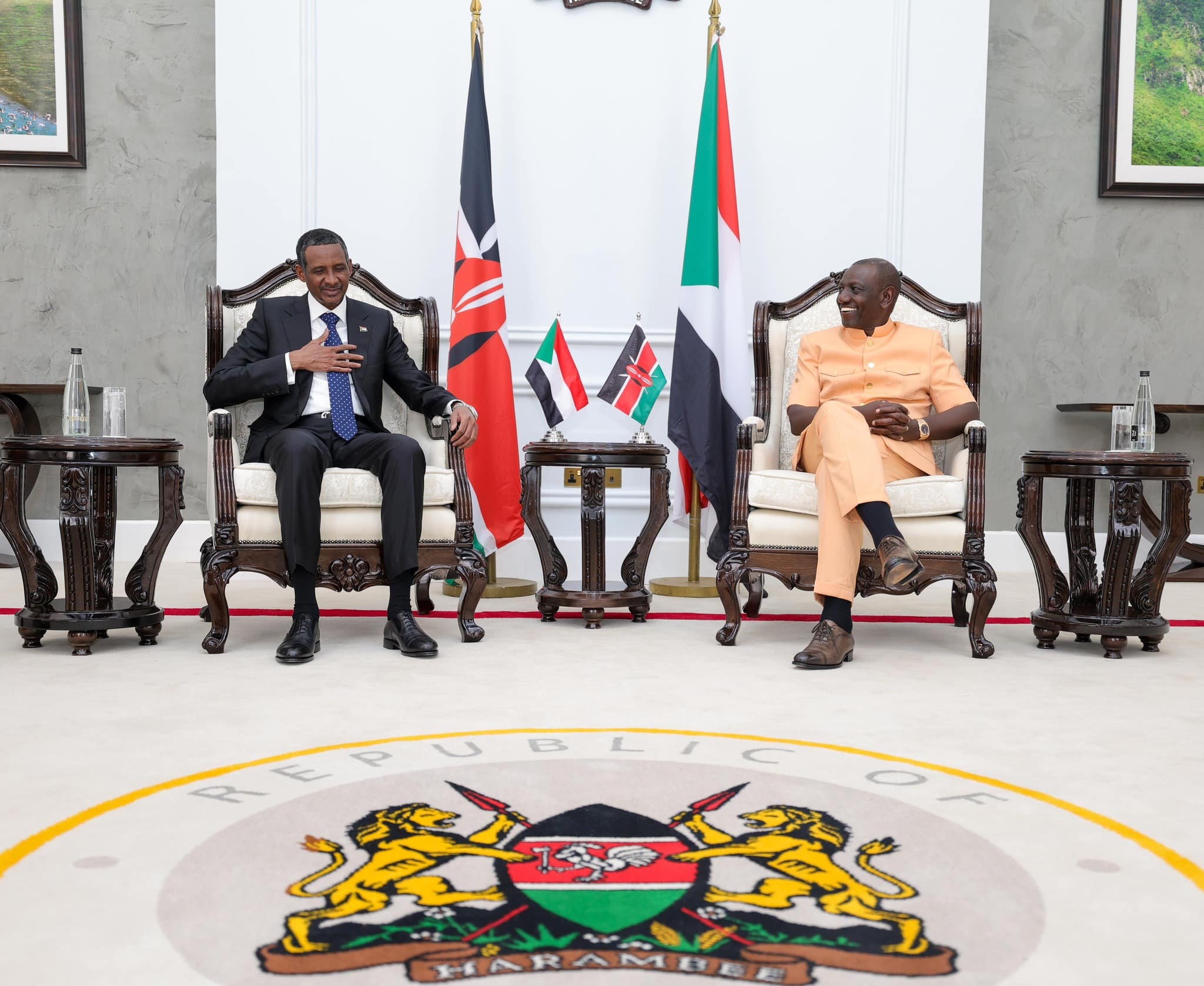
President William Ruto of Kenya meets Rapid Support Forces RSF leader General Mohamed Hamdan Dagalo in Nairobi. PHOTO/State House.

FacebookTwitterLinkedInRedditWhatsApp
Advertisement

A series of advances by the Sudanese military has led some observers to posit that the African nation’s yearslong civil war could be at a crucial turning point. Even if it were to end tomorrow, the bloody conflict would have left the Sudanese people scarred by violence that has killed tens of thousands and displaced millions of people. But the recent victories by the military do not spell the end of its adversary, a rebel paramilitary group that still holds large areas in Sudan. The Conversation turned to Christopher Tounsel, a historian of modern Sudan at the University of Washington, to explain what the war has cost and where it could turn now.

Can you give a summary of the civil war to date?

On April 15, 2023, fighting broke out in Sudan between the Sudanese Armed Forces, or SAF – led by de facto head of state Gen. Abdel Fattah al-Burhan – and the paramilitary Rapid Support Forces, or RSF, led by Gen. Mohamed Hamdan Dagalo, known colloquially as “Hemedti.” The RSF emerged out of the feared Janjaweed militia that had terrorized the Darfur region of Sudan.

While the SAF and RSF previously worked together to forcibly remove longtime President Omar al-Bashir from power in 2019, they later split amid a power struggle that turned deadly.

The major point of contention was the disputed timeline for RSF integration into the national military, with the RSF preferring a 10-year process to the SAF’s preferred two-year plan.

By early April 2023, the government deployed SAF troops along the streets of the capital, Khartoum, while RSF forces took up locations throughout the country. Matters came to a head when explosions and gunfire rocked Khartoum on April 15 of that year. The two forces have been in conflict ever since.

The human toll of the civil war has been staggering. As of February 2025, estimates of those killed from the conflict and its related causes, including lack of sufficient medical facilities and hunger, have ranged from 20,000 to 150,000 – a wide gulf that, according to Humanitarian Research Lab executive director Nathaniel Raymond, is partially due to the fact that the dead or displaced are still being counted.

In addition, the conflict has displaced more than 14 million people, a number that demographically makes the Sudan situation the world’s worst displacement crisis. Nearly half of Sudan’s population is “acutely food insecure,” according to the U.N.’s World Food Programme. Another 638,000 face “catastrophic levels of hunger” – the world’s highest number.

How have recent developments changed the war in Sudan?

The SAF has recently scored a slew of victories. At time of writing, the Sudanese military controls much of the country’s southeastern border with Ethiopia, the Red Sea coast – and, with it, Sudan’s strategically important Port Sudan – and parts of the country’s metropolitan center located at the confluence of the Blue and White Nile rivers.

Further, the SAF has reclaimed much of the White Nile and Gezira provinces and broken an RSF siege of North Kordofan’s provincial capital of el-Obeid. In perhaps the most important development, the army in late March recaptured the RSF’s last major stronghold in Khartoum, the Presidential Palace.

Each of these actions indicates that the SAF is taking an increasingly proactive approach in the war. Such positive momentum could not only serve to reassure the Sudanese populace that the SAF is the country’s strongest force but also signal to foreign powers that it is, and will continue to be, the country’s legitimate authority moving forward.

And yet, there are other indications that the RSF is in no rush to concede defeat. Despite the SAF’s advances, the RSF has strengthened its control over nearly all of Darfur, Sudan’s massive western region that shares a lengthy border with neighboring Chad.

It is here that the RSF has been accused of committing genocide against non-Arab communities, and only the besieged capital of North Darfur, El Fasher, stands in the way of total RSF hegemony in the region. The RSF also controls territory to the south, along Sudan’s borders with the Central African Republic and South Sudan.

The fact that the SAF and RSF are entrenched in their respective regional strongholds casts doubt on the significance of the military’s recent victories.

Could Sudan be heading to partition?

As a historian who spent years writing about South Sudanese separatism, I find it somewhat unfathomable to imagine that Sudan would further splinter into different countries. Given the current state of affairs, however, partition is not outside the realm of possibility. In February, during a summit in Kenya, the RSF and its allies officially commenced plans to create a rival government.

The African Union’s 55 member states are said to be split on the issue of Sudanese partition and the question of whether any entity linked with the RSF should be accepted. In January, during the waning days of U.S. President Joe Biden’s presidency, Washington determined that the RSF and its allies had committed genocide and sanctioned Hemedti, the RSF leader, prohibiting him and his family from traveling to the U.S. and freezing any American assets he may hold.

Any attempt to entertain partition could be read as an acknowledgment of the legitimacy of the RSF and would also create a dangerous precedent for other leaders who have been accused of human rights violations.

In addition to the RSF’s perceived lack of moral legitimacy, there is also the recent precedent of South Sudan’s secession. South Sudan, since seceding from Sudan in 2011, has experienced enormous difficulties. Roughly 2½ years into independence, the nation erupted into a civil war waged largely along ethnic lines. Since the conclusion of that war in 2018, the world’s youngest nation continues to struggle with intergroup violence, food insecurity and sanctions resulting from human rights violations.

Simply put, recent Sudanese history has shown that partition is not a risk-free solution to civil war.

How has shifting geopolitics affected the conflict?

It is important to understand that the conflict’s ripples extend far beyond Sudan’s borders. Similarly, the actions of countries such as the U.S., Russia and China have an impact on the war.

President Donald Trump’s executive order freezing contributions from the U.S. government’s development organization, USAID, has shuttered approximately 80% of the emergency food kitchens established to help those impacted by the conflict. An estimated 2 million people have been affected by this development.

Russian financial and military contributions have been credited with helping the SAF achieve its gains in recent months. Russia has long desired a Red Sea naval base near Port Sudan, and the expulsion of Russia’s fleet from Syria following the fall of President Bashar Assad increased the importance of such a base.

And then there is China. A major importer of Sudanese crude oil, China engaged in conversations to renegotiate oil cooperation agreements with Sudan in October 2024 with the hopes of increasing oil production amid the war. An end to the war – and, with it, protecting the flow of oil through pipelines vulnerable to attack – would benefit both members of this bilateral relationship.

As the war enters its third year, the outlook remains frustratingly difficult to discern.The Conversation

Christopher Tounsel, Associate Professor of History, University of Washington

This article is republished from The Conversation under a Creative Commons license. Read the original article.

Follow our WhatsApp Channel and X Account for real-time news updates.
Tags: Rapid Support Forces (RSF)South SudanSudan Civil WarSudan RSF
The Conversation

The Conversation

The Conversation is an independent news organization that publishes evidence-based articles written by experts to help readers understand diverse topics. We cover a wide range of areas including arts, culture, education, health, politics, science, and more¹. Their content is characterized by in-depth analysis, research, news, and ideas from leading academics and researchers. The Conversation aims to provide academic rigor with journalistic flair.

Related Posts

Majority Of The Msmes In Kenya Today Are In The Informal Sector. Many Do Have Credit Scores Or Sme Ratings From Credit Reference Bureaus.

Why So Many MSMEs Fail to Get Bank Loans in Kenya – Advice by a Banking Economist

June 16, 2026
Dcp National Chairman David Ole Parseina Asks Pastoralists And Minority Communities To Join Dcp.

Opinion | Why Pastoralist and Minority Communities in Kenya Need Stronger Political Voice

June 15, 2026
Making Water Accessible. South Africa’s President Cyril Ramaphosa Carrying A Child In 2018. Photo/Anc Party.

Opinion | Why Water is the Hidden Key to Every Child’s Future

June 15, 2026
Vinícius Júnior Delivers Brilliant Equalizer As Resilient Morocco Holds Brazil To Hard-Fought World Cup Draw

How The US Border Crackdowns Are Tarnishing the World Cup

June 15, 2026
ADVERTISEMENT

The Kenya Times Facebook

LATEST ARTICLES

  • What Ruto Secured at G7 Summit: Three Declarations Kenyans Must Know About
  • Muhoozi Confirms He Will Succeed Museveni as Uganda’s Next President
  • Who is Sue Nyathi — and Why Are Her Stories Impossible to Ignore?
  • No Israel, No America? Marjorie Taylor Greene Blasts Mike Huckabee Over Biblical Israel Comments
  • U.S. Indo-Pacific Command Reverts to Historic USPACOM Name After 2018 Rebrand
  • New York Orders Judges to Visit Prisons Annually to Check on Inmates
  • Whoopi Goldberg Presses JD Vance on Claims Black Americans Are Being Left Behind During Heated “The View” Clash
  • Trump Moves to Dismantle Education Department, Transfers Disability Programs and Civil Rights Enforcement
  • Four Republicans Join Democrats in Failed Senate Bid to Rein In Trump’s Iran War Powers
  • Trump Spotted with New Mark on Hand During G7 Summit, Fueling Online Buzz
  • DOJ Announces Charges Against 15 Members of Left-Wing Anti-ICE Group Direct Action Minnesota
  • Hillary Clinton: Biden’s 2024 Run Was a ‘Terrible Mistake’ That Handed Trump the White House
  • How Jeffrey Epstein Planned to Take Down Trump Before His Suicide-Report
  • Best Budget-Friendly Kenyan Meals to Cook at Home for Under KSh 500
  • How Kenyan Students Can Secure Scholarships to Study in the United States
ADVERTISEMENT

Company

About Us

Our Authors

Our Experts

Social Media

Policies

Privacy Policy

House Rules

Standards and Policies

Terms and Conditions

Subscription

My Account

Contact Us

Contact Us

Join Our Team

Advertise With Us

© Copyright 2026 | The Kenya Times | All Rights Reserved

Welcome Back!

Sign In with Facebook
Sign In with Google
Sign In with Linked In
OR

Login to your account below

Forgotten Password? Sign Up

Create New Account!

Sign Up with Facebook
Sign Up with Google
Sign Up with Linked In
OR

Fill the forms below to register

All fields are required. Log In

Retrieve your password

Please enter your username or email address to reset your password.

Log In
Your Privacy and Cookies
We use cookies on our website to give you the most relevant experience by remembering your preferences and repeat visits. By clicking “Accept”, you consent to the use of ALL the cookies.
Do not sell my personal information.
Cookie settingsACCEPT
Privacy & Cookies Policy

Privacy Overview

This website uses cookies to improve your experience while you navigate through the website. Out of these cookies, the cookies that are categorized as necessary are stored on your browser as they are essential for the working of basic functionalities of the website. We also use third-party cookies that help us analyze and understand how you use this website. These cookies will be stored in your browser only with your consent. You also have the option to opt-out of these cookies. But opting out of some of these cookies may have an effect on your browsing experience.
Necessary
Always Enabled
Necessary cookies are absolutely essential for the website to function properly. This category only includes cookies that ensures basic functionalities and security features of the website. These cookies do not store any personal information.
Functional
Functional cookies help to perform certain functionalities like sharing the content of the website on social media platforms, collect feedbacks, and other third-party features.
Performance
Performance cookies are used to understand and analyze the key performance indexes of the website which helps in delivering a better user experience for the visitors.
Analytics
Analytical cookies are used to understand how visitors interact with the website. These cookies help provide information on metrics the number of visitors, bounce rate, traffic source, etc.
Advertisement
Advertisement cookies are used to provide visitors with relevant ads and marketing campaigns. These cookies track visitors across websites and collect information to provide customized ads.
Others
Other uncategorized cookies are those that are being analyzed and have not been classified into a category as yet.
SAVE & ACCEPT
LOGIN | REGISTER
  • Login
  • Sign Up
  • Cart
No Result
View All Result
  • News
    • Latest News
    • Breaking News
    • Investigations
    • Explainers
    • Fact Check
  • Politics
    • Global Politics
    • Conflicts & Security
    • Elections
    • Diplomacy
    • Government & Policy
    • Political Analysis
  • Business
    • Global Economy
    • Markets
    • Technology
    • Startups
    • Energy
    • Finance
  • World News
    • Americas
    • Asia
    • Asia Pacific
    • Africa
    • Europe
    • Middle East
  • Africa
    • East Africa
    • West Africa
    • Southern Africa
    • Central Africa
  • Health
    • Global Health
    • Public Health
    • Health Policy
    • Medical Research
    • Diseases & Conditions
    • Mental Health
    • Nutrition
    • Climate & Health
    • Health Explainers
  • Sports
    • World Cup 2026
    • Athletics
    • Basketball
    • Boxing
    • Cricket
    • Football
    • Formula 1
    • Golf
    • Rugby
  • Weather
    • Climate Business
    • Climate Change
    • Climate Solutions
    • Living Green
  • Culture
    • Arts
    • Film & TV
    • Food
    • Lifestyle
    • Music
    • Travel
  • Opinion
    • Editorials
    • Letters
  • Behind The Brand
  • Contact Us

Not enough quota to unlock this post
Unlock left : 0
Are you sure want to cancel subscription?