Russian President Vladimir Putin has signaled that Moscow may consider ending most natural gas exports to Europe, instead focusing on emerging global markets that could offer higher returns.
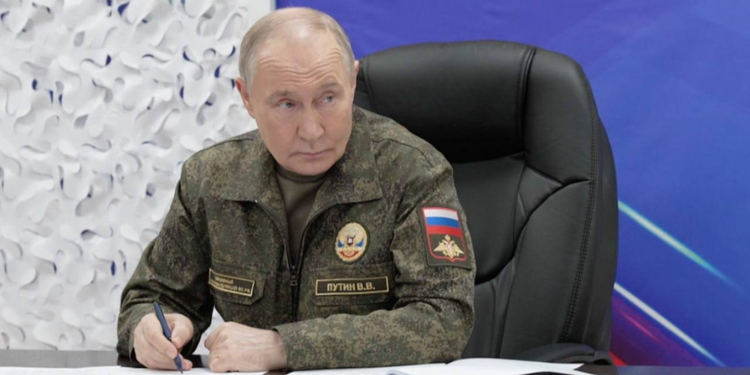
Speaking on state television, Putin on March 4 said he would instruct his government to assess the potential move in coordination with Russian energy companies.
“Other markets are opening now,” Putin said. “Maybe it’s better for us to end supplies to the European market right now? To go to those markets that are opening now and get a foothold there.”
He added that several buyers are willing to pay higher prices for Russian gas, which could offset revenues previously earned from European clients.
Putin’s comments come against the backdrop of the European Union’s plans to gradually phase out Russian pipeline gas and liquefied natural gas (LNG) imports by late 2027.
The European Commission is set to formally table a legal proposal to ban Russian oil imports on April 15, shortly after Hungary’s parliamentary elections.
President Putin clarified that his remarks were “thinking out loud,” not a formal decision, though the Kremlin emphasized that discussions with energy companies would begin promptly.
Also Read: Blow to Putin as Russia Admits Major Oil Depot Hit by Ukrainian Missiles
Since Russia invaded Ukraine in 2022, flows of Russian gas to Europe have already decreased significantly, though pipeline supplies continue to select nations such as Hungary, Slovakia, and Serbia. Russia also exports liquefied natural gas via the Novatek-led Yamal LNG project.
In 2025, Russian gas still accounted for an estimated 13% of EU imports, valued at over €15 billion ($17.4 billion) annually, highlighting continued European reliance despite sanctions.
European gas prices surged to a three-year high this week amid regional instability. Conflicts in the Middle East, particularly Iran-Israel hostilities, disrupted Gulf gas exports, while Qatar temporarily halted output at the Ras Laffan LNG plant, the world’s largest.
Benchmark Dutch and British gas prices climbed more than 40% on Tuesday and extended gains for a second day, reflecting mounting supply concerns.
Putin suggested that redirecting gas to emerging markets mirrors actions taken by other suppliers seeking higher revenues.
“Some clients emerged who are ready to buy that same natural gas at higher prices.”
Putin reassures Russia intends to maintain energy commitments to reliable partners
He emphasized that American companies, like Russia, naturally redirect supply to more profitable destinations.
Despite the proposed shift, Putin reassured that Russia intends to maintain energy commitments to reliable partners such as Hungary and Slovakia.
His remarks coincided with a Kremlin meeting with Hungarian Foreign Minister Peter Szijjarto, underscoring Moscow’s continued strategic engagement with select European allies.
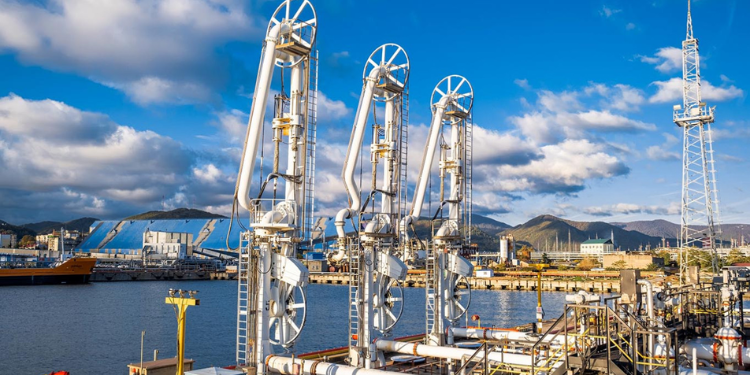
Russia’s Arctic LNG infrastructure reinforces its capacity to pivot exports globally. Maritime reporting shows that the ice-class carrier Arctic Metagaz recently conducted a triple simultaneous LNG ship-to-ship (STS) transfer from the sanctioned Arctic LNG 2 project in Murmansk.
Two transfers involved cargoes destined for China’s Beihai LNG terminal, the only confirmed recipient to date, while a third transfer involved Yamal LNG output near Kildin Island.
The Murmansk region has become a central hub for Arctic LNG exports and STS operations, bridging ice-class shipping with conventional tankers serving international markets.
Also Read: Blow to Putin as Sanctioned Russian Tanker Catches Fire After Explosion in Mediterranean
Despite Western sanctions, Russian LNG exports have remained resilient. Trade data indicate that Europe purchased approximately 93% of Yamal LNG output in January 2026, a record level, while EU imports from Yamal were up 8% year-on-year.
According to analysts, this reflects preemptive European purchases ahead of the planned 2027 ban on Russian LNG.
Energy specialists warn that a halt in Russian gas supplies would have profound implications. European nations have expanded LNG imports over the past few years to offset declining Russian pipeline flows.
Redirecting Russian gas to Asia or other high-paying markets could intensify price volatility and inflationary pressures on households and industry across the EU.
Follow our WhatsApp Channel and X Account for real-time news updates.