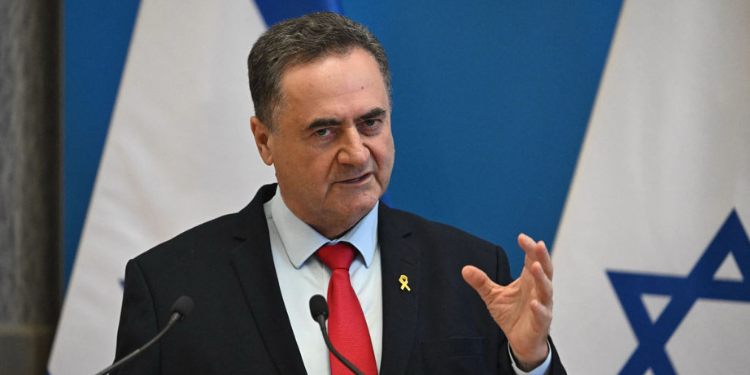

Israel has officially announced its plan to take control of southern Lebanon, making it the clearest statement yet of intentions to seize and maintain foreign territory as clashes with Hezbollah escalate.
The declaration was issued on Tuesday, March 24, when Israel’s defense minister announced that the Israeli military would take control of southern Lebanon up to the Litani River, about 30 kilometers north of the Israeli border.
It is the first time Israel has openly announced an intention to seize and hold territory inside Lebanon instead of describing operations as limited or temporary.
Israel to Occupy Southern Lebanon
Israel Katz, Israel’s defense minister, clarified that Israeli forces would stay in the areas they occupy.
“The principle is clear: if there is terror and rockets, there will be no homes or residents, and the army will stay inside,” he said.
The remarks indicated that Israel does not intend a quick operation but a long-term presence aimed at pushing Hezbollah further away from the border.
Israeli troops have already taken measures indicating long-term control, with military operations in the past two weeks targeting key infrastructure.
Also Read: Russian Soldier Turns on Own Unit, Guides Ukrainian Strikes That Kill 150 Troops
Several major bridges over the Litani River have been destroyed, and houses in Lebanese villages near the border have been demolished.
Israel states the buildings were used by Hezbollah fighters, while Lebanese officials say entire residential areas have been affected.
Until now, Israel had described its ground activities in Lebanon as limited and targeted raids.
Katz stated that the new statement eliminates that distinction and affirms Israel’s plan to establish what it calls a defensive buffer zone within Lebanese territory.
The defence minister had previously warned Lebanon’s government that it would lose territory if Hezbollah was not disarmed.
Lebanese authorities have repeatedly stated they do not oversee the group, which is heavily armed and functions independently of the state.
Hezbollah leaders quickly responded, stating they will oppose any Israeli presence south of the Litani River and calling the move a direct threat to the country’s sovereignty.
Officials linked to the group have said fighters will confront Israeli forces if they attempt to remain in the area.
Air strikes and ground operations have devastated large parts of southern Lebanon, and fighting has also spread to areas close to Beirut.
Also Read: U.S Military Gets 24 Hours to Withdraw from Foreign Base
Lebanese health officials report that over 1,000 people have been killed since the escalation started.
Over a million people have been forced to leave their homes, many fleeing villages near the Israeli border.
Escalation Risks Multiply as Israel Fights on Multiple Fronts
Occupying southern Lebanon while confronting Iran places Israel under heavy multi‑front strain.
Israel is now fighting Hezbollah across a border zone nearly 30 kilometres deep while maintaining heightened readiness against Iran and Iran‑aligned forces in Syria, Iraq, and Yemen.
Israel has already deployed tens of thousands of troops to its northern front, in addition to forces dedicated to air defense, intelligence, and long-range strike operations connected to Iran.
This posture increases the risk of escalation, as Hezbollah has an estimated 150,000 rockets and missiles, many of which can reach deep into Israel.
A prolonged ground occupation raises daily contact, casualties, and the risk of a miscalculation, bringing Iran more directly into the conflict.
By openly seizing territory, Israel also blurs the boundary between proxy warfare and direct confrontation.
Controlling Lebanese land shifts the conflict from cross-border exchanges to occupation, a move likely to provoke sustained resistance and justify broader retaliation by Iran’s regional network.