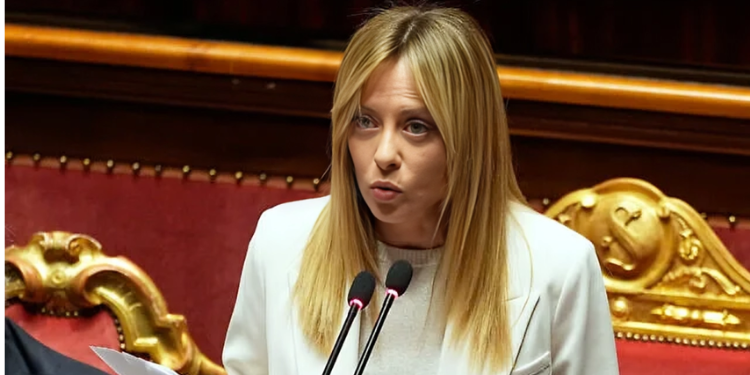
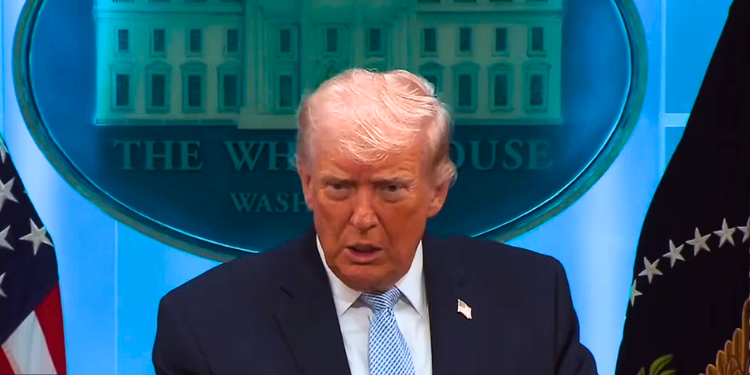
US President Donald Trump has launched a public attack on Italian Prime Minister Giorgia Meloni, marking a sharp break in relations between the U.S and Italy.
The remarks were made during a phone interview with the Italian media outlet Corriere della Sera on April 14, 2026, in which Trump criticized Meloni for refusing to support US military action related to the Iran conflict and for defending Pope Leo XIV following earlier comments by the US president.
The interview represents a clear change in tone from previous months, when Trump described Meloni as a close ally and key interlocutor in Europe.
This marks the most direct public confrontation between the two leaders since Trump’s return to the White House in January 2025.
Trump Attacks Meloni Over Iran and NATO
Trump said he was “shocked” by Meloni and accused her of lacking courage.
He stated that she had refused to support US efforts related to the Iran war, while continuing to benefit from US protection and Middle Eastern energy supplies.
Trump said Italy did not want to be involved in the conflict despite being a NATO member. He accused Meloni of expecting the United States to act on Italy’s behalf.
He added that Italy relied on oil from the region but was unwilling to share the security burden.
Also Read: FBI Adds Kansas City Woman to America’s Ten Most Wanted List
During the interview, Trump said he had not spoken directly with Meloni recently.
He claimed she had taken a unilateral position to keep Italy out of military involvement while still depending on the United States for defense.
Trump also raised the issue of Iran’s nuclear program.
He said Meloni did not take the Iranian threat seriously enough and claimed Iran could destroy Italy quickly if it obtained nuclear weapons.
The US president also criticized Italy’s domestic situation.
He said Italy would “not be the same country” in the future and linked the change to immigration trends.
Trump added that immigration is harming Italy and Europe as a whole.
Trump Faces Growing Global Resistance
A growing number of US allies and partners are distancing themselves from President Donald Trump, citing disputes over war policy, alliance obligations, trade pressure, and diplomatic conduct.
Also Read: U.S. Senator Vows to Block Aid to Israel Hours After Italy Suspends Defense Pact
The shift has become increasingly visible since the outbreak of the US‑Israel war with Iran in early 2026 and has affected relations across Europe, North America, and parts of Asia.
Several NATO members have declined to support the campaign.
Spain closed its airspace to US military aircraft involved in the conflict and denied access to shared bases.
Italy refused to allow US bombers to operate from a Sicilian base.
The United Kingdom (U.K) permitted the use of its bases only for defensive missions and ruled out direct combat involvement.
France criticized the escalation and warned of wider regional instability.
Trump has repeatedly questioned NATO’s reliability and value, while allies have quietly prepared for reduced US predictability.
Diplomatic traffic has increased within Europe and with non-US partners, signaling contingency planning rather than withdrawal.
Repeated threats to raise tariffs and sudden reversals have also pushed US partners to spread risk.
New trade arrangements among allies, including deals that would once have been avoided to avoid offending Washington, now proceed despite US objections.
Disputes over Greenland, immigration rhetoric, and repeated public criticism of allied governments have further strained relations.
Diplomats from Europe and Asia have signaled greater independence in foreign and economic policy decisions.
President Donald Trump has refused to apologize to Pope Leo XIV following his public criticism of the pontiff over the Iran war.
Trump had accused the Pope of being “weak” and claimed the pontiff did not understand the security threat posed by Iran.