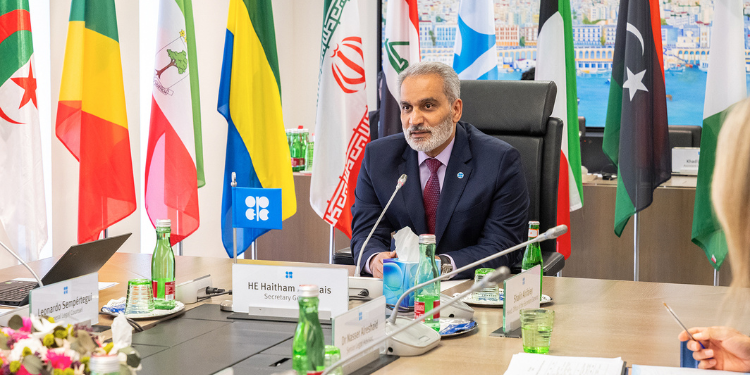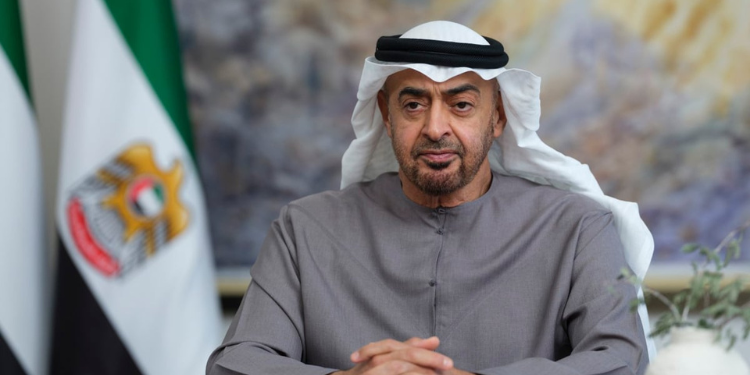
The United Arab Emirates has announced it will withdraw from the Organization of the Petroleum Exporting Countries (OPEC) and the OPEC+ alliance.
In a statement issued on April 28, the United Arab Emirates’ Ministry of Energy and Infrastructure said the withdrawal will take effect on May 1, 2026, ending the UAE’s membership in OPEC.
The country first joined the group in 1967 through the Emirate of Abu Dhabi and continued its membership after the formation of the United Arab Emirates in 1971.
Decision Tied to Long‑Term Energy Direction
The UAE said the decision follows a comprehensive review of its oil production policy and its current and future production capacity.
It said the move reflects the country’s long‑term strategic and economic vision and its evolving energy profile, including accelerated investment in domestic energy production.
Also Read: UAE Investor Acquires Major Stake in Gulf African Bank
“This decision reflects the UAE’s long-term strategic and economic vision and evolving energy profile, including accelerated investment in domestic energy production, and reinforces its commitment to a responsible, reliable, and forward-looking role in global energy markets,” the statement said.
The Ministry said the decision is based on national interest and on its commitment to contributing effectively to meeting the market’s pressing needs.
The government added that while near‑term volatility continues to affect supply dynamics, underlying trends point to sustained growth in global energy demand over the medium- to long-term.
It said a stable global energy system depends on a flexible, reliable, and affordable supply, noting that the UAE has invested to meet evolving demand efficiently and responsibly, with a focus on stability, affordability, and sustainability.
Production Policy After the UAE Withdrawal
The Ministry said its production policies will continue to be guided by responsibility and market stability, with due consideration of global supply and demand.
Following the withdrawal, the country said it will continue to act responsibly in global oil markets.
Any additional production brought to market will be introduced in a gradual and measured manner, aligned with demand and prevailing market conditions.
Also Read: Qatar Airways Restarts Flights to Syria and UAE After Long Disruptions
The UAE noted that the decision does not change the its commitment to global market stability or its approach based on cooperation with producers and consumers. Instead, it said the move strengthens the country’s ability to respond to evolving market needs.
The UAE also said it remains a trusted producer of some of the world’s most cost‑competitive and lower‑carbon barrels, which it said play an important role in supporting global economic growth and emissions reduction.
UAE–OPEC Relationship and the Country’s Wider Energy Strategy
The decision follows decades of constructive cooperation with OPEC and the OPEC+ alliance, during which it made significant contributions.
The Ministry said that engagement to support stable global energy markets will continue, even as the country focuses on national priorities and commitments to investors, customers, and partners.
UAE added that investment will continue across the energy value chain, including oil, gas, renewables, and low‑carbon solutions, to support long‑term energy system transformation, economic growth, and diversification.
The UAE is one of OPEC’s key producers, with substantial spare production capacity and among the lowest lifting costs globally. For years, Abu Dhabi has sought higher production baselines and quota adjustments to reflect expanded capacity.
Differences with OPEC’s de facto leader, Saudi Arabia, became public in 2021 during talks over extending production cuts. At the time, the UAE opposed the proposed agreement, saying it placed a heavier burden on the Emirates than on larger producers.
“For us in the UAE, it wasn’t a good deal,” UAE Minister of Energy and Infrastructure Suhail Al Mazrouei said at the time, referring to baseline calculations that did not reflect the country’s increased production capacity while favoring others.
Speculation about a possible UAE exit from OPEC and OPEC+ circulated in 2020 and again in 2023 during quota disputes, but was repeatedly denied.
At the time, Emirati figures, including Energy Minister Suhail Al Mazrouei, said the country remained committed to the alliance.