
President Donald Trump has hinted that he would consider traveling to Pakistan to sign a peace agreement with Iran, claiming the two sides are “very close” to reaching a deal that would end weeks of conflict.
Speaking to reporters on the White House South Lawn before departing for Las Vegas on Thursday, April 16, Trump said Tehran had agreed to hand over its stockpile of enriched uranium, a key sticking point in negotiations.
“We’re very close to making a deal with Iran,” Trump said. “We had to make sure that Iran never gets a nuclear weapon… They’ve totally agreed to that. They’ve agreed to almost everything, so maybe if they can get to the table, there’s a difference.”
Asked if he might travel to Islamabad to sign an agreement, Trump replied: “I might go, yeah. If the deal is signed in Islamabad, I might go.”
He further praised Pakistan’s Prime Minister Shehbaz Sharif and army chief Asim Munir for their role in brokering talks, calling them “really great.”
Role of Pakistan in mediation
Vice President JD Vance led a U.S. delegation to Islamabad last weekend for talks with Iranian officials but returned without a breakthrough.
Also Read: Trump Confronts European Ally Over Airbase Refusal in Iran Conflict
The White House says discussions are underway for a second round of negotiations, likely to be held again in Pakistan.
Trump’s comments highlight Islamabad’s growing role as a mediator in the conflict, with Pakistani officials also visiting Iran and other regional capitals in recent days. The U.S. president has voiced optimism that the war could end soon, saying the next round of talks will yield “amazing” results.
The remarks come amid a fragile ceasefire in Lebanon, where Israel and Hezbollah agreed to a 10-day truce beginning Thursday.
Israel has pledged to respond only to “imminent threats” from Hezbollah, though Prime Minister Benjamin Netanyahu rejected terms demanded by the group. The ceasefire is part of broader efforts to contain the Iran war, which has drawn in multiple regional actors.
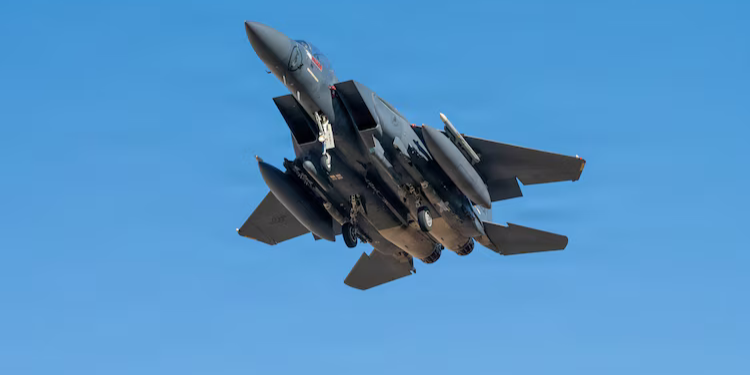
Meanwhile, the U.S. military continues to enforce a blockade of Iranian ports, deploying more than 10,000 troops, 12 ships, and 100 aircraft.
Also Read: Pakistan Signals Possible Renewed U.S.–Iran Peace Talks as Fragile Ceasefire Nears Expiry
The blockade has effectively closed the Strait of Hormuz to most commercial shipping, driving up global oil and gas prices and adding pressure on all sides to settle.
Trump’s conditions and threats
Trump had earlier insisted that Iran had agreed to surrender its enriched uranium, which he referred to as “nuclear dust.” He claimed the material was buried underground following U.S. bomber strikes.
“They’ve agreed to give us back the nuclear dust,” Trump said, though he provided no details on how such a transfer would occur.
The president dismissed reports of a 20-year timeline for suspending uranium enrichment, saying “that they will not have, beyond 20 years, that they will not have nuclear weapons.”
Trump also suggested the current two-week ceasefire with Iran, set to expire April 22, may not need to be extended.
“We’re doing well, I can tell you. I’m not sure it needs to be extended,” the president said. However, he reiterated his threat to resume bombing if talks fail.
The Iran war has strained U.S. relations with allies and partners. Spain closed its airspace to U.S. aircraft involved in the conflict, Italy denied access to a Sicilian base, and the U.K. limited its bases to defensive missions. France has warned of wider instability.
At the same time, Trump has clashed with Pope Leo XIV, who has criticized the war. “I have a right to disagree with the pope,” Trump said Thursday, adding that Iran’s pursuit of nuclear weapons posed a global threat.