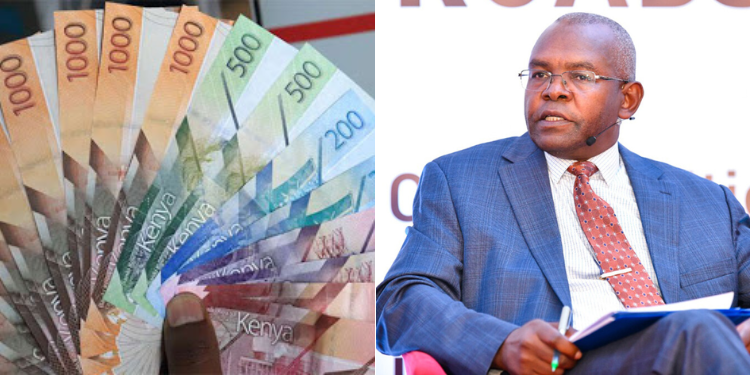
The Kenyan Shilling has marginally weakened in recent days as the Dollar gained ground, according to the late March trading numbers.
From the indicative rates, the Kenyan Shilling has shown a pattern of depreciation in 2026, with the currency reaching a high of 130.126 on 02/02/2026 before strengthening to a low of 128.696 on 23/02/2026.
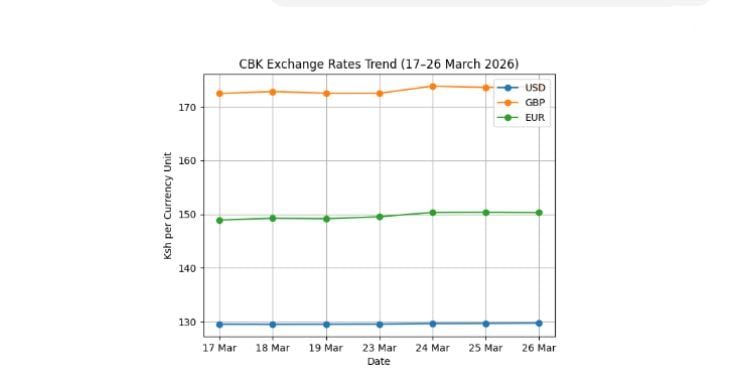
An analysis of the Central Bank of Kenya’s (CBK) daily indicative rates shows that the Kenyan Shilling has weakened steadily against the US dollar, with the exchange rate moving from KSh 129.50 on March 18 to KSh 129.72 on March 26.
Daily movements showed a gradual depreciation, with the Shilling trading at Ksh 129.50 per USD on 18 March. It inched up to Ksh 129.52 on 19 March and edged slightly higher to Ksh 129.54 on 23 March.
The currency then weakened steadily in the following days, trading at Ksh 129.65 on 24 March, Ksh 129.67 on 25 March, and closing at Ksh 129.72 on 26 March. Overall, the shilling recorded a modest decline against the US dollar over the week.
From the indicative rates, the US dollar appreciated consistently over the period, gaining about 20 cents against the shilling.
However, the trend shows incremental, orderly depreciation with no sharp fluctuations, indicating stable demand and supply conditions in the foreign exchange market.
USD-Kenyan Shilling Trend (19-26 March 2026)
Here is a chart representing the Ksh trend from March 19 to 26.
Also Read: CBK Invites Kenyans to Invest in Ksh60 Billion Treasury Bonds with as Low as 50K
What KSh Depreciation Means and the Possible Factors Behind It
A marginal depreciation of the Kenyan Shilling means that slightly more shillings are now required to purchase one US dollar than a few days ago.
In foreign exchange terms, movements of 0.1–0.3 shillings per dollar over several days are considered very small, indicating limited volatility in the currency market.
According to Trading Economics, March data show the shilling trading in a tight band around 129–130 per dollar, weakening by about 0.4% over the month and less than 0.3% over the past year.
Several factors influence the shilling’s value beyond immediate geopolitical events.
According to CNBC, rising oil prices due to tensions in the Middle East, including the Iran–Israel–US conflict, increase Kenya’s import bill and demand for dollars, which can gradually put downward pressure on the currency.
The Trading Economics notes that global dollar movements, domestic interest rates, foreign exchange reserves, and inflows from tea exports, tourism, remittances, and Eurobond operations are also key drivers.
7-Day Global CBK Indicative Rates Analysis
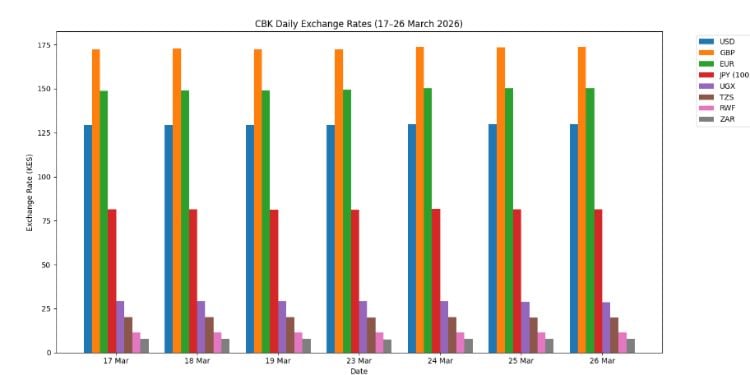
Based on CBK indicative rates, Kenya experienced a general rise in the value of its currency against most major currencies over the period, with the US dollar, British pound, Japanese yen, Ugandan shilling, Rwandan franc, South African rand, and Tanzanian shilling all recording gains. The euro, however, showed a slight decline on the last two days, moving from KSh 150.35 on 25 March to KSh 150.30 on 26 March, according to CBK indicative rates.
The US dollar showed a gradual upward trend against the Kenyan currency, starting at KSh 129.50 on March 18 and reaching KSh 129.72 on March 26, reflecting a slight depreciation of the shilling.
Meanwhile, the British pound strengthened during the period, rising from KSh 172.82 on March 18 to KSh 173.74 on March 26.
In contrast, the Japanese yen (per 100) stayed relatively stable, fluctuating slightly between KSh 81.20 and KSh 81.78 during the week, while the Ugandan shilling weakened, dropping from KSh 29.07 on March 18 to KSh 28.55 on March 26.
Read Also: Banks Slash Loan Interest Rates After CBK Move
The Rwandan franc saw little movement, trading between KSh 19.84 and KSh 20.01 during the period, as the South African rand remained mostly stable, trading between KSh 11.25 and KSh 11.27 according to the indicative rates.
Finally, the Tanzanian currency showed slight fluctuations, moving between KSh 7.55 and KSh 7.77 over the week, according to CBK indicative rates.
Below is a graph showing the trend.