
On February 17, President William Ruto directed Interior Cabinet Secretary Kipchumba Murkomen to develop, within 60 days, a framework for establishing a dedicated Nairobi Metropolitan Police Unit.
During the announcement, Ruto said the police unit would work closely with Nairobi City County security teams.
“Security is non-negotiable, especially in Nairobi. I therefore direct the Interior Cabinet Secretary to create within 60 days a framework for a dedicated Nairobi Metropolitan Police Unit,” Ruto said.
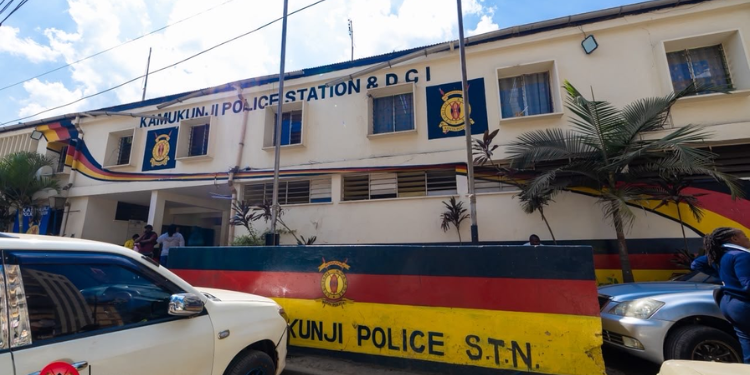
On July 17, the Ministry of Interior proposed Kamukunji Police Station as the headquarters of the New Police Unit.
Below is a breakdown of the structure of the specialized police unit and how it will be organized.
Nairobi Metropolitan Police Unit Structure
The Ministry of Interior said on July 27 that Ruto had directed the Police Unit to operate within the constitutional command-and-control framework of the National Police Service (NPS).
“The President directed that the proposed structure should maintain the constitutional command and control of the National Police Service while strengthening regional coordination within the Nairobi Metropolitan Area,” part of the statement read.
Hence, the Nairobi Metropolitan Police Unit will be led by the Deputy Inspector General of the Kenya Police Service (KPS), a position currently held by Eliud Lagat.
Below the Deputy Inspector General will be a Commandant, who will oversee the unit’s day-to-day operations with the support of a Deputy Commandant.
In April, Interior Cabinet Secretary Kipchumba Murkomen appointed former Rift Valley Regional Commander Tom Odero as the Commandant of the new Police Unit.
Also Read: Ruto Hints at How Nairobi Special Police Unit Will Work
Reporting to the Deputy Commandant will be an Integrated Command Center, a Multi-Agency Liaison Office, and Sub Region Commanders.
Sub Region Commanders will oversee Sub County Commanders, who will be responsible for Nairobi Metropolitan Police (NMP) Stations, Mtaa Police Posts, and NMP Patrol Bases.
In addition, the unit will comprise six specialized divisions: the Diplomatic Unit, Public Safety Unit, Enforcement Unit, Traffic Unit, Investigations Bureau, and Security and Patrol Unit.
How the Structure Looks:
| Command | Coordination | Operations | Specialized Units |
|---|---|---|---|
| Deputy Inspector General (KPS) | Integrated Command Centre | Sub Region Commanders | Diplomatic Unit |
| Commandant | Multi Agency Liaison Office | Sub County Commanders | Public Safety Unit |
| Deputy Commandant | NMP Stations | Enforcement Unit | |
| Mtaa Police Posts | Traffic Unit | ||
| NMP Patrol Bases | Investigations Bureau | ||
| Security and Patrol Unit |
Also Read: Kamukunji Police Station: Details of Proposed Headquarters for New Nairobi Metropolitan Police Unit
What You Need to Know About the New Unit
The Nairobi Metropolitan Police Unit (NMPU) is a proposed specialized police unit aimed at strengthening security, maintaining public order, and protecting critical infrastructure across the Nairobi Metropolitan Area.
The initiative is being spearheaded by the Ministry of Interior in collaboration with the Presidency to improve security coordination in the capital.
Under the proposal, Kamukunji Police Station will serve as the unit’s headquarters, housing its operational offices, police accommodation, and the Integrated Command and Communication Center (IC4), which will facilitate real-time coordination, communication, and surveillance operations across Nairobi City County.
The Ministry of Interior said Kamukunji Police Station was selected because of its strategic location in the heart of Nairobi’s central business district and its capacity to support coordinated responses to the city’s complex security challenges.
Once operational, the Nairobi Metropolitan Police Unit is expected to strengthen multi-agency coordination, improve emergency response, and enhance policing across the capital.
Follow our WhatsApp Channel and X Account for real-time news updates.