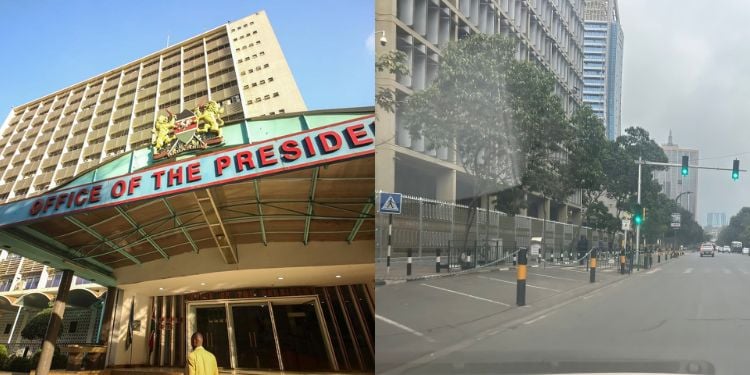
Harambee House is one of Kenya’s recognisable government buildings and stands at the centre of Nairobi’s Central Business District (CBD), housing offices associated with executive powers and national administration.
The building was constructed in 1961 during the final years of British colonial rule. At the time, it was built along what was then known as Coronation Avenue, which was later renamed Harambee Avenue.
It was originally designed to house the Ministry of Works and served as an administrative centre for managing public infrastructure and development projects.
As Kenya moved closer to independence, Harambee House took on greater political importance. In 1963, following internal self-government, then-Prime Minister Jomo Kenyatta relocated the Office of the President to the building.
He was impressed by its design and central location, and decided to firmly establish Harambee House as a seat of executive authority, a role it continues to play today.
The name “Harambee,” meaning “pull together” in Swahili, became closely linked to the building after Kenyatta popularised the term as a call for unity and collective effort in nation-building. Over time, the slogan became a defining part of Kenya’s post-independence identity.
Location and Physical Features
Harambee House is located on Harambee Avenue in Nairobi’s Central Business District. It stands directly opposite to the Office of the Deputy President and near other important government buildings, including Sheria House and the National Treasury complex.
The building is also close to primary landmarks such as Uhuru Park, the Kenyatta International Convention Centre (KICC), and the Cathedral Basilica of the Holy Family.
Also Read: Who Owns Kabarak University? Inside President Moi’s Family Holding in Nakuru
Structurally, it is a high-rise government office building with about 13-14 floors, making it one of the earliest modern office towers in Nairobi. Its height and central location have made it a strategic site for government administration and coordination.
Government Offices Housed at Harambee House
Harambee House serves as an administrative base for the Office of the President, supporting presidential work and coordination across different ministries and departments.
The building also houses the Cabinet Secretariat, which is responsible for organising Cabinet and Cabinet Committee meetings, preserving official government records, and safeguarding the Seal of the Government of Kenya.
Through these duties, the Secretariat plays a role in executive decision-making and policy coordination. In addition, parts of Harambee House accommodate offices linked to the Ministry of Interior and National Administration.
These departments are mainly involved in internal security coordination and national administration, and official government listings recognize the building as one of their operational locations.
Also Read: Brains Behind Nairobi’s Multi-Million Retail and Entertainment Hub, Signature Mall
Next to it is Harambee House Annex. While the two buildings are often mentioned together and are closely linked in function and location, they are not the same.
Security and Access Controls
Given its importance, Harambee House operates under strict security measures. Access to offices, boardrooms, and upper floors is tightly controlled, with entry limited to authorised government officials, staff, and pre-cleared visitors.
Photography and unauthorized filming inside the building are prohibited, reflecting its sensitivity as a government installation.
Beyond its physical structure, Harambee House represents Kenya’s transition from colonial administration to independent governance.
It has witnessed major moments in the country’s political history, including leadership changes, Cabinet deliberations, and coordination during national challenges.
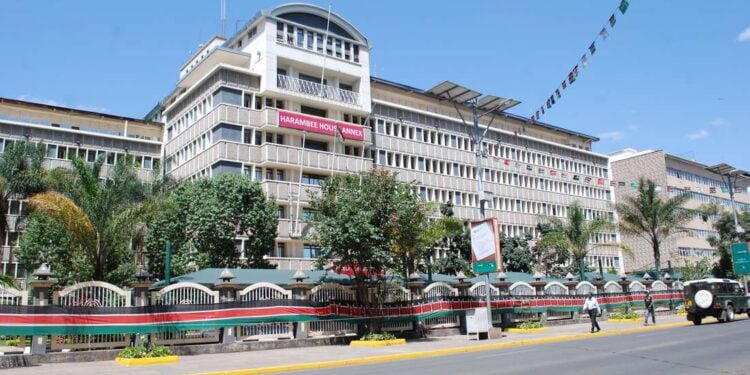
Harambee House is the seat of the Office of the President, whereas Harambee House Annex serves a different but supportive role within government. PHOTO -Hand out