


Wednesday, November 18, 2026
  • News
    • Latest News
    • Breaking News
    • Fact Check
    • Investigations
    • Explainers
  • Politics
    • Global Politics
    • Elections
    • Government & Policy
    • Diplomacy
    • Conflicts & Security
    • Political Analysis
  • Business
    • Global Economy
    • Markets
    • Technology
    • Startups
    • Energy
    • Finance
  • World News
    • Americas
    • Asia
    • Asia Pacific
    • Africa
    • Europe
    • Middle East
  • Africa
    • Central Africa
    • East Africa
    • West Africa
    • Southern Africa
  • Health
    • Global Health
    • Public Health
    • Health Policy
    • Medical Research
    • Diseases & Conditions
    • Mental Health
    • Nutrition
    • Climate & Health
    • Health Explainers
  • Sports
    • World Cup 2026
    • Athletics
    • Basketball
    • Boxing
    • Cricket
    • Football
    • Formula 1
    • Golf
    • Rugby
  • Weather
    • Climate Business
    • Climate Change
    • Climate Solutions
    • Living Green
  • Culture
    • Arts
    • Film & TV
    • Food and Recipes
    • Music
    • Lifestyle
    • People
    • Travel
  • Opinion
    • Editorials
    • Letters
  • Behind The Brand
REGISTER
LOGIN
No Result
View All Result
The Kenya Times
  • News
    • Latest News
    • Breaking News
    • Fact Check
    • Investigations
    • Explainers
  • Politics
    • Global Politics
    • Elections
    • Government & Policy
    • Diplomacy
    • Conflicts & Security
    • Political Analysis
  • Business
    • Global Economy
    • Markets
    • Technology
    • Startups
    • Energy
    • Finance
  • World News
    • Americas
    • Asia
    • Asia Pacific
    • Africa
    • Europe
    • Middle East
  • Africa
    • Central Africa
    • East Africa
    • West Africa
    • Southern Africa
  • Health
    • Global Health
    • Public Health
    • Health Policy
    • Medical Research
    • Diseases & Conditions
    • Mental Health
    • Nutrition
    • Climate & Health
    • Health Explainers
  • Sports
    • World Cup 2026
    • Athletics
    • Basketball
    • Boxing
    • Cricket
    • Football
    • Formula 1
    • Golf
    • Rugby
  • Weather
    • Climate Business
    • Climate Change
    • Climate Solutions
    • Living Green
  • Culture
    • Arts
    • Film & TV
    • Food and Recipes
    • Music
    • Lifestyle
    • People
    • Travel
  • Opinion
    • Editorials
    • Letters
  • Behind The Brand
No Result
View All Result
The Kenya Times ~ Trending, Breaking News and Videos
No Result
View All Result
ADVERTISEMENT

The Rise and Fall of Kenya Bus Service, Nairobi’s Transport Giant

Wiltord OtienobyWiltord Otieno
October 4, 2026
Reading Time: 7 mins read
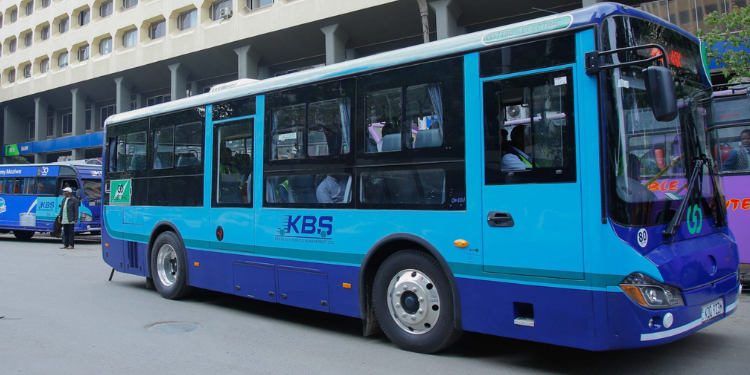
The Rise And Fall Of Kbs, Nairobi'S Transport Giant

Photo of a KBS bus. PHOTO/KBS

FacebookTwitterLinkedInRedditWhatsApp
Advertisement

For decades, Kenya Bus Service (KBS) dominated Nairobi’s public transport, controlling key routes across the city.

The Beginning of Kenya Bus Service

The history of KBS dates back to 1934, when the Overseas Transport Company of London introduced organised bus transport in Nairobi.

The company began with 13 buses operating on 12 routes at a time when Nairobi’s population was about 50,000.

The routes connected residential areas with the city center and other important parts of the growing town.

The operation later became Kenya Bus Services Ltd. and came under United Transport Overseas Services (UTOS), a British transport company.

A major change came in 1966 when the City Council of Nairobi acquired a 25 percent stake in KBS and granted UTOS a monopoly franchise to operate bus services in the city.

ADVERTISEMENT

During this period, KBS developed a large network of scheduled bus routes.


Also Read: Latema SACCO Routes, Stages, Parcel Services and Electric Buses Explained


Its large buses operated on fixed routes and timetables, providing a structured alternative to taxis and the smaller vehicles that would later become the dominant form of public transport.

The Rise of Matatus and Growing Competition

KBS’s dominance began to weaken as Nairobi expanded and demand for cheaper and more flexible transport increased.

Matatus had begun operating in Nairobi decades earlier, initially outside the formal transport system.

They were eventually legalized in 1973, opening the way for rapid growth of privately owned minibusses and other small passenger vehicles.

ADVERTISEMENT

Their ability to respond quickly to passenger demand gave them an important advantage over large buses operating fixed schedules.

The shift was gradual but significant.

In 1973, KBS carried an estimated 84 per cent of Nairobi’s public transport passengers while matatus carried about 16 per cent.

By 1985, KBS’s share had fallen to about 55 percent while matatus had risen to roughly 45 percent.

The government also attempted to compete with KBS.

In 1986, the government introduced the Nyayo Bus Service with a large fleet and subsidized fares.

The state-run operation was intended to provide affordable public transport, but operational and financial problems eventually weakened it.

Its decline left KBS competing against an increasingly powerful private matatu sector rather than facing another strong formal bus operator.

Stagecoach Takes Over KBS

Another major turning point came in 1991 when Stagecoach Holdings acquired United Transport’s shareholding in Kenya Bus Services.

Stagecoach introduced new investment and expanded the fleet, including express services and modern double-decker buses.

The company also sought to modernize KBS and make it more competitive in Nairobi’s changing transport market.

However, the matatu sector continued expanding while traffic congestion made scheduled large-bus operations increasingly difficult.

KBS’s market share fell sharply. Research cited by the World Bank shows that KBS had about 36 per cent of Nairobi’s public transport market in 1994. By 2000, its share had fallen to about 17 per cent across all routes and 29 per cent on routes it operated. The company had about 240 buses operating daily against almost 9,900 matatus.

In October 1998, Stagecoach sold its 95 percent stake in KBS to a consortium of Kenyan investors led by Karanja Kabage.

The company reverted to the Kenya Bus Services name.

Attempts to Save the Company

The new owners tried to restructure the business rather than rely entirely on the traditional large-bus model.

KBS separated some of its operations into different businesses, including Bus Track, which continued providing urban services, while KBS Express focused on inter-city transport.

In 2003, the company also introduced Metro Shuttle, a premium minibus service aimed mainly at middle- and higher-income Nairobi residents who were willing to pay more for scheduled, cleaner and more comfortable transport.

The Bus Track model also tried to reduce the burden of operating every bus directly.

Some former KBS supervisors were allowed to operate buses under lease and profit-sharing arrangements.

Despite these changes, the company’s financial position continued to deteriorate.

The Final Collapse

The final years of KBS were particularly difficult.

The company faced falling passenger numbers, competition from matatus, increasing operating costs and traffic congestion.

It also faced the financial burden of complying with new public transport safety regulations introduced in the early 2000s.

Legal Notice No. 161 of 2003 introduced requirements including seat belts, speed governors, restrictions on standing passengers and other safety measures.

For a large formal operator with hundreds of buses, meeting the requirements required substantial investment.

KBS later reported that fitting speed governors and seat belts to its fleet had cost about Ksh1.04 billion by February 2005.

The company was also heavily indebted.

By the time it collapsed, reports put its debts at about KSh1.2 billion, owed to suppliers and other creditors.

At its peak, KBS had 424 buses, about 3,400 employees and annual turnover estimated at Ksh3.3 billion.

Court records from 2005 show the seriousness of the crisis.


Also Read: Inside Forward Travellers: The Kayole SACCO That Became More Than a Transport Operator


Kenya Bus Services, Bus Track and Msafiri Passenger Services were involved in litigation over the financial and regulatory pressures affecting their operations, while creditors moved against company assets.

A separate High Court case records the auctioning of KBS vehicles to enforce a judgment against the company.

The original Kenya Bus Services Ltd eventually collapsed in 2005, ending the company that had dominated Nairobi’s organized bus transport for more than seven decades.

However, the KBS name and its operational experience did not disappear completely.

The Birth of KBS Management

In 2006, Kenya Bus Service Management Ltd (KBSM) emerged from the collapse of the old KBS.

Unlike the original company, KBSM was structured primarily as a transport management and franchising company rather than a conventional bus owner.

Under the new model, individual investors could own buses while KBSM provided management, operational systems, training, branding, and other services.

The model let the company keep using the KBS brand and expertise without having to finance and own an entire fleet itself.

Follow our WhatsApp Channel and X Account for real-time news updates.
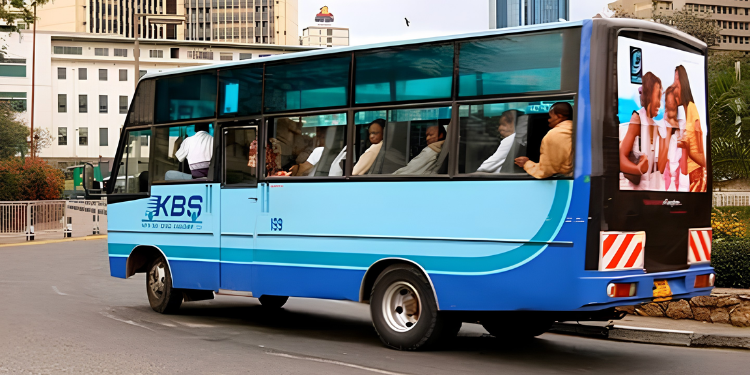
The Rise And Fall Of Kbs, Nairobi&Amp;Apos;S Transport Giant
Photo of a KBS bus. PHOTO/KBS
Tags: KBS
Wiltord Otieno

Wiltord Otieno

Wiltord Otieno is a passionate journalist at The Kenya Times with a keen eye for impactful stories. He specializes in sports writing, digital content, and storytelling that informs and inspires. Wiltord is driven by curiosity, delivering clear, engaging narratives that inform, challenge, and inspire audiences, and always ready to grow in this fast-evolving media landscape. He holds a Bachelor of Arts in Journalism and Mass Communication from The Technical University of Kenya. He can be reached at [email protected]

Related Posts

Yvonne Wambui Kibukosya: Raila Junior’s Wife Career, Children And Her Musical Family

Famous Musical Family Behind Raila Junior’s Wife Yvonne Wambui and Private Life

November 8, 2026
Gpo, Bank Of India And 8 Other Historic Buildings And Landmarks Along Nairobi'S Kenyatta Avenue

10 Historic Landmarks and Monuments to Know Along Nairobi’s Kenyatta Avenue

November 1, 2026
Times Tower: The 38-Storey Landmark With Hidden Vaults Beneath Kra Headquarters

Times Tower: The 38-Storey Landmark with Hidden Vaults Beneath KRA Headquarters

October 28, 2026
Yvonne Okwara Joins Shuga Global: Her New Role, Mtv Shuga History, Funding And Global Reach

Story Of the UK-Based Organisation Hiring Yvonne Okwara

October 28, 2026

Leave a Reply Cancel reply

Your email address will not be published. Required fields are marked *

ADVERTISEMENT

The Kenya Times Facebook

LATEST NEWS

  • CMA Licences Four New Fund Managers, Approves Two New Brokers
  • Ruto Announces KSh34 Billion Payments to Universities and Hospitals
  • Ruto’s Radical KCSE Printing Order Saves Kenya Ksh1.5 Billion
  • Foreign Investment Firm Cleared to Enter Nairobi Securities Exchange
  • CMA Approves Nine New Investment Funds for Kenyans
  • KRA Introduces New Tax Invoice Rules for Farmers and Small Businesses
  • HELB Releases Five New Student Loan Batches
  • Why Churches Risk Ksh5 Million Fine for Livestreaming Services
  • SRC Announces Major Changes to How Govt Employees Will Be Promoted
  • CBK Proposes Shutdown of Hundreds of Bank Accounts
  • DCI Officer Arrested for Allegedly Demanding Bribes
  • Somalia’s President Accuses UAE of Trying to Divide Country as Third African State Turns on Abu Dhabi
  • UK Opens Fully Funded Scholarships for Kenyans With Ksh330,000 Monthly Allowance: How to Apply
  • Mbadi Gives Update Push to Slash Monthly Salary Deductions
  • PHOTO STORY: Waunifor–Flax Road Strengthens Rural Economies in Elgeyo Marakwet, Uasin Gishu Counties
ADVERTISEMENT

Company

About Us

Our Authors

Our Experts

Social Media

Policies

Privacy Policy

House Rules

Standards and Policies

Terms and Conditions

Subscription

My Account

Contact Us

Contact Us

Join Our Team

Advertise With Us

© Copyright 2026 | The Kenya Times | All Rights Reserved

Welcome Back!

Sign In with Facebook
Sign In with Google
Sign In with Linked In
OR

Login to your account below

Forgotten Password? Sign Up

Create New Account!

Sign Up with Facebook
Sign Up with Google
Sign Up with Linked In
OR

Fill the forms below to register

All fields are required. Log In

Retrieve your password

Please enter your username or email address to reset your password.

Log In
Your Privacy and Cookies
We use cookies on our website to give you the most relevant experience by remembering your preferences and repeat visits. By clicking “Accept”, you consent to the use of ALL the cookies.
Do not sell my personal information.
Cookie settingsACCEPT
Privacy & Cookies Policy

Privacy Overview

This website uses cookies to improve your experience while you navigate through the website. Out of these cookies, the cookies that are categorized as necessary are stored on your browser as they are essential for the working of basic functionalities of the website. We also use third-party cookies that help us analyze and understand how you use this website. These cookies will be stored in your browser only with your consent. You also have the option to opt-out of these cookies. But opting out of some of these cookies may have an effect on your browsing experience.
Necessary
Always Enabled
Necessary cookies are absolutely essential for the website to function properly. This category only includes cookies that ensures basic functionalities and security features of the website. These cookies do not store any personal information.
Functional
Functional cookies help to perform certain functionalities like sharing the content of the website on social media platforms, collect feedbacks, and other third-party features.
Performance
Performance cookies are used to understand and analyze the key performance indexes of the website which helps in delivering a better user experience for the visitors.
Analytics
Analytical cookies are used to understand how visitors interact with the website. These cookies help provide information on metrics the number of visitors, bounce rate, traffic source, etc.
Advertisement
Advertisement cookies are used to provide visitors with relevant ads and marketing campaigns. These cookies track visitors across websites and collect information to provide customized ads.
Others
Other uncategorized cookies are those that are being analyzed and have not been classified into a category as yet.
SAVE & ACCEPT
LOGIN | REGISTER
  • Login
  • Sign Up
  • Cart
No Result
View All Result
  • News
    • Latest News
    • Breaking News
    • Investigations
    • Explainers
    • Fact Check
  • Politics
    • Global Politics
    • Conflicts & Security
    • Elections
    • Diplomacy
    • Government & Policy
    • Political Analysis
  • Business
    • Global Economy
    • Markets
    • Technology
    • Startups
    • Energy
    • Finance
  • World News
    • Americas
    • Asia
    • Asia Pacific
    • Africa
    • Europe
    • Middle East
  • Africa
    • East Africa
    • West Africa
    • Southern Africa
    • Central Africa
  • Health
    • Global Health
    • Public Health
    • Health Policy
    • Medical Research
    • Diseases & Conditions
    • Mental Health
    • Nutrition
    • Climate & Health
    • Health Explainers
  • Sports
    • World Cup 2026
    • Athletics
    • Basketball
    • Boxing
    • Cricket
    • Football
    • Formula 1
    • Golf
    • Rugby
  • Weather
    • Climate Business
    • Climate Change
    • Climate Solutions
    • Living Green
  • Culture
    • Arts
    • Film & TV
    • Food and Recipes
    • Lifestyle
    • Music
    • People
    • Travel
  • Opinion
    • Editorials
    • Letters
  • Behind The Brand
  • Contact Us

Not enough quota to unlock this post
Unlock left : 0
Are you sure want to cancel subscription?