The United States has approved a new $151.8 million military sale to Israel as tensions with Iran continue to escalate.
According to a March 6, 2026, statement by the U.S. Department of State, the package will provide thousands of bomb bodies and logistical support aimed at strengthening Israel’s military capabilities during the ongoing regional conflict.
The decision follows an escalation in regional conflict, with Israeli forces launching additional strikes on targets in Tehran and the wider region while the United States expands its naval presence nearby.
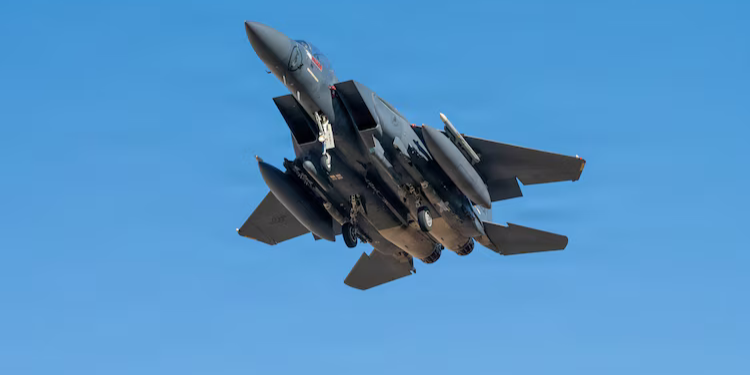
The State Department’s Bureau of Political-Military Affairs under the Foreign Military Sales program said the proposed package allows Israel to purchase 12,000 BLU-110A/B general-purpose 1,000-pound bomb bodies.
Valued at $151.8 million, the sale also includes additional logistical and technical support for Israel.
“The following non-major defense equipment items will also be included: U.S. Government and contractor engineering, logistics, and technical support services; and other related elements of logistics and program support,” the State Department said in its announcement.
Part of the bomb supply will come directly from existing U.S. stockpiles. The principal contractor involved in the sale is Repkon USA, based in Garland, Texas.
Congressional review of the emergency Israel bomb package waived
U.S. officials said the sale was approved under emergency authorities, allowing it to bypass the normal congressional review process.
Secretary of State Marco Rubio determined that the emergency transfer was necessary for U.S. national security interests.
Under Section 36(b) of the Arms Export Control Act, Congress typically reviews foreign military sales before they are finalized. However, the law allows that requirement to be waived when urgent national security concerns are cited.
“The Secretary of State has determined and provided detailed justification that an emergency exists that requires the immediate sale to the Government of Israel of the above defense articles and defense services is in the national security interests of the United States, thereby waiving the Congressional review requirements under Section 36(b) of the Arms Export Control Act, as amended.”
The arms deal come as the Israel Defense Forces (IDF) on Saturday announced that it had launched an additional wave of strikes targeting what it described as infrastructure belonging to the Iranian government in Tehran.
Also Read: Friction Rises as Netanyahu Hints That Trump Is Holding Secret Talks with Iran
According to the military, the attacks targeted facilities connected to the Islamic Revolutionary Guard Corps as well as command centers used by the militant group Hezbollah.
Israeli forces also reported carrying out strikes in Beirut, Lebanon, including in the Dahiyeh district of the city. The military said the operation targeted an air force command center belonging to the IRGC along with three additional operational facilities.
Explosions reported in Iran
Iranian media reported explosions near one of the capital’s major airports during the latest round of attacks. According to the semi-official Tasnim News Agency, the area surrounding Mehrabad Airport in Tehran was struck overnight.
A video shared by the outlet showed large fires burning in the distance, with thick black smoke rising into the sky, as explosions were heard.
The reports indicated multiple blasts occurred around the airport area, though details on casualties or damage were not immediately confirmed.
Speaking to reporters at the White House during a Saving College Sports roundtable, U.S. President Donald Trump spoke in the context of ongoing U.S. and Israeli military operations against Iran, addressing recent developments and providing his assessment of the campaign’s progress.
Trump said the campaign had been highly successful so far. “Somebody said, ‘How would you score it from zero to 10? I said, I’d give it a 12 to a 15,” the president said.

He added that Iran’s military infrastructure had suffered major losses.
“Their navy, army, air force, communication systems, and leaders are gone.”
The president also referenced earlier U.S. operations involving B-2 bombers targeting Iran’s nuclear capabilities. Trump had earlier rejected the idea of negotiations for now, stating that the only acceptable outcome is Iran’s “unconditional surrender” in a statement on Friday.
“There will be no deal with Iran except unconditional surrender,” he said.
A report by Fox News has also claimed that President Trump has privately expressed a serious interest in deploying U.S. troops on the ground inside Iran, citing two U.S. officials.
Third U.S. carrier preparing to deploy
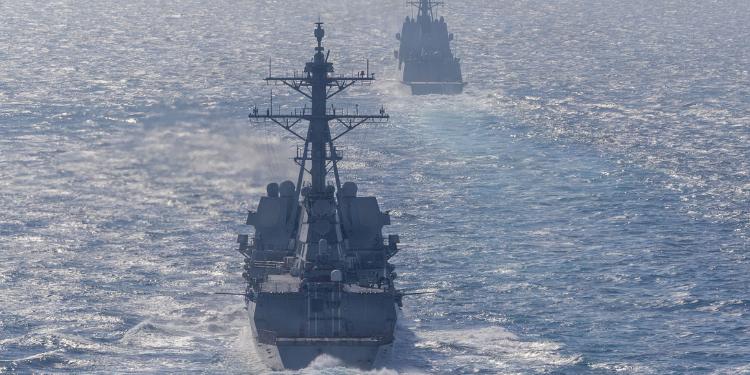
As the conflict continues, the United States is expanding its naval presence in the region, with Fox News reporting that the Pentagon is preparing to deploy a third aircraft carrier strike group to the Middle East.
A third aircraft carrier strike group centered around the USS George H.W. Bush (CVN-77) is preparing to deploy toward the Middle East after completing its final certification exercises.
The carrier this month concluded a major training event, the Composite Unit Training Exercise, which prepares carrier strike groups for operational deployment.
Also read: U.S. Navy Aircraft Carrier Arrives in Israel Amid Rising Regional Tensions
During the 28-day exercise, Carrier Air Wing 7 conducted 1,586 sorties, including hundreds of days and night carrier landings. Carrier commander Capt. Robert Bibeau said the strike group is now ready to deploy if needed.
“Our job is to ensure that when they need us — whether for air superiority, strike, electronic warfare, or presence — we are ready to deliver immediately and without hesitation,” Bibeau said.
U.S. Carriers already in the region
Two American aircraft carrier strike groups are already operating in the waters surrounding the Middle East. The Navy’s newest carrier, USS Gerald R. Ford (CVN-78), recently entered the Red Sea after transiting the Suez Canal.
Another carrier, USS Abraham Lincoln (CVN-72), is currently operating in the Arabian Sea. The United States has also increased its military coordination with allies during the crisis.
The government of the United Kingdom has allowed American forces to use British bases to launch defensive strikes against Iranian missile infrastructure.
British Prime Minister Keir Starmer said the UK would not participate in offensive operations but would allow U.S. forces to operate from its facilities for defensive purposes.
Follow our WhatsApp Channel and X Account for real-time news updates.