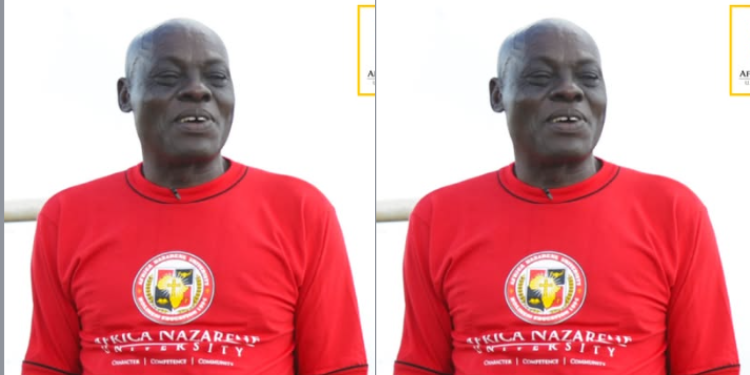
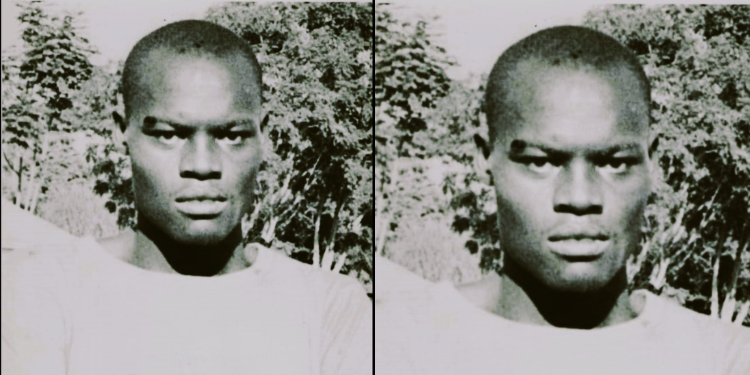
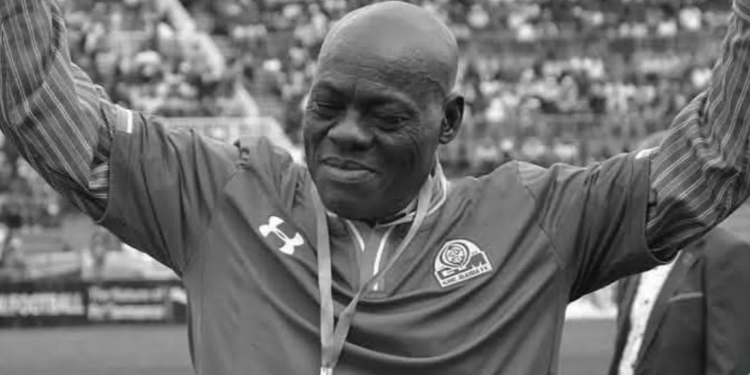
Allan Thigo is a Kenyan football legend who played for Harambee Stars and Gor Mahia F.C. and is regarded as one of the most influential midfielders in the country’s football history.
Thigo has passed away at the age of 77 at his home in Bungoma County.
He is widely celebrated as one of the key figures included in Kenya’s football Hall of Fame, remembered for his leadership, consistency, and contribution to the early success of Kenyan football, including Kenya’s debut at AFCON in 1972.
Early life and Breakthrough at Gor Mahia
Allan Thigo was born in 1949 in Bungoma County during a period when the Kenyan football structure in the country was still developing. Details of his education and family remain limited in public records.
Also Read: FKF Woes Deepen as Tribunal Extends Orders Protecting Hussein Mohammed
Thigo’s football career began in 1971, when he moved from Kisumu Hotstars to Gor Mahia.
From his early days at Gor Mahia, he quickly established himself as a dominant central midfielder, known for his control of the game, vision, and physical endurance.
His performances earned him a place in the national team, and he was part of the historic Kenyan squad that qualified for its first-ever Africa Cup of Nations in 1972, held in Cameroon.
Thigo featured in all three-group stage matches as Kenya made its continental debut.
As a composed and intelligent midfielder, Thigo made the number eight role his own and wore the iconic No.13 shirt, which later became synonymous with his identity.
His unmatched stamina and consistency earned him the nickname ‘The Ninety Minutes Man,‘ since he was rarely substituted during matches because of his energy.
Allan Thigo’s Achievements and football Career
At club level, Thigo played a remarkable 12-seasons with Gor Mahia between 1970 and 1981, during which he scored 88 goals.
In 1975, he served as vice-captain under Johnathan Niva and played a key role in helping Kenya win the inaugural East and Central Africa Challenge Cup in Zambia.
In 1976, as player-coach, he guided Gor Mahia to an unbeaten league title, one of the most celebrated achievements in the club’s history.
He later repeated his influence in 1979, when Gor Mahia secured another league title and advanced to the final of the Africa Cup Winners’ Cup.
Thigo again served as player-coach, leading the team through a historic continental campaign where they lost 8-0 to Cameroon’s Canon Yaoundé in the final.
Despite the defeat by Cameroon, his role in guiding the team to the continental stage without formal coaching training highlighted his tactical intelligence and leadership at a young age of 29.
Also Read: High Court Blocks Removal of FKF Boss Hussein Mohammed
Transition, Identity and Lasting Influence
Following his retirement from active football in 1982, Thigo transitioned into coaching.
He maintained a long-standing connection with Gor Mahia, returning for a second coaching stint in 2008.
Beyond his official roles, Thigo was widely known for his charisma and influence within Kenyan football circles.
He is also named in the Kenyan Footballers Wall of Fame platers together with other players like Joe kadenge
Among Gor Mahia supporters, he earned several memorable nicknames including The Mayor of Miwani,’ Akira Wuon Oyugi, Okoth Dara Singh, and Alan Ball, a reference to the English 1966 World Cup-winning midfielder.