Monday, June 22, 2026
  • News
    • Latest News
    • Breaking News
    • Fact Check
    • Investigations
    • Explainers
  • Politics
    • Global Politics
    • Elections
    • Government & Policy
    • Diplomacy
    • Conflicts & Security
    • Political Analysis
  • Business
    • Global Economy
    • Markets
    • Technology
    • Startups
    • Energy
    • Finance
  • World News
    • Americas
    • Asia
    • Asia Pacific
    • Africa
    • Europe
    • Middle East
  • Africa
    • Central Africa
    • East Africa
    • West Africa
    • Southern Africa
  • Health
    • Global Health
    • Public Health
    • Health Policy
    • Medical Research
    • Diseases & Conditions
    • Mental Health
    • Nutrition
    • Climate & Health
    • Health Explainers
  • Sports
    • World Cup 2026
    • Athletics
    • Basketball
    • Boxing
    • Cricket
    • Football
    • Formula 1
    • Golf
    • Rugby
  • Weather
    • Climate Business
    • Climate Change
    • Climate Solutions
    • Living Green
  • Culture
    • Arts
    • Film & TV
    • Food
    • Music
    • Lifestyle
    • Travel
  • Opinion
    • Editorials
    • Letters
  • Behind The Brand
REGISTER
LOGIN
No Result
View All Result
The Kenya Times
  • News
    • Latest News
    • Breaking News
    • Fact Check
    • Investigations
    • Explainers
  • Politics
    • Global Politics
    • Elections
    • Government & Policy
    • Diplomacy
    • Conflicts & Security
    • Political Analysis
  • Business
    • Global Economy
    • Markets
    • Technology
    • Startups
    • Energy
    • Finance
  • World News
    • Americas
    • Asia
    • Asia Pacific
    • Africa
    • Europe
    • Middle East
  • Africa
    • Central Africa
    • East Africa
    • West Africa
    • Southern Africa
  • Health
    • Global Health
    • Public Health
    • Health Policy
    • Medical Research
    • Diseases & Conditions
    • Mental Health
    • Nutrition
    • Climate & Health
    • Health Explainers
  • Sports
    • World Cup 2026
    • Athletics
    • Basketball
    • Boxing
    • Cricket
    • Football
    • Formula 1
    • Golf
    • Rugby
  • Weather
    • Climate Business
    • Climate Change
    • Climate Solutions
    • Living Green
  • Culture
    • Arts
    • Film & TV
    • Food
    • Music
    • Lifestyle
    • Travel
  • Opinion
    • Editorials
    • Letters
  • Behind The Brand
  • News
    • Latest News
    • Breaking News
    • Fact Check
    • Investigations
    • Explainers
  • Politics
    • Global Politics
    • Elections
    • Government & Policy
    • Diplomacy
    • Conflicts & Security
    • Political Analysis
  • Business
    • Global Economy
    • Markets
    • Technology
    • Startups
    • Energy
    • Finance
  • World News
    • Americas
    • Asia
    • Asia Pacific
    • Africa
    • Europe
    • Middle East
  • Africa
    • Central Africa
    • East Africa
    • West Africa
    • Southern Africa
  • Health
    • Global Health
    • Public Health
    • Health Policy
    • Medical Research
    • Diseases & Conditions
    • Mental Health
    • Nutrition
    • Climate & Health
    • Health Explainers
  • Sports
    • World Cup 2026
    • Athletics
    • Basketball
    • Boxing
    • Cricket
    • Football
    • Formula 1
    • Golf
    • Rugby
  • Weather
    • Climate Business
    • Climate Change
    • Climate Solutions
    • Living Green
  • Culture
    • Arts
    • Film & TV
    • Food
    • Music
    • Lifestyle
    • Travel
  • Opinion
    • Editorials
    • Letters
  • Behind The Brand
No Result
View All Result
The Kenya Times ~ Trending, Breaking News and Videos
No Result
View All Result
ADVERTISEMENT

Is UN Too Old, Remote, Isolated and Out of Touch with the Reality of Our World?

Peter OngerabyPeter Ongera
May 27, 2024
Reading Time: 8 mins read
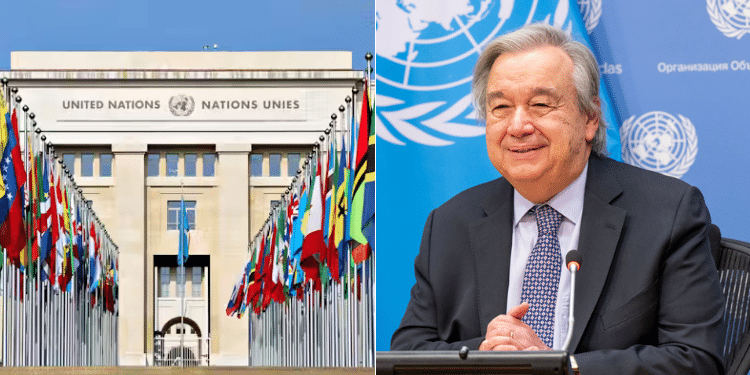
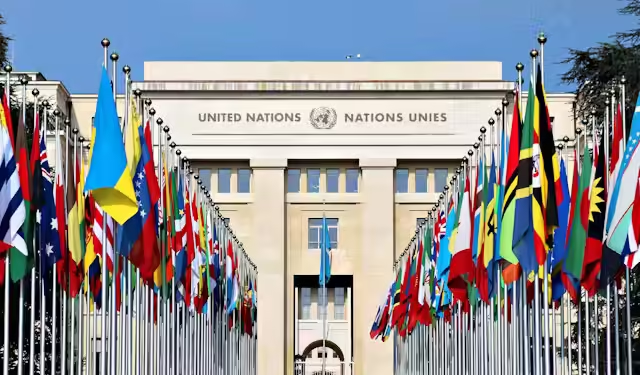
Un Headquarters In Geneva And Un Secretary General António Guterres. Photo/Courtesy

UN Headquarters in Geneva and UN Secretary General

FacebookTwitterLinkedInRedditWhatsApp
Advertisement

Today, the World stands where Europe was in 1945. The United Nations (UN) finds itself in the middle of grim and disruptive wars in Ukraine and Gaza amidst ravaging effects of climate change.

The post-World War II period started with the creation of the United Nations Organization aiming at promoting global peace, security, and cooperation.

The UN promotes norms and values of its founder country, the United States of America (USA) such as economic liberalism in the form of relatively free trade and open markets; political liberalism in the form of representative government and human rights; and other liberal concepts, such as nonaggression, self-determination, and the peaceful settlement of disputes anchored on the U.S.A.

UN Charter 

Members agree with the UN Charter on the maintenance of international peace and security; equal rights and self-determination of a people; international cooperation and solving international problems; and serving as a center for harmonizing the actions of nations in attaining common ends (Article 1; UN Charter).

Now the UN is increasingly being ignored, challenged, and shunted aside as new international organizations such as the G20 emerge in an increasingly multipolar world.

Organizations such as the BRICS (Brazil, Russia, India, China, and South Africa) are poised to become the world’s principal engine of new demand and spending power.

ADVERTISEMENT

The BRICS economies oppose a US-dominated order that is propped up by the Dollar and global governance institutions formed after the Second World War. The expansion in BRICS membership and the quest to decouple from the U.S.A dollar through growing trade in national currencies symbolizes a shift in the global landscape.
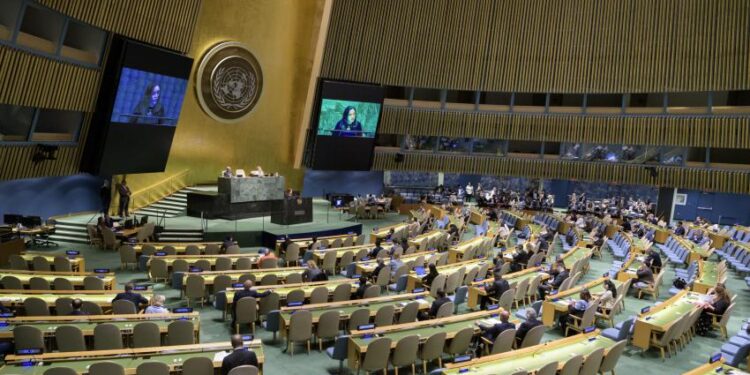
Un
United Nations General Assembly. Photo/UN

Voting Powers

The five BRICS nations have a combined gross domestic product (GDP) larger than that of the G7 in purchasing power parity terms and are nominally responsible for 26 percent of the global GDP. Despite this, they get only 15 percent of the voting power at the International Monetary Fund

But former Kenyan Prime Minister and opposition leader once in 2020 opined; “the World has no alternative to the United Nations and its support bodies like the World Bank, the International Monetary Fund and the World Health Organization; and to ideals like international security, free markets and democracy”.

Outdated Setup

The UN has offices in Kenya for the United Nations Environment Programme ,the United Nations Centre for Human Settlements, now known as UN-HABITAT and 23 UN agencies operating from Nairobi.

Over the past few weeks, Nairobi has played host to two events critical to the United Nations (UN) but did not get much media and public attention. From climate change to poverty, they are global in nature, and the UN fails to deal with them due to its undemocratic, exclusive, and outdated setup.

On May 5, Colombe Cahen-Salvador, Atlas Movements’ UN Secretary General candidate led 100 participants of a workshop through key areas where the UN could play a better role in their lives, from fighting deadly flooding to ensuring more equitable access to financing.

ADVERTISEMENT

Several participants described the UN as an institution that must be dismantled, serving solely the interest of the US and a few countries and rarely achieving its purpose.


Also Read: China, Russia Gang Up to Counter US Dominance in Africa


Others explained that it is too distant from the people defining this situation as “un-United Nations”. Grievances were also discussed around the unequal treatment of people coming from different member states: for example, one person mentioned how difficult is for someone from Kenya to receive a visa from most Western countries, while it’s almost a given the other way around.

Several specific policy solutions were also aired during the conversation, with Colombe mentioning the need to create a global truth and reconciliation commission to address colonial crimes. Once more, the debate turned around the difficulties of implementing such programs when the most influential nations were not interested in addressing their torts.

On April 28 the Inter Region Economic Network (IREN) held a media forum where thought leaders discussed papers for on the future of global unity and development.
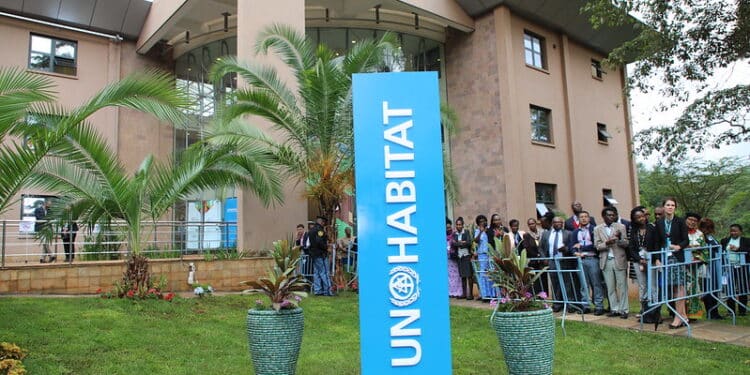
Un-Habitat. Photo/Courtesy
UN-Habitat. Photo/Courtesy
Poised for change

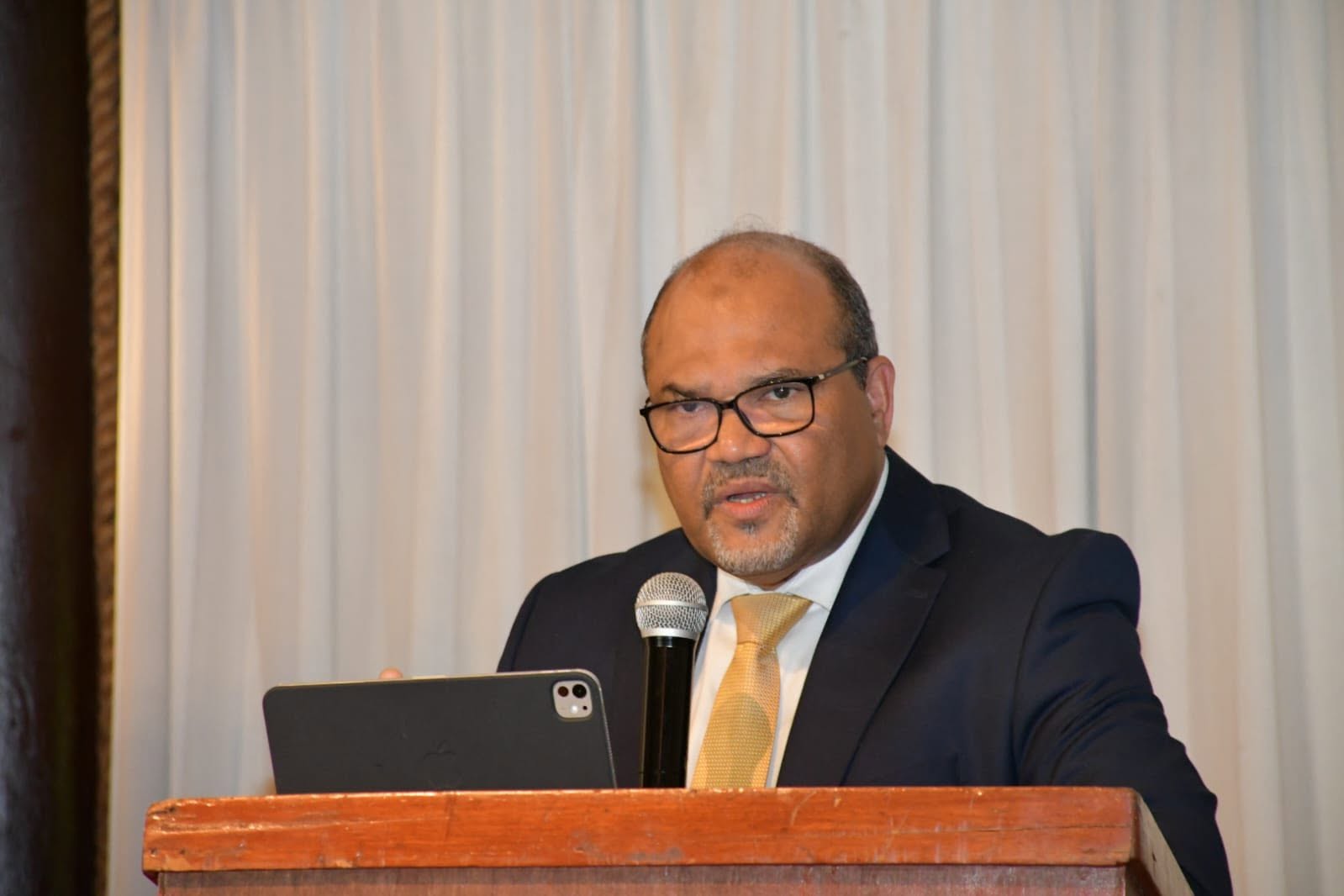
According to the Director, African Centre for the Study of the United States, University of the Witwatersrand in South Africa Dr. Bob Wekesa September 2024 will be a momentous time for the world as the global governing body, the United Nations (UN), is poised to change if not substantially, at least appreciably.

“With the anticipated changes in the UN, global governance will equally change, and with it, we shall likely begin to view the world in a manner substantially different from that we do today”,noted Dr Wekesa

Even if the current UN reform does not reach the threshold of catalytic reforms, the buzz already created around the UN and global governance will remain on the global agenda for the foreseeable future.

Disrupt the USA

Prof. Macharia Munene of United States International University-Africa and Mr. James Shikwati Founder Director Inter Region Network Kenya agree that Artificial Intelligence (AI) technologies, shifting geopolitical landscape, rising nationalism, and erosion of trust in international institutions are likely to reshape global governance mechanisms.

They say, “the rise of both state and non-state consequential powers with the capability to project their national interests globally are likely to disrupt the United States of America-led international order.

The stimulation of new multilateral agencies and institutions keen to redistribute power, and decision-making processes is likely to redefine the United Nations systems”.

Dr Wekesa’s discussion paper laid out a brief history of the reform process commonly referred to as the Summit of the Future. The expected shift in the UN architecture follows many years of calls for the reform of the United Nations in the face of mounting global challenges, not least the geopolitical battle for a more equitable representation by all countries.

Responding to the increasing calls for equity in representation as well as addressing various planetary issues, the UN Secretary-General, Antonio Guterres, launched a “Global Conversation” in early 2020 amidst the COVID-19 pandemic.

It is the time, the third African Sovereign Wealth and Pension Fund Leaders Forum Covid-19 Roundtable agreed to redouble efforts to facilitate infrastructure co-investment partnerships with African governments and development finance partners.

The group has its focus on industrial infrastructure related to the African Continental Free Trade Agreement, as well as healthcare and agriculture sectors.

In September 2020, world leaders attending that year’s UN General Assembly made the consequential “Declaration on the Commemoration of the Seventy-fifth Anniversary of the United Nations.”

As the declaration noted, the world had changed manifold since the establishment of the UN, more than seven decades ago. Yet, the UN had lagged behind these changes therefore being mismatched with the realities of the twenty-first century.

Calls for the reform of the Security Council have been given lip service, while the peace and security architecture was fraying at the seams as underlined by the Russia-Ukraine war and eventually, the Israel-Palestine war.
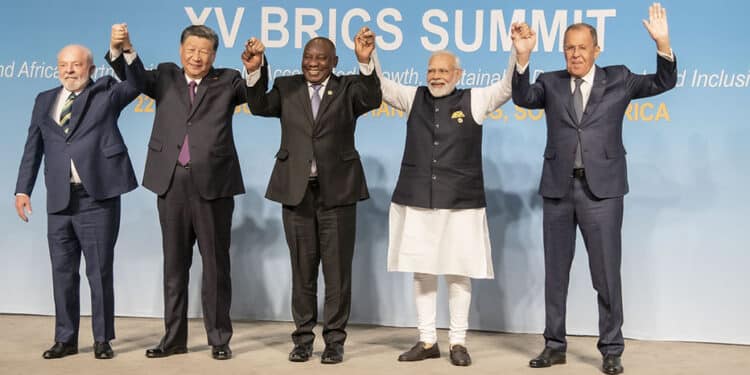
Un
Heads of state under BRICS. Photo/Courtesy
Upgrade the UN

This called for an “upgrade of the United Nations”. The declaration noted the 2015 “Addis Ababa Action Agenda on Financing for Development was key to the implementation of the 2030 Agenda”, which had fallen short in implementation.

This had impeded the achievement of the UN Agenda 2030 on sustainable development with the deadline for achieving the seventeen goals fast approaching.

The international landscape is undergoing structural shifts partly due to technology such as advances in Artificial Intelligence(AI)and geopolitical dynamics.

As a result, there is loss of legitimacy in the current institutions of governance, the UN systems and Bretton Woods institutions appear incapable of solving global challenges have put multilateralism in crisis.

“Major geopolitical rivals, namely U.S.A, China and Russia have put Artificial Intelligence at the center of their national strategies”, assert Prof. Macharia and Mr Shikwati noting the disparities between developed and developing countries in terms of conditions, possibilities, and capacities to produce new scientific and technological knowledge and to generate innovation.

Political observers have for decades believed that liberal democracy offered the only plausible future pathways for big, industrially sophisticated countries to make their citizens rich.

By allowing governments to monitor, understand, and control their citizens far more effectively than ever before, AI offers a way for big, economically advanced countries to make their citizens rich while maintaining control over them—the first since the end of the Cold War.


Also Read: Kenya Selected for United Nations Global Role


Huge gap

A huge gap exists between developed and developing countries when it comes to AI development and deployment which if not closed will lead to further inequalities between the Global North and Global South.

They say, “AI is a power multiplier, enabling the management, processing, and application of vast amounts of information. A country or government that can effectively use, manage, and control AI will possess the power to rule and govern the world”.

Human rights

However, from Mauritania Dr. Brahim Khlil, an independent researcher with a focus on Sustainable Development and Industrial Innovation is convinced that the intricate web of today’s world, where power no longer resides solely in the hands of a few but is shared across multiple global entities, the United Nations (UN) shines as a beacon of collective action and diplomacy “knitting together peace, development, and human rights efforts, especially within the vibrant continent of Africa”.

UN solidifies its position as an essential force for global peace and development. This strategic focus and dedicated support from the UN are crucial for tackling the global challenges of an interlinked world.
Tags: BRICSRussia - Ukraine warUN
Peter Ongera

Peter Ongera

Peter Ongera is an award-winning investigative journalist whose fearless reporting has exposed corruption, human rights violations, and illicit financial flows across Kenya and the African continent. With over a decade of experience, Peter has become a trusted voice on issues of governance, electoral integrity, and democratic accountability. His deeply researched stories have been featured by respected platforms including the Thomson Reuters Foundation, Internews, Africa Check, Lida Network, Hivos, and Context. Trained in digital forensics, open-source intelligence (OSINT), and fact-checking, Peter combines cutting-edge verification techniques with a passion for evidence-based storytelling. He has also mentored emerging journalists across the globe, equipping them to hold power to account. Through his work, Peter champions a journalism that not only informs but drives systemic reform; empowering communities to demand transparency, justice, and lasting change. You can reach him at [email protected].

Related Posts

Throughout Generations, Fathers Have Taken On The Role Of Teachers, Some Of Them Teaching Us How To Ride A Bicycle, Overcoming Obstacles, Or How To Navigate Life'S Challenges.

Opinion | What Fatherhood Teaches Us About Real Security

June 22, 2026
Ai Is Rewriting History In Every Sector Of The Economy. Africa’s Ai Future Depends On Energy Sovereignty — Not Just Renewables

Africa’s AI Future Depends on Energy Sovereignty — Not Just Renewables

June 22, 2026
How The Middle East War Has Affected Global Banking And Rates For Kenya

How Kenya’s Banks Are Preparing for Interest Rate Changes and What It Means for You

June 19, 2026
G7 Summit Offers Africa Opportunity, But Kenya Risks Missing The Moment

G7 Summit Offers Africa Opportunity, But Kenya Risks Missing the Moment

June 18, 2026
ADVERTISEMENT

The Kenya Times Facebook

LATEST NEWS

  • Judge Who Stopped BBI: Justice Gatembu’s Bold Bid for President of the Court of Appeal
  • Opinion | What Fatherhood Teaches Us About Real Security
  • Water Bills Set to Rise as New Tariffs and Penalties Are Approved
  • Govt Declares Historic Mombasa Landmark New National Heritage Site
  • Africa’s AI Future Depends on Energy Sovereignty — Not Just Renewables
  • Waweru wa Nyambura Exits Royal Media After 10 Years in Emotional Farewell
  • New Twist as Ruth Odinga Exposes Firing of 700 Employees and Intrigues Behind School Raid
  • Several Injured After Explosion at Qatar’s Strategic Ras Laffan Gas Facility
  • Apple’s Incoming CEO John Ternus Faces Major Challenge to Restore Company’s Lost Design Identity
  • White House Deploys RFK Jr. Across Swing States to Rally Support Before Midterms
  • U.S.-Iran Negotiations Resume as JD Vance Meets Senior Iranian Officials
  • ‘He Failed Badly’ Trump Predicts Starmer Resignation Over Immigration and Energy
  • Gachau Reveals Liver Injury Following Vurugu 2 Defeat, Provides Health Update
  • Little-Known Details of Prisca Bett, the Mother of William Ruto’s Daughter Abby Cherop
  • SHA-Approved Hospitals and Clinics in Kajiado County [LIST]
ADVERTISEMENT

Company

About Us

Our Authors

Our Experts

Social Media

Policies

Privacy Policy

House Rules

Standards and Policies

Terms and Conditions

Subscription

My Account

Contact Us

Contact Us

Join Our Team

Advertise With Us

© Copyright 2026 | The Kenya Times | All Rights Reserved

Welcome Back!

Sign In with Facebook
Sign In with Google
Sign In with Linked In
OR

Login to your account below

Forgotten Password? Sign Up

Create New Account!

Sign Up with Facebook
Sign Up with Google
Sign Up with Linked In
OR

Fill the forms below to register

All fields are required. Log In

Retrieve your password

Please enter your username or email address to reset your password.

Log In
Your Privacy and Cookies
We use cookies on our website to give you the most relevant experience by remembering your preferences and repeat visits. By clicking “Accept”, you consent to the use of ALL the cookies.
Do not sell my personal information.
Cookie settingsACCEPT
Privacy & Cookies Policy

Privacy Overview

This website uses cookies to improve your experience while you navigate through the website. Out of these cookies, the cookies that are categorized as necessary are stored on your browser as they are essential for the working of basic functionalities of the website. We also use third-party cookies that help us analyze and understand how you use this website. These cookies will be stored in your browser only with your consent. You also have the option to opt-out of these cookies. But opting out of some of these cookies may have an effect on your browsing experience.
Necessary
Always Enabled
Necessary cookies are absolutely essential for the website to function properly. This category only includes cookies that ensures basic functionalities and security features of the website. These cookies do not store any personal information.
Functional
Functional cookies help to perform certain functionalities like sharing the content of the website on social media platforms, collect feedbacks, and other third-party features.
Performance
Performance cookies are used to understand and analyze the key performance indexes of the website which helps in delivering a better user experience for the visitors.
Analytics
Analytical cookies are used to understand how visitors interact with the website. These cookies help provide information on metrics the number of visitors, bounce rate, traffic source, etc.
Advertisement
Advertisement cookies are used to provide visitors with relevant ads and marketing campaigns. These cookies track visitors across websites and collect information to provide customized ads.
Others
Other uncategorized cookies are those that are being analyzed and have not been classified into a category as yet.
SAVE & ACCEPT
LOGIN | REGISTER
  • Login
  • Sign Up
  • Cart
No Result
View All Result
  • News
    • Latest News
    • Breaking News
    • Investigations
    • Explainers
    • Fact Check
  • Politics
    • Global Politics
    • Conflicts & Security
    • Elections
    • Diplomacy
    • Government & Policy
    • Political Analysis
  • Business
    • Global Economy
    • Markets
    • Technology
    • Startups
    • Energy
    • Finance
  • World News
    • Americas
    • Asia
    • Asia Pacific
    • Africa
    • Europe
    • Middle East
  • Africa
    • East Africa
    • West Africa
    • Southern Africa
    • Central Africa
  • Health
    • Global Health
    • Public Health
    • Health Policy
    • Medical Research
    • Diseases & Conditions
    • Mental Health
    • Nutrition
    • Climate & Health
    • Health Explainers
  • Sports
    • World Cup 2026
    • Athletics
    • Basketball
    • Boxing
    • Cricket
    • Football
    • Formula 1
    • Golf
    • Rugby
  • Weather
    • Climate Business
    • Climate Change
    • Climate Solutions
    • Living Green
  • Culture
    • Arts
    • Film & TV
    • Food
    • Lifestyle
    • Music
    • Travel
  • Opinion
    • Editorials
    • Letters
  • Behind The Brand
  • Contact Us

Not enough quota to unlock this post
Unlock left : 0
Are you sure want to cancel subscription?