Wednesday, June 3, 2026
  • News
    • Latest News
    • Breaking News
    • Fact Check
    • Investigations
    • Explainers
  • Politics
    • Global Politics
    • Elections
    • Government & Policy
    • Diplomacy
    • Conflicts & Security
    • Political Analysis
  • Business
    • Global Economy
    • Markets
    • Technology
    • Startups
    • Energy
    • Finance
  • World News
    • Americas
    • Asia
    • Asia Pacific
    • Africa
    • Europe
    • Middle East
  • Africa
    • Central Africa
    • East Africa
    • West Africa
    • Southern Africa
  • Health
    • Global Health
    • Public Health
    • Health Policy
    • Medical Research
    • Diseases & Conditions
    • Mental Health
    • Nutrition
    • Climate & Health
    • Health Explainers
  • Sports
    • Athletics
    • Basketball
    • Boxing
    • Cricket
    • Football
    • Formula 1
    • Golf
    • Rugby
  • Weather
    • Climate Business
    • Climate Change
    • Climate Solutions
    • Living Green
  • Culture
    • Arts
    • Film & TV
    • Food
    • Music
    • Lifestyle
    • Travel
  • Opinion
    • Editorials
    • Letters
  • Behind The Brand
REGISTER
LOGIN
No Result
View All Result
The Kenya Times
  • News
    • Latest News
    • Breaking News
    • Fact Check
    • Investigations
    • Explainers
  • Politics
    • Global Politics
    • Elections
    • Government & Policy
    • Diplomacy
    • Conflicts & Security
    • Political Analysis
  • Business
    • Global Economy
    • Markets
    • Technology
    • Startups
    • Energy
    • Finance
  • World News
    • Americas
    • Asia
    • Asia Pacific
    • Africa
    • Europe
    • Middle East
  • Africa
    • Central Africa
    • East Africa
    • West Africa
    • Southern Africa
  • Health
    • Global Health
    • Public Health
    • Health Policy
    • Medical Research
    • Diseases & Conditions
    • Mental Health
    • Nutrition
    • Climate & Health
    • Health Explainers
  • Sports
    • Athletics
    • Basketball
    • Boxing
    • Cricket
    • Football
    • Formula 1
    • Golf
    • Rugby
  • Weather
    • Climate Business
    • Climate Change
    • Climate Solutions
    • Living Green
  • Culture
    • Arts
    • Film & TV
    • Food
    • Music
    • Lifestyle
    • Travel
  • Opinion
    • Editorials
    • Letters
  • Behind The Brand
  • News
    • Latest News
    • Breaking News
    • Fact Check
    • Investigations
    • Explainers
  • Politics
    • Global Politics
    • Elections
    • Government & Policy
    • Diplomacy
    • Conflicts & Security
    • Political Analysis
  • Business
    • Global Economy
    • Markets
    • Technology
    • Startups
    • Energy
    • Finance
  • World News
    • Americas
    • Asia
    • Asia Pacific
    • Africa
    • Europe
    • Middle East
  • Africa
    • Central Africa
    • East Africa
    • West Africa
    • Southern Africa
  • Health
    • Global Health
    • Public Health
    • Health Policy
    • Medical Research
    • Diseases & Conditions
    • Mental Health
    • Nutrition
    • Climate & Health
    • Health Explainers
  • Sports
    • Athletics
    • Basketball
    • Boxing
    • Cricket
    • Football
    • Formula 1
    • Golf
    • Rugby
  • Weather
    • Climate Business
    • Climate Change
    • Climate Solutions
    • Living Green
  • Culture
    • Arts
    • Film & TV
    • Food
    • Music
    • Lifestyle
    • Travel
  • Opinion
    • Editorials
    • Letters
  • Behind The Brand
No Result
View All Result
The Kenya Times ~ Trending, Breaking News and Videos
No Result
View All Result
ADVERTISEMENT

Opinion | Can a Kenyan Economic Doctrine Become Africa’s Next Liberation?

Fred OgolabyFred Ogola
March 11, 2026
Reading Time: 7 mins read
East African Community (Eac) Health Ministers And Leaders Are Set To Meet To Discuss The Ebola Crisis Caused By The Bundibugyo Virus Strain.

President William Ruto with his Ugandan counterpart Yoweri Museveni during EAC Summit in Arusha, Tanzania. PHOTO/PCS.

FacebookTwitterLinkedInRedditWhatsApp
Advertisement

“In our country, development is not your birthright—it is a presidential favour.” This striking observation by Cabinet Secretary Opiyo Wandayi captures a painful reality in many African states: economic opportunity often depends less on systems and institutions than on political patronage. Citizens may protest, petition, or vote, yet meaningful development frequently hinges on the goodwill of those in power.

It is precisely this reality that inspired my work on Solomonic Economics and the broader EVOLVE doctrine. The doctrine draws intellectual inspiration from the social justice tradition articulated in Rerum Novarum, the landmark encyclical of Pope Leo XIII, which emphasized the dignity of labour, the moral responsibilities of capital, and the need for societies to ensure just economic participation.

These principles remain strikingly relevant today. Africa’s challenge is no longer simply political freedom—it is the construction of economic systems that protect human dignity while enabling broad-based prosperity.

Across the continent, a quiet but consequential question is gaining urgency: why has political independence not translated into true economic sovereignty?

More than six decades after the wave of independence movements swept Africa, many nations remain trapped in cycles of debt dependency, corruption leakages, weak institutions, and limited citizen participation in economic decision-making. While democratic gains have been real, the economic architecture underpinning many African states remains fragile.

This is why it is the for an honest continental conversation about what I call Africa’s Third Economic Liberation.

The first liberation was political independence from colonial rule.

The second liberation was the democratic wave of the 1990s, when multi-party politics returned to much of the continent.

Yet neither phase fundamentally transformed the systems through which economic power is organized and distributed.

Economic justice for Kenya 

The third liberation must therefore focus on economic justice, transparency, and citizen participation in the creation of national wealth. Development must be understood not merely as GDP growth but as freedom—freedom derived from access to the basic goods of life: food security, education, healthcare, and meaningful employment rooted in the dignity of work.

It is in this context that the EVOLVE doctrine emerges as a possible framework for Africa’s next chapter of development.

At its core lies Solomonic Economics—a justice-centred approach to economic governance that combines ethical public leadership with modern technological tools to reduce corruption, decentralise economic power, and empower citizens.

For decades, African states have largely operated within economic paradigms designed elsewhere: colonial extractive systems, Western market capitalism, or post-independence state socialism. Each framework has offered lessons, yet none has fully addressed the structural governance failures that continue to undermine development.

Solomonic Economics attempts to fill this gap by placing justice and accountability at the centre of economic design.

Today’s technological landscape offers tools that earlier generations of reformers could scarcely have imagined. Distributed ledger technologies such as blockchain, alongside innovations emerging from decentralised finance, enable the design of public finance systems in which transactions are transparent, traceable, and resistant to manipulation.

In practical terms, governments could implement digital public finance platforms that allow citizens to see how tax revenues are allocated and spent. Procurement contracts, development fund,s and welfare transfers could be recorded on open ledgers accessible to the public.

Such systems would not eliminate corruption entirely. However, they would dramatically narrow the space within which it thrives.

Inclusive radical transparency

The EVOLVE doctrine therefore proposes a radical transparency architecture for public finance—one that shifts governance from trust in political promises toward trust in open systems.

Equally critical is the question of citizen participation in economic decision-making.

Across Africa, national budgets are typically designed within ministries with limited direct input from the public. Yet development outcomes tend to be more sustainable when communities have a stake in how resources are allocated.

Digital governance platforms could enable citizens to participate directly in prioritising development investments in areas such as education, healthcare, water systems, food security, national identification systems and local infrastructure.

In parallel, new financial models could enable communities to collectively invest in productive assets—from agricultural processing facilities to renewable energy infrastructure—ensuring that citizens share in the economic value generated by development.

The EVOLVE vision is therefore not purely technological. It also draws from longstanding traditions of moral economic thinking. The social justice principles articulated by Pope Leo XIII emphasised the dignity of labour, the moral obligations of capital, and the responsibility of society to safeguard the poor.

In today’s digital economy, the convergence of ethical governance and technological transparency offers Africa a rare opportunity to redesign its institutions.

However, doctrines and theories alone do not transform societies. Ideas gain legitimacy only when tested in practice.

For EVOLVE to gain credibility, it must begin with practical economic prototypes.

Pilot programmes demonstrating transparent public finance systems, corruption-resistant procurement platforms, and citizen-driven budgeting could provide measurable evidence of what works. If even a single jurisdiction—such as a county government—were able to demonstrate meaningful reductions in financial leakages alongside improvements in service delivery, the implications would extend far beyond national borders.

Reform ideas often spread across Africa when tangible success stories emerge.

Need for intellectual infrastructure in Africa

To sustain such progress, Africa also requires a stronger intellectual infrastructure. An independent research institution dedicated to the study of Solomonic Economics could help develop policy frameworks, train public officials, and convene scholars and reformers from across the continent.

One proposal is the establishment of a Solomonic Institute of Advanced Studies within the planned Hekima University framework. Such an institution could collaborate with international partners, including development agencies and regional organizations, to explore how transparency-driven governance models might be adapted across diverse African contexts.

Ultimately, the objective is not to create another ideological label. Africa does not lack policy slogans. What the continent urgently needs are systems that align economic incentives with public accountability.

The EVOLVE doctrine, therefore, seeks to move the development conversation away from personalities and toward institutions—toward governance structures that make corruption harder to commit, development more participatory, and public resources more productive.

If Africa’s next development chapter is to succeed, it must be built on institutions that citizens trust and economic frameworks that distribute opportunity more broadly.

The Third Liberation will not emerge from rhetoric alone. It will come from the patient construction of transparent systems that allow citizens to see, influence, and benefit from the economies they sustain.

Africa’s future prosperity will depend less on discovering new resources than on designing better economic governance.

In that sense, the continent’s next liberation will not be fought on battlefields or in independence rallies. It will be achieved through the deliberate redesign of the institutions that govern economic life.

And that is the challenge this generation must now confront.
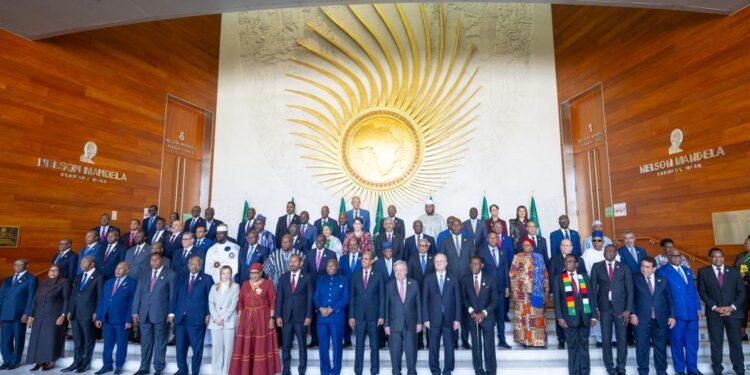
Questions As Whether The African Union Is Still Relevant And How Africa Would Look Like With Au
African Union 39th Ordinary Session concludes in Addis Ababa. PHOTO/AU.
Tags: Africa EconomyKenyaRuto
Fred Ogola

Fred Ogola

Prof. Fred Ogola is the LDP Presidential Aspirant in Kenya's 2027 elections. He is a Strategist, Economist, and Governance Expert at the IFC, World Bank, and the European Central Bank. Currently serving as the Deputy Vice Chancellor at Uzima University. He was the Academic Director for over 12 years at Strathmore Business School. He has developed over 413 Curriculums with Higher Education, published over 7 books, 317 scientific articles, and trained over 1 million C-Suit Executives in Kenya, Africa, and globally. He is the Founder and Convener of Africa Digital Assets. He can be reached at: [email protected]

Related Posts

Moe Has Vowed To Take Action Against Utumishi Girls School Principal Over School Fire That Killed 16 Learners.

Opinion | How Kenya Failed the Girls of Utumishi Academy

June 2, 2026
Is Kenya Losing Its Morals? Rising Deviant Behavior And Rampant Crime

Opinion | The Mother Who Hates Her Own Children: Kenya’s Moral Collapse

June 2, 2026
Treasury Invites Applications For Board Recruitment Across 39 State-Owned Enterprises

Opinion | How New Taxes on Bank Card Transactions Charges Will Raise the Costs for Ordinary Kenyans if Adopted by Parliament

June 1, 2026
The Kenya National Examinations Council (Knec) Has Announced The Dates For The 2026/2027 Business And Technical Examination.

Opinion | AI Mistakes That Could Destroy Kenya’s Future — Global Lessons Every Leader, Business and Citizen Must See Now

May 31, 2026
ADVERTISEMENT

The Kenya Times Facebook

LATEST ARTICLES

  • Shocking Revelations from Lenana School: Prefect Exposes How Students Sabotaged CCTV Before Forced Closure
  • UK Updates Travel Notice for Japan – What Visitors Need to Know
  • ‘She Is Murdering 60 Minutes’: Scott Pelley Fired by CBS After Explosive Clash With Bari Weiss
  • Pray for Our Troops: Greene Urges Trump to End ‘Pointless War’ as Iran Targets U.S. Troops
  • Explosions on Iran’s Strategic Island, Sirens in Bahrain, Missiles Over Kuwait – Is the Ceasefire Collapsing?
  • Did Harambee Stars Reject Hotel in South Africa Ahead of Lesotho Friendlies?
  • Botswana Tanker Blasted as U.S. Fires Hellfire Into Empty Ship Heading to Iran’s Kharg Island
  • Trump’s DOJ Scraps $1.776B Anti-weaponization Fund
  • CBS News Pays $2.5 Million to Inexperienced Producer to Lead 60 Minutes
  • Neto Agostinho Profile: Educational Background, Career, Political Journey and Net Worth
  • Trump Admin Says There Are Many Places to Send Americans After Kenya Blocks Ebola Facility
  • Jill Biden Reveals What “Could Have Killed” Biden While He Was in Office
  • Trump Admits: ‘No One Knows Where the Iran Conversations Lead’
  • Trump AG Todd Blanche Says Trump Would Have Gone to Prison if He Lost 2024 Election
  • Raila Odinga Junior Unveils His Late Father’s Restored Hummer
ADVERTISEMENT

Company

About Us

Our Authors

Our Experts

Social Media

Policies

Privacy Policy

House Rules

Standards and Policies

Terms and Conditions

Subscription

My Account

Contact Us

Contact Us

Join Our Team

Advertise With Us

© Copyright 2026 | The Kenya Times | All Rights Reserved

Welcome Back!

Sign In with Facebook
Sign In with Google
Sign In with Linked In
OR

Login to your account below

Forgotten Password? Sign Up

Create New Account!

Sign Up with Facebook
Sign Up with Google
Sign Up with Linked In
OR

Fill the forms below to register

All fields are required. Log In

Retrieve your password

Please enter your username or email address to reset your password.

Log In
Your Privacy and Cookies
We use cookies on our website to give you the most relevant experience by remembering your preferences and repeat visits. By clicking “Accept”, you consent to the use of ALL the cookies.
Do not sell my personal information.
Cookie settingsACCEPT
Privacy & Cookies Policy

Privacy Overview

This website uses cookies to improve your experience while you navigate through the website. Out of these cookies, the cookies that are categorized as necessary are stored on your browser as they are essential for the working of basic functionalities of the website. We also use third-party cookies that help us analyze and understand how you use this website. These cookies will be stored in your browser only with your consent. You also have the option to opt-out of these cookies. But opting out of some of these cookies may have an effect on your browsing experience.
Necessary
Always Enabled
Necessary cookies are absolutely essential for the website to function properly. This category only includes cookies that ensures basic functionalities and security features of the website. These cookies do not store any personal information.
Functional
Functional cookies help to perform certain functionalities like sharing the content of the website on social media platforms, collect feedbacks, and other third-party features.
Performance
Performance cookies are used to understand and analyze the key performance indexes of the website which helps in delivering a better user experience for the visitors.
Analytics
Analytical cookies are used to understand how visitors interact with the website. These cookies help provide information on metrics the number of visitors, bounce rate, traffic source, etc.
Advertisement
Advertisement cookies are used to provide visitors with relevant ads and marketing campaigns. These cookies track visitors across websites and collect information to provide customized ads.
Others
Other uncategorized cookies are those that are being analyzed and have not been classified into a category as yet.
SAVE & ACCEPT
LOGIN | REGISTER
  • Login
  • Sign Up
  • Cart
No Result
View All Result
  • News
    • Latest News
    • Breaking News
    • Investigations
    • Explainers
    • Fact Check
  • Politics
    • Global Politics
    • Conflicts & Security
    • Elections
    • Diplomacy
    • Government & Policy
    • Political Analysis
  • Business
    • Global Economy
    • Markets
    • Technology
    • Startups
    • Energy
    • Finance
  • World News
    • Americas
    • Asia
    • Asia Pacific
    • Africa
    • Europe
    • Middle East
  • Africa
    • East Africa
    • West Africa
    • Southern Africa
    • Central Africa
  • Health
    • Global Health
    • Public Health
    • Health Policy
    • Medical Research
    • Diseases & Conditions
    • Mental Health
    • Nutrition
    • Climate & Health
    • Health Explainers
  • Sports
    • Athletics
    • Basketball
    • Boxing
    • Cricket
    • Football
    • Formula 1
    • Golf
    • Rugby
  • Weather
    • Climate Business
    • Climate Change
    • Climate Solutions
    • Living Green
  • Culture
    • Arts
    • Film & TV
    • Food
    • Lifestyle
    • Music
    • Travel
  • Opinion
    • Editorials
    • Letters
  • Behind The Brand
  • Contact Us

Not enough quota to unlock this post
Unlock left : 0
Are you sure want to cancel subscription?