
Monday, June 1, 2026
  • News
    • Latest News
    • Breaking News
    • Fact Check
    • Investigations
    • Explainers
  • Politics
    • Global Politics
    • Elections
    • Government & Policy
    • Diplomacy
    • Conflicts & Security
    • Political Analysis
  • Business
    • Global Economy
    • Markets
    • Technology
    • Startups
    • Energy
    • Finance
  • World News
    • Americas
    • Asia
    • Asia Pacific
    • Africa
    • Europe
    • Middle East
  • Africa
    • Central Africa
    • East Africa
    • West Africa
    • Southern Africa
  • Health
    • Global Health
    • Public Health
    • Health Policy
    • Medical Research
    • Diseases & Conditions
    • Mental Health
    • Nutrition
    • Climate & Health
    • Health Explainers
  • Sports
    • Athletics
    • Basketball
    • Boxing
    • Cricket
    • Football
    • Formula 1
    • Golf
    • Rugby
  • Weather
    • Climate Business
    • Climate Change
    • Climate Solutions
    • Living Green
  • Culture
    • Arts
    • Film & TV
    • Food
    • Music
    • Lifestyle
    • Travel
  • Opinion
    • Editorials
    • Letters
  • Behind The Brand
REGISTER
LOGIN
No Result
View All Result
The Kenya Times
  • News
    • Latest News
    • Breaking News
    • Fact Check
    • Investigations
    • Explainers
  • Politics
    • Global Politics
    • Elections
    • Government & Policy
    • Diplomacy
    • Conflicts & Security
    • Political Analysis
  • Business
    • Global Economy
    • Markets
    • Technology
    • Startups
    • Energy
    • Finance
  • World News
    • Americas
    • Asia
    • Asia Pacific
    • Africa
    • Europe
    • Middle East
  • Africa
    • Central Africa
    • East Africa
    • West Africa
    • Southern Africa
  • Health
    • Global Health
    • Public Health
    • Health Policy
    • Medical Research
    • Diseases & Conditions
    • Mental Health
    • Nutrition
    • Climate & Health
    • Health Explainers
  • Sports
    • Athletics
    • Basketball
    • Boxing
    • Cricket
    • Football
    • Formula 1
    • Golf
    • Rugby
  • Weather
    • Climate Business
    • Climate Change
    • Climate Solutions
    • Living Green
  • Culture
    • Arts
    • Film & TV
    • Food
    • Music
    • Lifestyle
    • Travel
  • Opinion
    • Editorials
    • Letters
  • Behind The Brand
  • News
    • Latest News
    • Breaking News
    • Fact Check
    • Investigations
    • Explainers
  • Politics
    • Global Politics
    • Elections
    • Government & Policy
    • Diplomacy
    • Conflicts & Security
    • Political Analysis
  • Business
    • Global Economy
    • Markets
    • Technology
    • Startups
    • Energy
    • Finance
  • World News
    • Americas
    • Asia
    • Asia Pacific
    • Africa
    • Europe
    • Middle East
  • Africa
    • Central Africa
    • East Africa
    • West Africa
    • Southern Africa
  • Health
    • Global Health
    • Public Health
    • Health Policy
    • Medical Research
    • Diseases & Conditions
    • Mental Health
    • Nutrition
    • Climate & Health
    • Health Explainers
  • Sports
    • Athletics
    • Basketball
    • Boxing
    • Cricket
    • Football
    • Formula 1
    • Golf
    • Rugby
  • Weather
    • Climate Business
    • Climate Change
    • Climate Solutions
    • Living Green
  • Culture
    • Arts
    • Film & TV
    • Food
    • Music
    • Lifestyle
    • Travel
  • Opinion
    • Editorials
    • Letters
  • Behind The Brand
No Result
View All Result
The Kenya Times ~ Trending, Breaking News and Videos
No Result
View All Result
ADVERTISEMENT

Kenya’s Political Elites Switch Parties with Every Election – How this Fuels Violence

Gilbert M KhadiagalabyGilbert M Khadiagala
May 17, 2023
Reading Time: 7 mins read
FacebookTwitterLinkedInRedditWhatsApp
Advertisement

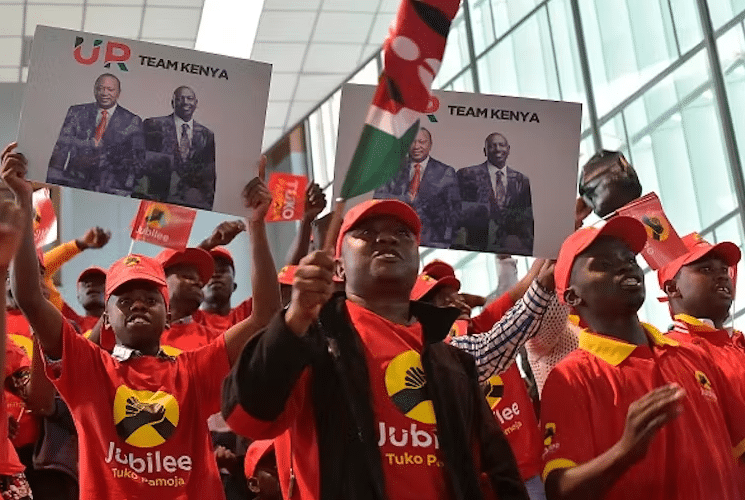
Barely seven months after leaving office, Kenya’s former president Uhuru Kenyatta is battling to keep together the party that won him a second term and a majority in parliament in 2017. His Jubilee Party performed dismally in the 2022 election. Only 25 out of 290 members of parliament, two out of 47 senators and one county governor out of 47 were elected on its ticket. This isn’t surprising in Kenya where political elites switch parties and coalitions with every election. No political party or coalition has ruled for more than one term since the opposition deposed the independence movement, KANU, in 2002. Gilbert Khadiagala, a political scientist who has researched the fluidity of Kenya’s political coalitions, explains the impact of this.

What is the background of Kenya’s fluid political landscape?

The onset of the multiparty era in the early 1990s brought a new phase of complex political coalitions and alliances. They were competing against the previously dominant political party, the Kenya African National Union (KANU). Typical of Africa’s post-colonial dominant parties, KANU governed for more than two decades through authoritarian methods. Under presidents Jomo Kenyatta (1963-1978) and Daniel Moi (1978-2002), KANU co-opted opposition figures into an elaborate system of patronage and coerced critics who didn’t toe the party line.

The coalitions that emerged were based primarily on ethnic and regional affiliations – they were overwhelmingly elite-based. The first was the Forum for the Restoration Democracy (FORD). However, barely a year into its existence, FORD broke into two major factions – FORD Kenya and FORD Asili – in August 1992. Further splits followed.


Also Read: Raila Odinga Accuses Foreign Missions in Kenya of Partisanship, Promises ‘Mother of All Demonstrations’ on Monday


The dominant coalitions that participated in the August 2022 elections – the Kenya Kwanza alliance (led by William Ruto) and the Azimio alliance (led by Raila Odinga) – comprise many smaller parties. They are products of previous failed attempts at alliance building.

ADVERTISEMENT

In 30 years of competitive politics, coalitions were expected to gradually stabilize into coherent political parties with national reach and resonance. Instead, political coalitions in Kenya have not advanced beyond their narrow bases. They remain fundamentally ethnic and regional machines that are frequently scrambled together on the eve of elections to win power.

I have studied Kenya’s politics for 30 years. It’s my view that Kenyan coalitions that rise and fall with every election do not provide the foundation for steady and enduring party systems. These coalitions postpone the evolution of national parties that would lend some predictability and stability to political competition.


Also Read: Political Parties Registrar Terms Ongoing Defections Illegal


Parties should broadly reflect – and manage – societal differences. In Germany, for instance, parties have come together to overcome certain historical differences by calling on shared interests. Germany’s coalition governments are largely based on well-established political parties, not conglomerations concocted before elections as in Kenya. And political parties negotiate these governing coalitions after elections, not before.

Throughout Africa, where ethnic and regional divisions are paramount, political mobilizations deepen societal differences. Electoral violence occurs because winning coalitions control all the national resources.

The winner-takes-all political systems of countries like Ghana, Kenya, Nigeria and Sierra Leone face a related problem: they have very small independent private sectors. So winners are tempted to use political power to grab national resources.

ADVERTISEMENT

What are the main weaknesses of fluid political coalitions?

They cause instability in the country. Unstable coalitions contribute to electoral violence as losing coalitions vent their grievances. Following the violent aftermath of the 2017 Kenyan elections, Odinga’s coalition at the time, the National Super Alliance (NASA), threatened to agitate for the secession of his support base from Kenya.


Also Read: Karua Says Greedy Politicians are Behind GMO Imports


In 2002, there was a brief phase of optimism for an enduring coalition. The National Rainbow Alliance (NARC), led by Mwai Kibaki, was a grouping of the leading ethnic groups ranged against Moi’s chosen successor, Kenyatta. But it ended in civil conflict in 2007-2008 after Kibaki marginalized key allies largely on ethnic and regional lines.

The Government of National Unity crafted by international actors in 2008 became an uneasy and unwieldy coalition. Its members decamped to new coalitions in the next elections.

Subsequent political alliances have reproduced the conditions for anxiety and chaos after every election. Despite the 2010 constitution giving more power to Kenya’s 47 counties, political elites remain fixated on winning presidential elections to gain power at the center.

The unstable coalitions also account for widespread corruption. Winning coalitions expend enormous resources to fortify their power. To do this they have to loot state resources.

What are the strengths of these loose coalitions?

In societies where ethnic groups coincide with regions, coalitions are one of the means of organizing competitive politics. The loose coalitions enable leaders who neither share policies nor vision to temporarily accommodate each other. This creates a semblance of national unity. The fluid coalitions are, therefore, essential in such political landscapes until national cohesion and coherence are achieved.

When the search for presidential power ceases to be politically relevant and salient, Kenya’s politics will be normalized. Transforming coalitions into solid parties may take time. But it’s the only way out of the prevailing political stalemate.

What adjustments should be made?

Kenyans do share basic bread-and-butter interests. When those interests are highlighted – instead of ethnic and regional affiliations – political parties with national outreach could emerge.

It’s elites who emphasize cultural and ethnic differences between regions. They have a large stake in the stalemate continuing, instead of building institutionalized parties. The puzzle for Kenya is how to transform ethnic diversities and identities into the foundations for predictable and organized politics.The Conversation

Gilbert M. Khadiagala, Jan Smuts Professor of International Relations and Director of the African Centre for the Study of the United States (ACSUS), University of the Witwatersrand

This article is republished from The Conversation under a Creative Commons license. Read the original article.

Tags: Daniel Arap MoiElectionsElectoral ViolenceEthnicityJomo KenyattaJubilee PartyKANUKenya DevolutionKenya ElectionsKenya PoliticsMultiparty DemocracyMwai KibakiPolitical CoalitionsUhuru KenyattaWilliam Ruto
Gilbert M Khadiagala

Gilbert M Khadiagala

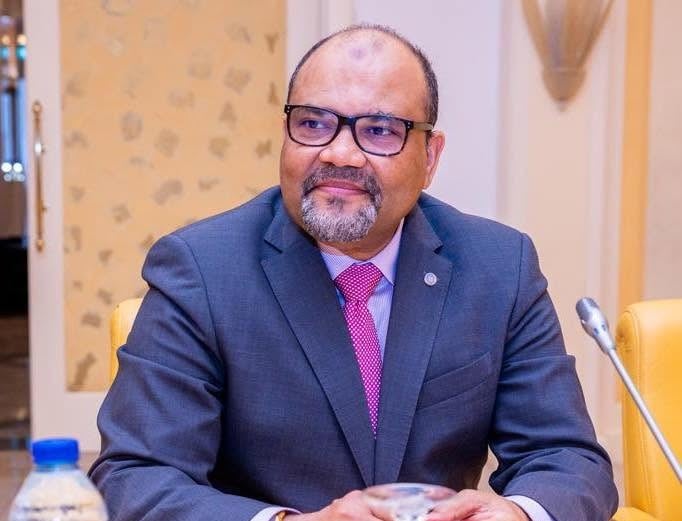
Professor Khadiagala trained as a political scientist in Kenya, Canada, and the United States. He specializes in African International Relations, Conflict Management and Resolution, African Regional and Sub-Regional Institutions, and Comparative Political Institutions. He has published on politics and security in Southern Africa, the Great Lakes Region, Eastern, and the Horn of Africa. In addition, he has written widely on mediation of African conflicts, Kenyan politics, and governance and leadership in Africa. He is currently conducting research on state formation in South Sudan. He hold a PhD from John Hopkins University.

Related Posts

Treasury Invites Applications For Board Recruitment Across 39 State-Owned Enterprises

Opinion | How New Taxes on Bank Card Transactions Charges Will Raise the Costs for Ordinary Kenyans if Adopted by Parliament

June 1, 2026
Artificial Intelligence Esther Muoria Is A Seasoned Manager And Phd Holder Appointed By President William Ruto As The Tvet Principal Secretary.

Opinion | AI Mistakes That Could Destroy Kenya’s Future — Global Lessons Every Leader, Business and Citizen Must See Now

May 31, 2026
Health Cs Aden Duale Denies Claims Sha Will Shut Down. Ebola Storm Rages On

Opinion | Kenya Should Think Before Rejecting the Laikipia Ebola Facility

May 31, 2026
Low Wages Squeeze Kenyans As As Computer Misuse And Cybercrimes Act Establishes Penalties For Unauthorized Access To Computer Systems, As Well The Legal Cybersecurity Practices.

Opinion | Why Wage Increases Won’t Fix What’s Broken in Kenya’s Economy

May 29, 2026
ADVERTISEMENT

The Kenya Times Facebook

LATEST ARTICLES

  • “I Couldn’t Care Less” Trump Responds After Iran Ends Talks With US
  • Jill Biden Reveals Regret Over Joe Biden’s 2024 Run in New Interview
  • Stars Abroad: Moses Shumah, Kenyan Striker Breaking Records in Zambia
  • Doctors Question Transparency of Trump’s Heart Test Results
  • Corazone Aquino: Kenyan Star Named After Philippines’ Former President
  • KMA Reveals How to Know Licensed Doctors After Deadly Kitale Surgery
  • Iran Ends All Negotiations With US, Vows to “Completely” Block the Strait of Hormuz
  • Wise vs Remitly vs Western Union: Best International Transfer in 2026
  • KDF Soldiers Take Charge as Protests Erupt in Nanyuki Over Ebola Quarantine Facility
  • End of an Era as Paris Lounge & Grill Rebrands, Kentwood Address Undergoes Renovation
  • Benny McCarthy Makes Changes to Harambee Stars Squad Days After Unveiling 24 Players
  • Ruto Delivers Weighty Apology During Madaraka Day Speech [FULL TEXT SPEECH]
  • Njeri Maina Explains Why President Ruto Can’t Be Impeached
  • Plane Crashes in Maasai Mara
  • How “And” Lost to “Or” in the Finance Bill 2026
ADVERTISEMENT

Company

About Us

Our Authors

Our Experts

Social Media

Policies

Privacy Policy

House Rules

Standards and Policies

Terms and Conditions

Subscription

My Account

Contact Us

Contact Us

Join Our Team

Advertise With Us

© Copyright 2026 | The Kenya Times | All Rights Reserved

Welcome Back!

Sign In with Facebook
Sign In with Google
Sign In with Linked In
OR

Login to your account below

Forgotten Password? Sign Up

Create New Account!

Sign Up with Facebook
Sign Up with Google
Sign Up with Linked In
OR

Fill the forms below to register

All fields are required. Log In

Retrieve your password

Please enter your username or email address to reset your password.

Log In
Your Privacy and Cookies
We use cookies on our website to give you the most relevant experience by remembering your preferences and repeat visits. By clicking “Accept”, you consent to the use of ALL the cookies.
Do not sell my personal information.
Cookie settingsACCEPT
Privacy & Cookies Policy

Privacy Overview

This website uses cookies to improve your experience while you navigate through the website. Out of these cookies, the cookies that are categorized as necessary are stored on your browser as they are essential for the working of basic functionalities of the website. We also use third-party cookies that help us analyze and understand how you use this website. These cookies will be stored in your browser only with your consent. You also have the option to opt-out of these cookies. But opting out of some of these cookies may have an effect on your browsing experience.
Necessary
Always Enabled
Necessary cookies are absolutely essential for the website to function properly. This category only includes cookies that ensures basic functionalities and security features of the website. These cookies do not store any personal information.
Functional
Functional cookies help to perform certain functionalities like sharing the content of the website on social media platforms, collect feedbacks, and other third-party features.
Performance
Performance cookies are used to understand and analyze the key performance indexes of the website which helps in delivering a better user experience for the visitors.
Analytics
Analytical cookies are used to understand how visitors interact with the website. These cookies help provide information on metrics the number of visitors, bounce rate, traffic source, etc.
Advertisement
Advertisement cookies are used to provide visitors with relevant ads and marketing campaigns. These cookies track visitors across websites and collect information to provide customized ads.
Others
Other uncategorized cookies are those that are being analyzed and have not been classified into a category as yet.
SAVE & ACCEPT
LOGIN | REGISTER
  • Login
  • Sign Up
  • Cart
No Result
View All Result
  • News
    • Latest News
    • Breaking News
    • Investigations
    • Explainers
    • Fact Check
  • Politics
    • Global Politics
    • Conflicts & Security
    • Elections
    • Diplomacy
    • Government & Policy
    • Political Analysis
  • Business
    • Global Economy
    • Markets
    • Technology
    • Startups
    • Energy
    • Finance
  • World News
    • Americas
    • Asia
    • Asia Pacific
    • Africa
    • Europe
    • Middle East
  • Africa
    • East Africa
    • West Africa
    • Southern Africa
    • Central Africa
  • Health
    • Global Health
    • Public Health
    • Health Policy
    • Medical Research
    • Diseases & Conditions
    • Mental Health
    • Nutrition
    • Climate & Health
    • Health Explainers
  • Sports
    • Athletics
    • Basketball
    • Boxing
    • Cricket
    • Football
    • Formula 1
    • Golf
    • Rugby
  • Weather
    • Climate Business
    • Climate Change
    • Climate Solutions
    • Living Green
  • Culture
    • Arts
    • Film & TV
    • Food
    • Lifestyle
    • Music
    • Travel
  • Opinion
    • Editorials
    • Letters
  • Behind The Brand
  • Contact Us

Not enough quota to unlock this post
Unlock left : 0
Are you sure want to cancel subscription?