Thursday, July 9, 2026
  • News
    • Latest News
    • Breaking News
    • Fact Check
    • Investigations
    • Explainers
  • Politics
    • Global Politics
    • Elections
    • Government & Policy
    • Diplomacy
    • Conflicts & Security
    • Political Analysis
  • Business
    • Global Economy
    • Markets
    • Technology
    • Startups
    • Energy
    • Finance
  • World News
    • Americas
    • Asia
    • Asia Pacific
    • Africa
    • Europe
    • Middle East
  • Africa
    • Central Africa
    • East Africa
    • West Africa
    • Southern Africa
  • Health
    • Global Health
    • Public Health
    • Health Policy
    • Medical Research
    • Diseases & Conditions
    • Mental Health
    • Nutrition
    • Climate & Health
    • Health Explainers
  • Sports
    • World Cup 2026
    • Athletics
    • Basketball
    • Boxing
    • Cricket
    • Football
    • Formula 1
    • Golf
    • Rugby
  • Weather
    • Climate Business
    • Climate Change
    • Climate Solutions
    • Living Green
  • Culture
    • Arts
    • Film & TV
    • Food
    • Music
    • Lifestyle
    • Travel
  • Opinion
    • Editorials
    • Letters
  • Behind The Brand
REGISTER
LOGIN
No Result
View All Result
The Kenya Times
  • News
    • Latest News
    • Breaking News
    • Fact Check
    • Investigations
    • Explainers
  • Politics
    • Global Politics
    • Elections
    • Government & Policy
    • Diplomacy
    • Conflicts & Security
    • Political Analysis
  • Business
    • Global Economy
    • Markets
    • Technology
    • Startups
    • Energy
    • Finance
  • World News
    • Americas
    • Asia
    • Asia Pacific
    • Africa
    • Europe
    • Middle East
  • Africa
    • Central Africa
    • East Africa
    • West Africa
    • Southern Africa
  • Health
    • Global Health
    • Public Health
    • Health Policy
    • Medical Research
    • Diseases & Conditions
    • Mental Health
    • Nutrition
    • Climate & Health
    • Health Explainers
  • Sports
    • World Cup 2026
    • Athletics
    • Basketball
    • Boxing
    • Cricket
    • Football
    • Formula 1
    • Golf
    • Rugby
  • Weather
    • Climate Business
    • Climate Change
    • Climate Solutions
    • Living Green
  • Culture
    • Arts
    • Film & TV
    • Food
    • Music
    • Lifestyle
    • Travel
  • Opinion
    • Editorials
    • Letters
  • Behind The Brand
  • News
    • Latest News
    • Breaking News
    • Fact Check
    • Investigations
    • Explainers
  • Politics
    • Global Politics
    • Elections
    • Government & Policy
    • Diplomacy
    • Conflicts & Security
    • Political Analysis
  • Business
    • Global Economy
    • Markets
    • Technology
    • Startups
    • Energy
    • Finance
  • World News
    • Americas
    • Asia
    • Asia Pacific
    • Africa
    • Europe
    • Middle East
  • Africa
    • Central Africa
    • East Africa
    • West Africa
    • Southern Africa
  • Health
    • Global Health
    • Public Health
    • Health Policy
    • Medical Research
    • Diseases & Conditions
    • Mental Health
    • Nutrition
    • Climate & Health
    • Health Explainers
  • Sports
    • World Cup 2026
    • Athletics
    • Basketball
    • Boxing
    • Cricket
    • Football
    • Formula 1
    • Golf
    • Rugby
  • Weather
    • Climate Business
    • Climate Change
    • Climate Solutions
    • Living Green
  • Culture
    • Arts
    • Film & TV
    • Food
    • Music
    • Lifestyle
    • Travel
  • Opinion
    • Editorials
    • Letters
  • Behind The Brand
No Result
View All Result
The Kenya Times ~ Trending, Breaking News and Videos
No Result
View All Result
ADVERTISEMENT

Plastic-eating Insect Discovered in Kenya

The ConversationbyThe Conversation
November 10, 2024
Reading Time: 6 mins read
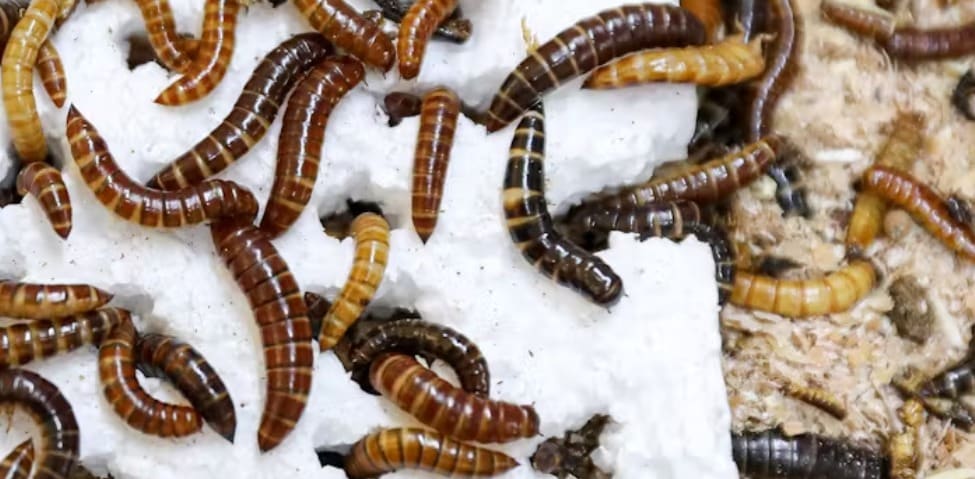
Lesser Mealworm Larvae Chew Through Polystyrene. Photo Courtesy Fathiya Khamis

Lesser mealworm larvae chew through polystyrene. Photo courtesy Fathiya Khamis

FacebookTwitterLinkedInRedditWhatsApp
Advertisement

There’s been an exciting new discovery in the fight against plastic pollution: mealworm larvae that are capable of consuming polystyrene. They join the ranks of a small group of insects that have been found to be capable of breaking the polluting plastic down, though this is the first time that an insect species native to Africa has been found to do this.

Polystyrene, commonly known as styrofoam, is a plastic material that’s widely used in food, electronic and industrial packaging. It’s difficult to break down and therefore durable. Traditional recycling methods – like chemical and thermal processing – are expensive and can create pollutants. This was one of the reasons we wanted to explore biological methods of managing this persistent waste.

I am part of a team of scientists from the International Centre of Insect Physiology and Ecology who have found that the larvae of the Kenyan lesser mealworm can chew through polystyrene and host bacteria in their guts that help break down the material.

The lesser mealworm is the larval form of the Alphitobius darkling beetle. The larval period lasts between 8 and 10 weeks. The lesser mealworm are mostly found in poultry rearing houses which are warm and can offer a constant food supply – ideal conditions for them to grow and reproduce.
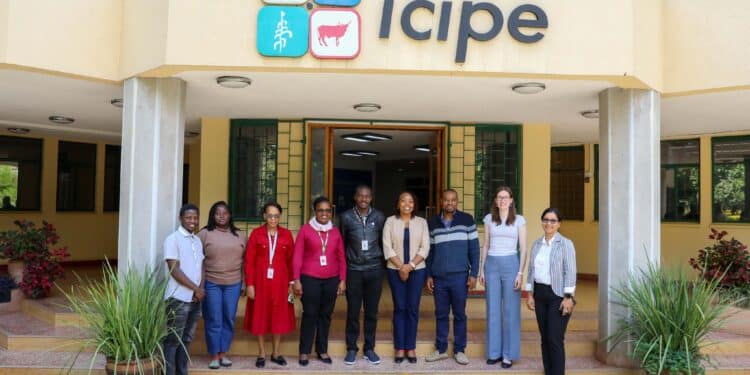
A Team From Modelling In The Infectious Diseases Strategic Programme At Wellcome And Kemri At Icipe Headquarters. Photo: Icipe
A team from Modelling in the Infectious Diseases Strategic Programme at Wellcome and KEMRI at ICIPE Headquarters. Photo: ICIPE

Though lesser mealworms are thought to have originated in Africa, they can be found in many countries around the world. The species we identified in our study, however, could be a sub-species of the Alphitobius genus. We are conducting further investigation to confirm this possibility.

Our study also examined the insect’s gut bacteria. We wanted to identify the bacterial communities that may support the plastic degradation process.

Also Read: Reason Behind the White Butterflies Seen in Kenyan Skies

Plastic pollution levels are at critically high levels in some African countries. Though plastic waste is a major environmental issue globally, Africa faces a particular challenge due to high importation of plastic products, low re-use and a lack of recycling of these products.

By studying these natural “plastic-eaters”, we hope to create new tools that help get rid of plastic waste faster and more efficiently. Instead of releasing a huge number of these insects into trash sites (which isn’t practical), we can use the microbes and enzymes they produce in factories, landfills and cleanup sites. This means plastic waste can be tackled in a way that’s easier to manage at a large scale.

Key findings

We carried out a trial, lasting over a month. The larvae were fed either polystyrene alone, bran (a nutrient-dense food) alone, or a combination of polystyrene and bran.

We found that mealworms on the polystyrene-bran diet survived at higher rates than those fed on polystyrene alone. We also found that they consumed polystyrene more efficiently than those on a polystyrene-only diet. This highlights the benefits of ensuring the insects still had a nutrient-dense diet.

While the polystyrene-only diet did support the mealworms’ survival, they didn’t have enough nutrition to make them efficient in breaking down polystyrene. This finding reinforced the importance of a balanced diet for the insects to optimally consume and degrade plastic. The insects could be eating the polystyrene because it’s mostly made up of carbon and hydrogen, which may provide them an energy source.

The mealworms on the polystyrene-bran diet were able to break down approximately 11.7% of the total polystyrene over the trial period.

Gut bacteria

The analysis of the mealworm gut revealed significant shifts in the bacterial composition depending on the diet. Understanding these shifts in bacterial composition is crucial because it reveals which microbes are actively involved in breaking down plastic. This will help us to isolate the specific bacteria and enzymes that can be harnessed for plastic degradation efforts.

The guts of polystyrene-fed larvae were found to contain higher levels of Proteobacteria and Firmicutes, bacteria that can adapt to various environments and break down a wide range of complex substances. Bacteria such as Kluyvera, Lactococcus, Citrobacter and _Klebsiella were also particularly abundant and are known to produce enzymes capable of digesting synthetic plastics. The bacteria won’t be harmful to the insect or to the environment when used at scale.

The abundance of bacteria indicates that they play a crucial role in breaking down the plastic. This may mean that mealworms may not naturally have the ability to eat plastic. Instead, when they start eating plastic, the bacteria in their guts might change to help break it down. Thus, the microbes in the mealworms’ stomachs can adjust to unusual diets, like plastic.

Also Read: A New Invasive Mosquito has been found in Kenya – What This Means for Malaria Control

These findings support our hypothesis that the gut of certain insects can enable plastic degradation. This is likely because the bacteria in their gut can produce enzymes that break down plastic polymers.

This raises the possibility of isolating these bacteria, and the enzymes produced, to create microbial solutions that will address plastic waste on a larger scale.

What’s next

Certain insect species, such as yellow mealworms (Tenebrio molitor) and superworms (Zophobas morio), have already demonstrated the ability to consume plastics. They’re able to break down materials like polystyrene with the help of bacteria in their gut.

Our research is unique because it focuses on insect species native to Africa, which have not been extensively studied in the context of plastic degradation.

This regional focus is important because the insects and environmental conditions in Africa may differ from those in other parts of the world, potentially offering new insights and practical solutions for plastic pollution in African settings.

The Kenyan lesser mealworm’s ability to consume polystyrene suggests that it could play a role in natural waste reduction, especially for types of plastic that are resistant to conventional recycling methods.

Future studies could focus on isolating and identifying the specific bacterial strains involved in polystyrene degradation and examining their enzymes.

We hope to figure out if the enzymes can be produced at scale for recycling waste.

Additionally, we may explore other types of plastics to test the versatility of this insect for broader waste management applications.

Scaling up the use of the lesser mealworms for plastic degradation would also require strategies for ensuring insect health over prolonged plastic consumption, as well as evaluating the safety of resulting insect biomass for animal feeds.The Conversation

Fathiya Khamis, Senior Scientist, International Centre of Insect Physiology and Ecology

This article is republished from The Conversation under a Creative Commons license. Read the original article.
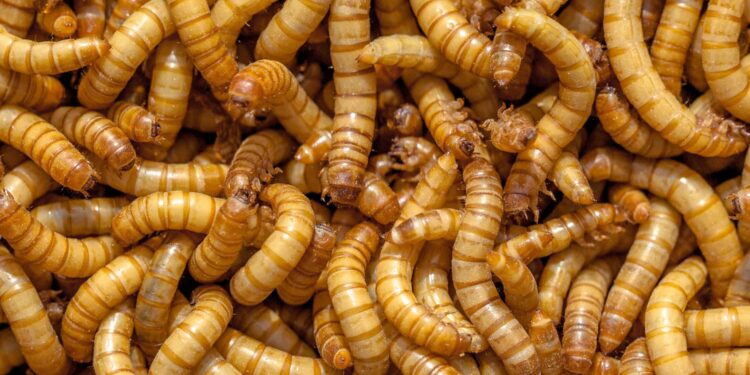

Yellow Mealworms. Photo: Heritage Acres
Yellow mealworms. Photo: Heritage Acres
Tags: Plasticyellow mealworms
The Conversation

The Conversation

The Conversation is an independent news organization that publishes evidence-based articles written by experts to help readers understand diverse topics. We cover a wide range of areas including arts, culture, education, health, politics, science, and more¹. Their content is characterized by in-depth analysis, research, news, and ideas from leading academics and researchers. The Conversation aims to provide academic rigor with journalistic flair.

Related Posts

Felistus Kaveva

Kaptagat Cycling Challenge Unites Sport, Inclusion and Conservation

July 3, 2026
A Collage Of A Tortoise And The Jackson’s Three-Horned Chameleon At The Wild Photo/Arcadia Safaris

List of Most Exported Reptiles in Kenya

May 15, 2026
Principal Secretary For Forestry Gitonga Mugambi Congratulates Antoine Moses On His World Record Feat, Which Is Now Pending Ratification.

Antoine Moses Sets Historic Mangrove Record in Kenya as PS Gitonga Hails Feat

May 1, 2026
President William Ruto Launched Initiative To Increase Kenya'S Forest Cover With Cutting Of Trees Still Rampant

Opinion | Why the Destruction of Forests is an Existential Threat to Kenya’s Future

April 27, 2026
ADVERTISEMENT

The Kenya Times Facebook

LATEST NEWS

  • ‘We Are Waiting for the Americans to Save Us’ – In Crisis, Cubans Have Given Up on Reform From Within
  • Why Dangote Overlooked Isiolo When Choosing Location of His Giant 700,000 bpd Single Train Refinery
  • IEBC Reveals Plan to Delay Ol Kalou By-Election Until 2027
  • Multi-Vehicle Collision Disrupts Traffic on Naivasha–Nakuru Highway
  • Profile of Kenneth Ngure, Kenyan Professor Appointed to WHO STI Advisory Group
  • How FIFA Chooses Referees for World Cup Matches: Full Selection Process Explained
  • Mbadi Reveals Why Govt Canceled Original Ksh249.7B Nairobi-Nakuru Highway Deal
  • How First-Year Students Can Download University Admission Letters
  • Wicknell Chivayo Firm to Deliver Key 50MW Solar Project Within 8 Months
  • Who Was Julius Maina? Driver of the Iconic Pickup That Drove Opposition Leaders to 1991 Kamukunji Rally
  • Kenya Overhauls Bank Licence Fees for First Time in 33 Years
  • How KUCCPS-Placed Students Can Apply for Government Scholarship 2026
  • How to Apply for HELB Loan and Scholarships in 2026 Without ID Card
  • How Kenyan Couples Can Now Legally Wed in Gardens, Hotels, and Beaches
  • How Much Would It Cost to Occupy an Entire Floor at Nairobi’s GTC Office Tower?
ADVERTISEMENT

Company

About Us

Our Authors

Our Experts

Social Media

Policies

Privacy Policy

House Rules

Standards and Policies

Terms and Conditions

Subscription

My Account

Contact Us

Contact Us

Join Our Team

Advertise With Us

© Copyright 2026 | The Kenya Times | All Rights Reserved

Welcome Back!

Sign In with Facebook
Sign In with Google
Sign In with Linked In
OR

Login to your account below

Forgotten Password? Sign Up

Create New Account!

Sign Up with Facebook
Sign Up with Google
Sign Up with Linked In
OR

Fill the forms below to register

All fields are required. Log In

Retrieve your password

Please enter your username or email address to reset your password.

Log In
Your Privacy and Cookies
We use cookies on our website to give you the most relevant experience by remembering your preferences and repeat visits. By clicking “Accept”, you consent to the use of ALL the cookies.
Do not sell my personal information.
Cookie settingsACCEPT
Privacy & Cookies Policy

Privacy Overview

This website uses cookies to improve your experience while you navigate through the website. Out of these cookies, the cookies that are categorized as necessary are stored on your browser as they are essential for the working of basic functionalities of the website. We also use third-party cookies that help us analyze and understand how you use this website. These cookies will be stored in your browser only with your consent. You also have the option to opt-out of these cookies. But opting out of some of these cookies may have an effect on your browsing experience.
Necessary
Always Enabled
Necessary cookies are absolutely essential for the website to function properly. This category only includes cookies that ensures basic functionalities and security features of the website. These cookies do not store any personal information.
Functional
Functional cookies help to perform certain functionalities like sharing the content of the website on social media platforms, collect feedbacks, and other third-party features.
Performance
Performance cookies are used to understand and analyze the key performance indexes of the website which helps in delivering a better user experience for the visitors.
Analytics
Analytical cookies are used to understand how visitors interact with the website. These cookies help provide information on metrics the number of visitors, bounce rate, traffic source, etc.
Advertisement
Advertisement cookies are used to provide visitors with relevant ads and marketing campaigns. These cookies track visitors across websites and collect information to provide customized ads.
Others
Other uncategorized cookies are those that are being analyzed and have not been classified into a category as yet.
SAVE & ACCEPT
LOGIN | REGISTER
  • Login
  • Sign Up
  • Cart
No Result
View All Result
  • News
    • Latest News
    • Breaking News
    • Investigations
    • Explainers
    • Fact Check
  • Politics
    • Global Politics
    • Conflicts & Security
    • Elections
    • Diplomacy
    • Government & Policy
    • Political Analysis
  • Business
    • Global Economy
    • Markets
    • Technology
    • Startups
    • Energy
    • Finance
  • World News
    • Americas
    • Asia
    • Asia Pacific
    • Africa
    • Europe
    • Middle East
  • Africa
    • East Africa
    • West Africa
    • Southern Africa
    • Central Africa
  • Health
    • Global Health
    • Public Health
    • Health Policy
    • Medical Research
    • Diseases & Conditions
    • Mental Health
    • Nutrition
    • Climate & Health
    • Health Explainers
  • Sports
    • World Cup 2026
    • Athletics
    • Basketball
    • Boxing
    • Cricket
    • Football
    • Formula 1
    • Golf
    • Rugby
  • Weather
    • Climate Business
    • Climate Change
    • Climate Solutions
    • Living Green
  • Culture
    • Arts
    • Film & TV
    • Food
    • Lifestyle
    • Music
    • Travel
  • Opinion
    • Editorials
    • Letters
  • Behind The Brand
  • Contact Us

Not enough quota to unlock this post
Unlock left : 0
Are you sure want to cancel subscription?