
Negotiations between the United States and Iran stretched late into the night in Islamabad, Pakistan. Still, they ended without a breakthrough, prompting both sides to agree to extend talks for another day.
The discussions, mediated by Pakistan, mark the first direct face‑to‑face meeting between U.S. and Iranian officials since the Islamic Revolution in 1979.
Iran’s Tasnim news agency on Sunday, April 12 morning reported that the talks concluded after 14 hours, with technical teams now exchanging expert texts.
“Negotiations will continue despite some remaining differences,” the Iranian government said in a statement posted on X.
Fars News added that the two sides had failed to reach an understanding in the previous round and are now working on a new text, with Pakistan proposing a further round of talks after a pause on Sunday.
It was nearly 4 a.m. in Islamabad when the delegations broke for the night. Both sides agreed to reconvene in the coming days for Round 4 of peace talks.
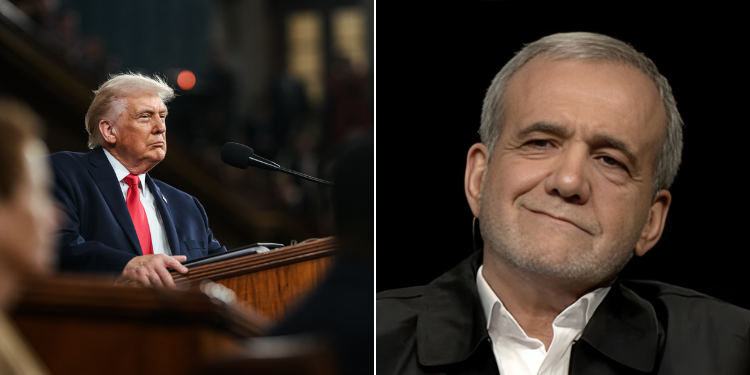
Vice President JD Vance is leading the U.S. delegation, accompanied by senior envoy Steve Witkoff, and President Donald Trump’s son‑in‑law Jared Kushner.
Also Read: Trump Fires Warning After U.S. Intel Revealed China May Send Weapons to Iran
On the Iranian side, negotiators include Foreign Minister Abbas Araghchi, Parliament Speaker Mohammad‑Bagher Ghalibaf, and senior official Mohammad Bagheri Kani. Pakistani officials are mediating the trilateral discussions.
The talks are focused on three key issues, including Tehran’s control of the Strait of Hormuz, Israel’s ongoing conflict with Hezbollah in Lebanon, and Iran’s stockpile of enriched uranium.
Pakistan meeting features Strait of Hormuz dispute
The most contentious issue remains the Strait of Hormuz, a strategic waterway critical to global energy supplies.
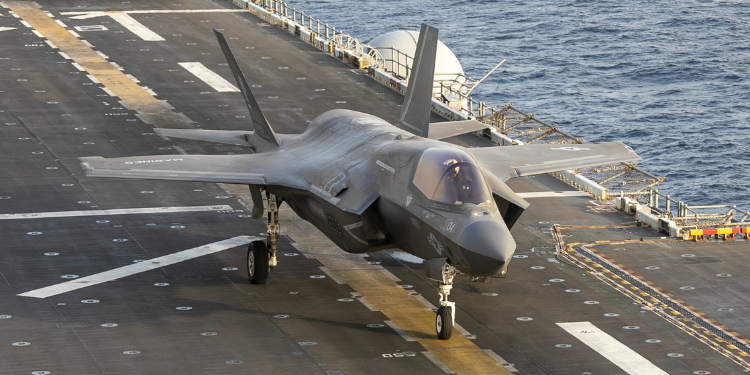
U.S. Central Command (CENTCOM) confirmed that two Navy destroyers — USS Frank E. Peterson and USS Michael Murphy — conducted operations in the strait on Saturday to begin clearing mines laid by Iran’s Revolutionary Guards. Admiral Brad Cooper said the mission aimed to establish a safe passage for commercial shipping.
Iran’s Revolutionary Guards (IRGC) responded with a warning that any military vessels attempting to transit the Strait “will be dealt with severely.”
The IRGC Navy declared that it had full authority to manage the waterway and would permit civilian vessels only under specific conditions.
Iranian state broadcaster IRIB carried the statement, which denied U.S. claims that American ships had already transited the strait.
President Donald Trump on Saturday told reporters that U.S. forces were sweeping the strait for mines.
“They probably have a couple of mines in the water. We have minesweepers out there. We’re sweeping the strait,” the president said.
He added that the U.S. would open the strait “as a favor” to other countries, including China, Japan, South Korea, France, and Germany, which rely on the passage for energy imports.
Speaking before departing the White House for Florida, Trump said the outcome of the talks made “no difference” to him.
“We win no matter what,” he declared. “We’ve totally defeated that country. Maybe they make a deal, maybe they don’t. It doesn’t matter. From the standpoint of America, we win.”
Trump claimed Iran’s navy and air force had been destroyed, along with its radar and leadership. He also criticized NATO for not assisting in clearing the strait.
France’s Macron reacts to U.S.-Iran talks
French President Emmanuel Macron said he had spoken with Iran’s President Masoud Pezeshkian, urging him to seize the opportunity presented by the Islamabad talks.
Also Read: “I Don’t Care” — Tense Moment as Trump Clashes With Reporter Over Hormuz Blockade
Macron called for a binding agreement that would guarantee regional security and restore freedom of navigation in the Strait of Hormuz. He also emphasized the importance of respecting the ceasefire in Lebanon, where Hezbollah continues to clash with Israeli forces.
“France stands ready to contribute in this area,” Macron said, adding that Israel must respect Lebanon’s sovereignty.
Why this matters
Despite marathon negotiations, significant gaps remain between the U.S. and Iran. Sources in Tehran said the framework under discussion is not comprehensive and fails to address all outstanding issues.
While Iran has shown some flexibility, American demands remain maximalist, particularly regarding full access to the Strait of Hormuz.
Al Jazeera reported that Pakistan has proposed joint patrols in the strait as a possible compromise, though neither side has publicly endorsed the idea.
For now, the ceasefire between the U.S. and Iran holds, but tensions remain high. The extension of talks offers a slim hope of progress, but the threat of escalation in the Gulf continues to loom large.
With U.S. naval operations underway and Iran warning of severe responses, the coming days will be critical in determining whether diplomacy can avert further conflict.