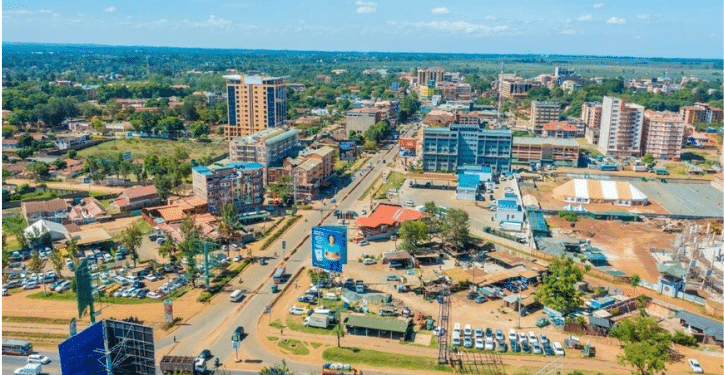
Thika Municipality is a step closer to becoming Kenya’s sixth city after receiving the Senate’s approval. But the transition will only be completed if Kiambu County meets a series of conditions within the next 90 days.
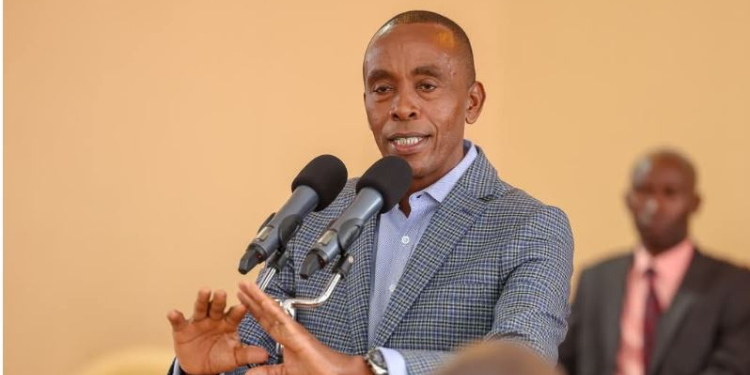
The Senate Committee on Devolution and Intergovernmental Relations directed Kiambu Governor Kimani Wamatangi to submit a comprehensive work plan addressing key issues raised during public participation before Thika can be granted a city charter.
The committee said the conditions are aimed at ensuring the proposed city has the infrastructure, governance systems and public services required under the law before it is officially conferred with city status.
“That the Senate approves the conferment of the city status to Thika Municipality and the resolution of the Senate be transmitted to the President for the issuance of a Charter pursuant to section 7 of the Urban Areas and Cities Act,” reads part of the report.
The Senate committee observed that shifting to a city status would provide an important platform to accelerate development, improve daily service delivery, and spark local economic growth.
Senate Gives Kiambu 90-Day Deadline Over Thika City Status Bid
According to the report, the county government has been given 90 days to prepare and submit detailed implementation plans demonstrating how it will address concerns raised by residents and stakeholders during the public participation process.
The Senate noted that while Thika had made significant progress toward attaining city status, further commitments were needed to guarantee sustainable urban development.
Water, Roads and Drainage Among Key Priorities
Among the conditions outlined by senators is the expansion of water supply to ensure reliable access to clean water for households across the proposed city.
The county has also been directed to modernize aging drainage systems to reduce flooding during rainy seasons and overhaul solid waste management to improve sanitation.
In addition, the Senate committee called for the urgent upgrade of infrastructure and service networks, including deteriorating roads within the municipality, saying that improved transport links are critical to supporting Thika’s economic growth.
Part of the implementation plan also requires Kiambu County to fully operationalize the local public theatre and the museum interpretive center as part of efforts to preserve the town’s cultural heritage.
Also Read: Process of Making Thika a City Kicks Off: How Rent and Cost of Doing Business will Change
Senate Acknowledges Progress
Despite the conditions, the committee said Thika had demonstrated considerable progress in strengthening its institutional, financial and infrastructure capacity.
“The committee observes that Thika Municipality has demonstrated notable progress in strengthening its institutional, financial and infrastructural foundation and the conferment of city status,” part of the report reads.
The Senate’s recommendations will guide the final phase of the city’s elevation process.
County Says Thika Is Ready
Kiambu County maintains that Thika has met the requirements for city status through investments in infrastructure, urban planning and public service delivery.
Governor Kimani Wamatangi has described the proposed elevation as a people-centered initiative aimed at improving livelihoods, attracting investment and expanding economic opportunities.
According to the county government, the administration has been working with national agencies, including the State Department for Housing and Urban Development, the Kenya National Highways Authority (KeNHA), the Kenya Rural Roads Authority (KeRRA) and the Kenya Urban Roads Authority (KURA), to improve roads, drainage systems and street lighting across Thika.
The county says Thika’s readiness is also supported by the Integrated Strategic Urban Development Plan (ISUDP), which guides future growth and development.
If the county fulfills the Senate’s conditions and submits satisfactory implementation plans within the stipulated period, Thika will move closer to officially becoming Kenya’s sixth city after Nairobi, Mombasa, Kisumu, Nakuru and Eldoret.
Why Thika Is Seeking City Status
Thika is one of Kenya’s leading industrial towns and serves as the economic backbone of Kiambu County.
Located about 42 kilometres northeast of Nairobi along the A2 highway, the municipality had a population of 279,429 according to the 2019 Kenya Population and Housing Census and has continued to grow as part of the Nairobi Metropolitan region.
The town is home to some of the country’s largest manufacturing and agro-processing industries, with products ranging from processed pineapples, coffee, edible oils and animal feeds to textiles, motor vehicle assembly, cigarettes, packaging materials and industrial chemicals.
Thika also hosts about 100 small-scale industries and around 50 major factories, making it one of Kenya’s key industrial centres.
Beyond manufacturing, Thika has a vibrant education and financial services sector, with three universities, several middle-level colleges and hundreds of primary and secondary schools serving the wider region.
Its strategic location has also strengthened its position as a commercial hub. The municipality is connected to Nairobi through the Thika Superhighway, linked to central Kenya and the northeastern region by major highways, and served by a railway line for both passenger and freight transport.
In addition to its industrial significance, Thika is known for tourist attractions such as Chania Falls, Fourteen Falls, and Thika Falls, and Ol Donyo Sabuk National Park, which lies a short distance from the town.
Governor Wamatangi has in the past proclaimed that Thika is the second most industrialized town in Kenya, currently hosting more than 1,000 industries engaged in manufacturing, agro-processing, and financial services.
Also Read: Kenyan Investors Reluctant to Buy Land as Property Growth Persists Along Thika Road
Features That Make County Eligible for City Status
According to Section 5 of the Urban Areas and Cities Act, to be classified as a city in Kenya, an urban centre must satisfy several key requirements.
First, it must have a population of over 500,000 residents, as confirmed by the latest census. This population growth is a testament to the town’s economic potential.
The town must also have an Integrated Urban Development Plan that outlines its strategies for sustainable growth, infrastructure development, and environmental management.
Additionally, the town needs to demonstrate the capacity to generate sufficient revenue to sustain its operations through innovative revenue-collection methods.
They must demonstrate a sound system of records and prudent management, and have the capacity to deliver essential services to their residents effectively and efficiently.
It must also have active institutional participation by its residents in the management of its affairs, as well as infrastructural facilities and the capacity for functional, effective waste disposal.
Follow our WhatsApp Channel and X Account for real-time news updates.