Thursday, October 15, 2026
  • News
    • Latest News
    • Breaking News
    • Fact Check
    • Investigations
    • Explainers
  • Politics
    • Global Politics
    • Elections
    • Government & Policy
    • Diplomacy
    • Conflicts & Security
    • Political Analysis
  • Business
    • Global Economy
    • Markets
    • Technology
    • Startups
    • Energy
    • Finance
  • World News
    • Americas
    • Asia
    • Asia Pacific
    • Africa
    • Europe
    • Middle East
  • Africa
    • Central Africa
    • East Africa
    • West Africa
    • Southern Africa
  • Health
    • Global Health
    • Public Health
    • Health Policy
    • Medical Research
    • Diseases & Conditions
    • Mental Health
    • Nutrition
    • Climate & Health
    • Health Explainers
  • Sports
    • World Cup 2026
    • Athletics
    • Basketball
    • Boxing
    • Cricket
    • Football
    • Formula 1
    • Golf
    • Rugby
  • Weather
    • Climate Business
    • Climate Change
    • Climate Solutions
    • Living Green
  • Culture
    • Arts
    • Film & TV
    • Food and Recipes
    • Music
    • Lifestyle
    • People
    • Travel
  • Opinion
    • Editorials
    • Letters
  • Behind The Brand
REGISTER
LOGIN
No Result
View All Result
The Kenya Times
  • News
    • Latest News
    • Breaking News
    • Fact Check
    • Investigations
    • Explainers
  • Politics
    • Global Politics
    • Elections
    • Government & Policy
    • Diplomacy
    • Conflicts & Security
    • Political Analysis
  • Business
    • Global Economy
    • Markets
    • Technology
    • Startups
    • Energy
    • Finance
  • World News
    • Americas
    • Asia
    • Asia Pacific
    • Africa
    • Europe
    • Middle East
  • Africa
    • Central Africa
    • East Africa
    • West Africa
    • Southern Africa
  • Health
    • Global Health
    • Public Health
    • Health Policy
    • Medical Research
    • Diseases & Conditions
    • Mental Health
    • Nutrition
    • Climate & Health
    • Health Explainers
  • Sports
    • World Cup 2026
    • Athletics
    • Basketball
    • Boxing
    • Cricket
    • Football
    • Formula 1
    • Golf
    • Rugby
  • Weather
    • Climate Business
    • Climate Change
    • Climate Solutions
    • Living Green
  • Culture
    • Arts
    • Film & TV
    • Food and Recipes
    • Music
    • Lifestyle
    • People
    • Travel
  • Opinion
    • Editorials
    • Letters
  • Behind The Brand
  • News
    • Latest News
    • Breaking News
    • Fact Check
    • Investigations
    • Explainers
  • Politics
    • Global Politics
    • Elections
    • Government & Policy
    • Diplomacy
    • Conflicts & Security
    • Political Analysis
  • Business
    • Global Economy
    • Markets
    • Technology
    • Startups
    • Energy
    • Finance
  • World News
    • Americas
    • Asia
    • Asia Pacific
    • Africa
    • Europe
    • Middle East
  • Africa
    • Central Africa
    • East Africa
    • West Africa
    • Southern Africa
  • Health
    • Global Health
    • Public Health
    • Health Policy
    • Medical Research
    • Diseases & Conditions
    • Mental Health
    • Nutrition
    • Climate & Health
    • Health Explainers
  • Sports
    • World Cup 2026
    • Athletics
    • Basketball
    • Boxing
    • Cricket
    • Football
    • Formula 1
    • Golf
    • Rugby
  • Weather
    • Climate Business
    • Climate Change
    • Climate Solutions
    • Living Green
  • Culture
    • Arts
    • Film & TV
    • Food and Recipes
    • Music
    • Lifestyle
    • People
    • Travel
  • Opinion
    • Editorials
    • Letters
  • Behind The Brand
No Result
View All Result
The Kenya Times ~ Trending, Breaking News and Videos
No Result
View All Result
ADVERTISEMENT

Electric Vehicles in Africa: What is Needed to Grow the Sector

The ConversationbyThe Conversation
November 12, 2024
Reading Time: 10 mins read
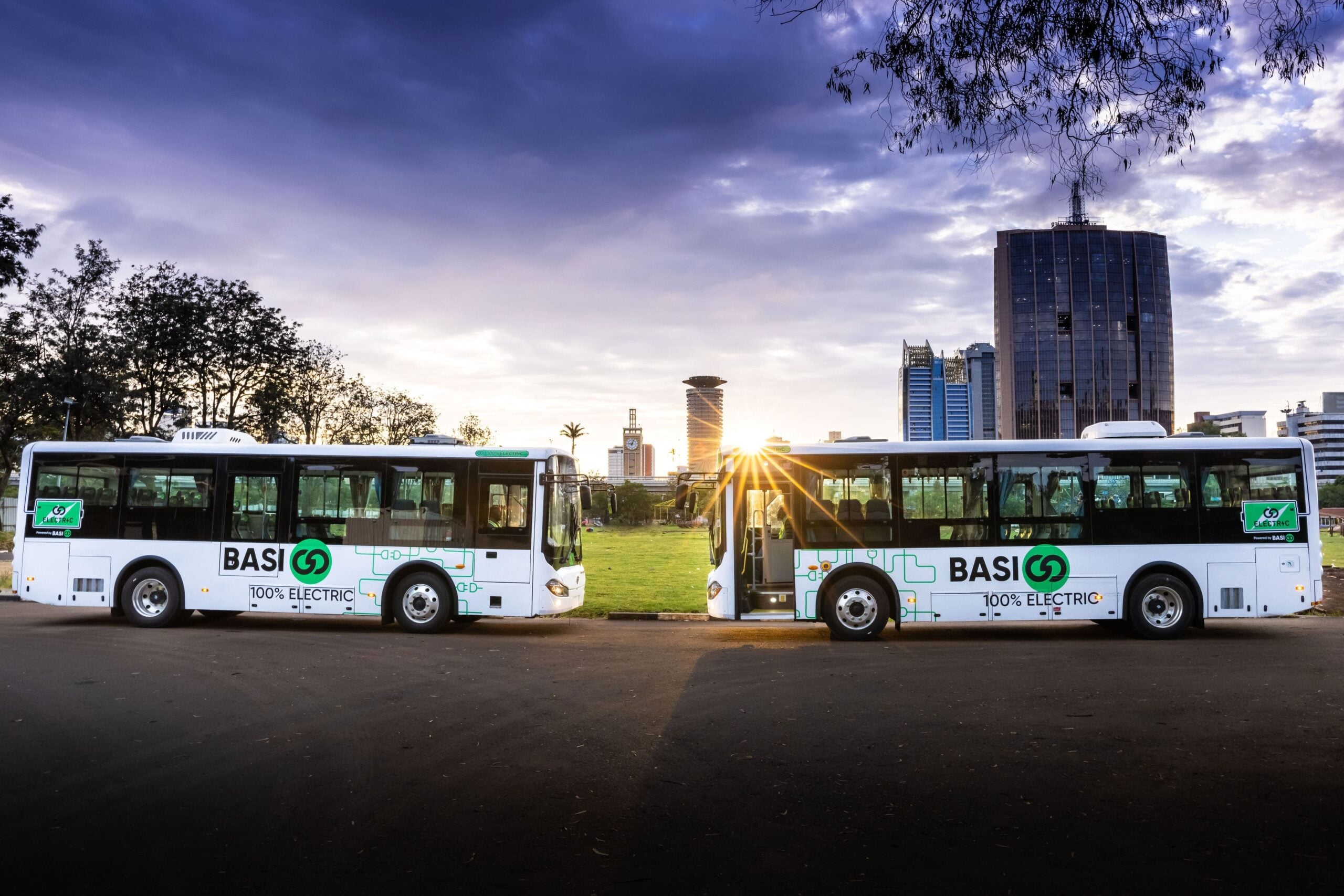
A Fleet Of Electric Vehicles By Basigo Being Launched In Kenya'S Capital City Nairobi.

Electric Vehicles by BasiGo. PHOTO/BasiGo.

FacebookTwitterLinkedInRedditWhatsApp
Advertisement

In sub-Saharan Africa, high levels of particulate matter (PM2.5) pollution from vehicle tailpipe emissions cause poor health, developmental stunting, and even death. Vehicle emissions also contribute to global warming. Electric vehicles could help solve these problems but they’ve been slow to take off in the region. Its biggest economy, South Africa, had only about 1,000 electric vehicles by 2022.

We are specialist transport engineers whose research has focused on electric vehicles and road freight transport in sub-Saharan Africa. In our work we look at how electric vehicles could contribute to reducing emissions in the region, and what is standing in the way of electrifying transport.

One of the reasons for low uptake is the high cost of electric vehicles. They also have limited range and their batteries are slow to charge: a problem for long distance or frequent driving.

The inability of countries to generate and distribute enough clean electricity is also a barrier to electrifying vehicles. Just over half of all electricity in the region comes from burning fossil fuels. Powering electric vehicles with electricity generated by burning fossil fuels wouldn’t necessarily reduce carbon emissions.

However, the rollout of electric motorcycles and small public transport vehicles has already begun. If all vehicles could be made locally, using clean energy, there would be tremendous economic benefits for the region.

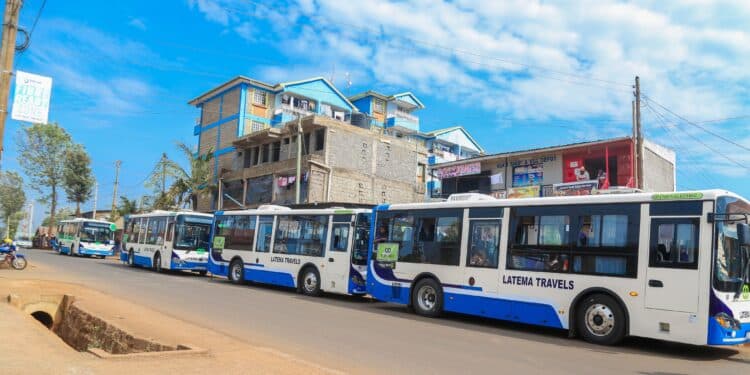
Electric Buses By Basigo In Nairobi City. Photo Basigo
Electric Buses by BasiGo in Nairobi City. PHOTO/BasiGo

Electric mobility is some way off

Transitioning to electric mobility requires clean energy provision, which means investing in electricity infrastructure. Electric vehicle charging stations can be installed fast: South Africa already has a very high electric vehicle ratio of one charger for every five cars, compared to the UK at 1:20. But these charging stations must be able to deliver electricity when vehicles need it. They need reliable, renewable energy stored in large battery systems to do so – and these large battery systems are still being developed.


Also Read: Strategy to Boost E-Mobility Pays Off as Number of Electric Vehicles Hits 5,000 in Kenya


In sub-Saharan Africa informal public transport moves about 72% of the region’s passengers. Freight moves goods in the absence of adequate rail. Electrifying these sectors needs careful planning.

Informal “paratransit” or “popular transportation” is made up of minibuses (matatu, ndiaga ndiaye, danfo, trotro), three-wheelers (tuk-tuk) and motorbikes (boda boda, moto).

Planning for the eventual electrification of informal taxis is complicated by the sector’s unscheduled, decentralised, often chaotic and demand-driven nature.

Freight transport is a leading indicator for economic growth, and for economies to grow, freight transport must grow. This means that national and local governments must plan and invest in high powered, fast charging stations along transport routes. These must be able to charge different sizes and kinds of trucks. The freight industry cannot absorb these costs alone.

Need for rapid change

The transport sector must make the transition to electric mobility faster than the breakneck speed at which smartphones were adopted if it is to meet Net Zero – an end to carbon emissions – by 2050. Costly electrical and civil infrastructure (roads, minibus termini, truck stops, electricity distribution networks) will be needed – and soon.

However, our results show that fleets will have to contain a mix of electric and combustion-based engines if countries want to continue to transport the same amount of goods and people they are currently transporting. This is because electric vehicles charge slowly. While a diesel minibus taxi takes only one minute to fill up with enough diesel to travel 750 kilometres, the fastest currently available electric minibus recharges at a mere 2km per minute with DC and 0.3km per minute with AC. The electric taxi’s range is also only 21% of the diesel equivalent.

Filling stations in the region generally store the equivalent of up to 225,000km worth of fuel for a diesel minibus. The same size of stationary electric battery storage will store a mere 16,000km for an electric equivalent minibus. Range-extending and potentially swappable battery storage can be used (where a trailer acts as a mobile battery bank to the vehicle, and is charged from a solar charging station to reduce emissions). But this will increase the cost so much that it may not be financially viable for the freight industry at all.

Building a local electric vehicle industry

Except for South Africa, the region has been a dumping ground for second hand vehicles from developed countries. The comparatively simple designs of electric vehicles provide an opportunity for sub-Saharan Africa to move away from accepting second hand vehicles and towards a new local electric vehicle industry.

Workers in hundreds of thousands of jobs making combustion engines could be reskilled to make electric vehicles. Africa already has the skills to design and produce the powertrain components, such as batteries and electric motors. Setting up local industries would also spare sub-Saharan Africa from being flooded by cheap electric vehicle imports that don’t contribute to local employment.

Ethiopia has recently banned the import of combustion vehicles. Africa’s first all-electric mass rapid transit was set up in Dakar, Senegal in 2023. The Golden Arrow bus company in South Africa purchased 120 electric buses this year. Heavy haul electric trucks are also entering the South African market space.

Africa has already produced tens of thousands of electric two- and three-wheelers used for public transport and last-mile delivery. These include Ampersand in Rwanda, Roam Electric in Kenya, and Spiro in Benin. Batteries are usually provided through swapping and payment by mobile phone. In South Africa, Mellowvans produce a last-mile three-wheeler.


Also Read: Electric Startup BasiGo to Deliver 15 Buses to Nairobi PSV Operators


A Roam Air electric motorbike recently completed the 6000km journey from Nairobi to Stellenbosch using only the region’s abundant solar power. In Kenya, BasiGO assembled buses locally and now provides finance for electric buses. Roam Electric makes locally designed electric buses (and motorbikes). Meanwhile, a project owned by the South African National Energy Development Institute at Stellenbosch University in South Africa has converted a petrol minibus taxi and a 65-seater diesel bus to electric.

Electrification is inevitable

The shift to electric vehicles is inevitable. These steps are needed first:

  • Review transport policy related to freight vehicles, such as axle weight and vehicle length, to ensure that imported electric vehicles can operate on African road networks.
  • Ensure paratransit is safe, efficient and equitable.
  • Carefully consider import duties and incentives. Rwanda scrapped customs tax on electric vehicles to make them cheaper, but this led to an influx of old hybrid vehicles with depleted batteries. South Africa has vehicle import duties to protect local production, but an additional luxury tax on electric vehicles makes these expensive to buy.
  • Rethink the taxation model. In South Africa, for example, fuel levies make up a chunk of national revenue.

To make the most of the electric mobility revolution, sub-Saharan African countries need policies and incentives to localise production and invest in green energy, lest they miss the bus.The Conversation

MJ (Thinus) Booysen, Professor in Engineering, Stellenbosch University and Joubert Van Eeden, Professor of Industrial Engineering, Stellenbosch University

This article is republished from The Conversation under a Creative Commons license. Read the original article.

Follow our WhatsApp Channel and join our WhatsApp Group for real-time news updates.
Electric Buses By Basigo In Nairobi City. Photo Basigo
Electric Buses by BasiGo in Nairobi City. PHOTO/BasiGo
Tags: Climate ChangeCOP29Electric VehiclesGreen energy
The Conversation

The Conversation

The Conversation is an independent news organization that publishes evidence-based articles written by experts to help readers understand diverse topics. We cover a wide range of areas including arts, culture, education, health, politics, science, and more¹. Their content is characterized by in-depth analysis, research, news, and ideas from leading academics and researchers. The Conversation aims to provide academic rigor with journalistic flair.

Related Posts

Binge-Eating Among College Students With Abundant Junk Food, A Common Setting Linked To Binge-Eating Risks.

How Globalization and Food Insecurity Fuel Disordered Eating Behavior in Young Adults

October 14, 2026
From Knowledge To Impact: A New Era Of Kenya–Uk Science Diplomacy

From Knowledge Sharing to Innovation: A New Chapter in Kenya–UK Science Diplomacy

October 10, 2026
Kenyan Teaching And Teachers Received Awards For Outstanding Contributions On October 5, At The Kasarani Indoor Arena During National World Teachers’ Day.

What Would a Truly Professional Teaching Profession Look Like in Kenya?

October 7, 2026
Beyond Borders: Why Science Diplomacy Must Drive The Next Era Of Development

Why Science Diplomacy Must Drive the Next Era of Development

October 5, 2026
ADVERTISEMENT

The Kenya Times Facebook

LATEST NEWS

  • Kabarnet Stadium Nears Year-End Completion as Baringo Expands Sports Infrastructure
  • KSh1.8 Billion Road Project Launched to Link Chepkorio and Kipsaina
  • Oburu Celebrates Birthday at Nairobi Hospital Sends Message to His Wives
  • EPRA Signals Possible Fuel Price Increases in the Coming Months
  • KPSEA 2026 Timetable: Key Dates Parents and Candidates Need to Know
  • Where to Access SHA-Covered Treatment in Lamu County [Full List]
  • KRA Clarifies Invoice Systems Accepted for Government Payments
  • Winnie Odinga Declares Bid for Nairobi Senate Seat
  • Mama Ida Issues Update on Oburu After Chants
  • Win for Sifuna as Equitable Party Becomes Linda Mwananchi
  • Mystery Surrounds Control of Murang’a Health System After Ministry’s Revelation
  • New Bolt Plus Subscription Offers Customers Cashbacks and Free Deliveries from KSh 280 Per Month
  • India Offers to Supply KDF New Armoured Military Vehicles
  • KNEC Withholds Teacher Training Exam Results for Some Students
  • Several Kenyans Abducted in Congo Prompting Urgent Alert
ADVERTISEMENT

Company

About Us

Our Authors

Our Experts

Social Media

Policies

Privacy Policy

House Rules

Standards and Policies

Terms and Conditions

Subscription

My Account

Contact Us

Contact Us

Join Our Team

Advertise With Us

© Copyright 2026 | The Kenya Times | All Rights Reserved

Welcome Back!

Sign In with Facebook
Sign In with Google
Sign In with Linked In
OR

Login to your account below

Forgotten Password? Sign Up

Create New Account!

Sign Up with Facebook
Sign Up with Google
Sign Up with Linked In
OR

Fill the forms below to register

All fields are required. Log In

Retrieve your password

Please enter your username or email address to reset your password.

Log In
Your Privacy and Cookies
We use cookies on our website to give you the most relevant experience by remembering your preferences and repeat visits. By clicking “Accept”, you consent to the use of ALL the cookies.
Do not sell my personal information.
Cookie settingsACCEPT
Privacy & Cookies Policy

Privacy Overview

This website uses cookies to improve your experience while you navigate through the website. Out of these cookies, the cookies that are categorized as necessary are stored on your browser as they are essential for the working of basic functionalities of the website. We also use third-party cookies that help us analyze and understand how you use this website. These cookies will be stored in your browser only with your consent. You also have the option to opt-out of these cookies. But opting out of some of these cookies may have an effect on your browsing experience.
Necessary
Always Enabled
Necessary cookies are absolutely essential for the website to function properly. This category only includes cookies that ensures basic functionalities and security features of the website. These cookies do not store any personal information.
Functional
Functional cookies help to perform certain functionalities like sharing the content of the website on social media platforms, collect feedbacks, and other third-party features.
Performance
Performance cookies are used to understand and analyze the key performance indexes of the website which helps in delivering a better user experience for the visitors.
Analytics
Analytical cookies are used to understand how visitors interact with the website. These cookies help provide information on metrics the number of visitors, bounce rate, traffic source, etc.
Advertisement
Advertisement cookies are used to provide visitors with relevant ads and marketing campaigns. These cookies track visitors across websites and collect information to provide customized ads.
Others
Other uncategorized cookies are those that are being analyzed and have not been classified into a category as yet.
SAVE & ACCEPT
LOGIN | REGISTER
  • Login
  • Sign Up
  • Cart
No Result
View All Result
  • News
    • Latest News
    • Breaking News
    • Investigations
    • Explainers
    • Fact Check
  • Politics
    • Global Politics
    • Conflicts & Security
    • Elections
    • Diplomacy
    • Government & Policy
    • Political Analysis
  • Business
    • Global Economy
    • Markets
    • Technology
    • Startups
    • Energy
    • Finance
  • World News
    • Americas
    • Asia
    • Asia Pacific
    • Africa
    • Europe
    • Middle East
  • Africa
    • East Africa
    • West Africa
    • Southern Africa
    • Central Africa
  • Health
    • Global Health
    • Public Health
    • Health Policy
    • Medical Research
    • Diseases & Conditions
    • Mental Health
    • Nutrition
    • Climate & Health
    • Health Explainers
  • Sports
    • World Cup 2026
    • Athletics
    • Basketball
    • Boxing
    • Cricket
    • Football
    • Formula 1
    • Golf
    • Rugby
  • Weather
    • Climate Business
    • Climate Change
    • Climate Solutions
    • Living Green
  • Culture
    • Arts
    • Film & TV
    • Food and Recipes
    • Lifestyle
    • Music
    • People
    • Travel
  • Opinion
    • Editorials
    • Letters
  • Behind The Brand
  • Contact Us

Not enough quota to unlock this post
Unlock left : 0
Are you sure want to cancel subscription?