
Wednesday, June 3, 2026
  • News
    • Latest News
    • Breaking News
    • Fact Check
    • Investigations
    • Explainers
  • Politics
    • Global Politics
    • Elections
    • Government & Policy
    • Diplomacy
    • Conflicts & Security
    • Political Analysis
  • Business
    • Global Economy
    • Markets
    • Technology
    • Startups
    • Energy
    • Finance
  • World News
    • Americas
    • Asia
    • Asia Pacific
    • Africa
    • Europe
    • Middle East
  • Africa
    • Central Africa
    • East Africa
    • West Africa
    • Southern Africa
  • Health
    • Global Health
    • Public Health
    • Health Policy
    • Medical Research
    • Diseases & Conditions
    • Mental Health
    • Nutrition
    • Climate & Health
    • Health Explainers
  • Sports
    • Athletics
    • Basketball
    • Boxing
    • Cricket
    • Football
    • Formula 1
    • Golf
    • Rugby
  • Weather
    • Climate Business
    • Climate Change
    • Climate Solutions
    • Living Green
  • Culture
    • Arts
    • Film & TV
    • Food
    • Music
    • Lifestyle
    • Travel
  • Opinion
    • Editorials
    • Letters
  • Behind The Brand
REGISTER
LOGIN
No Result
View All Result
The Kenya Times
  • News
    • Latest News
    • Breaking News
    • Fact Check
    • Investigations
    • Explainers
  • Politics
    • Global Politics
    • Elections
    • Government & Policy
    • Diplomacy
    • Conflicts & Security
    • Political Analysis
  • Business
    • Global Economy
    • Markets
    • Technology
    • Startups
    • Energy
    • Finance
  • World News
    • Americas
    • Asia
    • Asia Pacific
    • Africa
    • Europe
    • Middle East
  • Africa
    • Central Africa
    • East Africa
    • West Africa
    • Southern Africa
  • Health
    • Global Health
    • Public Health
    • Health Policy
    • Medical Research
    • Diseases & Conditions
    • Mental Health
    • Nutrition
    • Climate & Health
    • Health Explainers
  • Sports
    • Athletics
    • Basketball
    • Boxing
    • Cricket
    • Football
    • Formula 1
    • Golf
    • Rugby
  • Weather
    • Climate Business
    • Climate Change
    • Climate Solutions
    • Living Green
  • Culture
    • Arts
    • Film & TV
    • Food
    • Music
    • Lifestyle
    • Travel
  • Opinion
    • Editorials
    • Letters
  • Behind The Brand
  • News
    • Latest News
    • Breaking News
    • Fact Check
    • Investigations
    • Explainers
  • Politics
    • Global Politics
    • Elections
    • Government & Policy
    • Diplomacy
    • Conflicts & Security
    • Political Analysis
  • Business
    • Global Economy
    • Markets
    • Technology
    • Startups
    • Energy
    • Finance
  • World News
    • Americas
    • Asia
    • Asia Pacific
    • Africa
    • Europe
    • Middle East
  • Africa
    • Central Africa
    • East Africa
    • West Africa
    • Southern Africa
  • Health
    • Global Health
    • Public Health
    • Health Policy
    • Medical Research
    • Diseases & Conditions
    • Mental Health
    • Nutrition
    • Climate & Health
    • Health Explainers
  • Sports
    • Athletics
    • Basketball
    • Boxing
    • Cricket
    • Football
    • Formula 1
    • Golf
    • Rugby
  • Weather
    • Climate Business
    • Climate Change
    • Climate Solutions
    • Living Green
  • Culture
    • Arts
    • Film & TV
    • Food
    • Music
    • Lifestyle
    • Travel
  • Opinion
    • Editorials
    • Letters
  • Behind The Brand
No Result
View All Result
The Kenya Times ~ Trending, Breaking News and Videos
No Result
View All Result
ADVERTISEMENT

Kenya’s Lamu Port was meant to deliver great things. But, as the story of local fishermen shows, it hasn’t

Gediminas LesutisbyGediminas Lesutis
September 14, 2022
Reading Time: 7 mins read
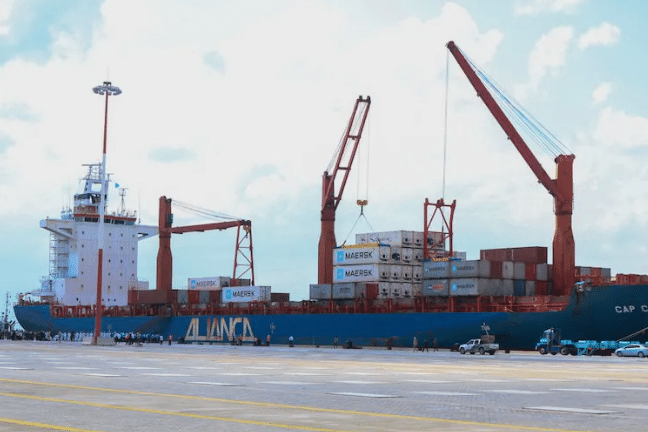
Container Ship Docks At The Lamu Port In Kenya

A container ship docks at the Lamu Port in Kenya | Dihoff Mukoto/AFP via Getty Images

FacebookTwitterLinkedInRedditWhatsApp
Advertisement

For nearly two decades, successive Kenyan governments have promoted mega infrastructure projects as a pathway to development. The Lamu Port has been one of them.

In 2012, then president Mwai Kibaki – at the inauguration ceremony for a transport corridor that stretches from the Lamu Port to South Sudan and Ethiopia, and known as Lapsset – stated:

I have no doubt that this day will go down in history as one of the defining moments – when we made a major stride to connect our people to the many socio-economic opportunities that lie ahead.

However, as my research shows, the reality of these mega projects is more complex than state officials acknowledge.

Instead of bringing development, a better society and a happier life, mega infrastructures result in hardship, especially for vulnerable, historically marginalized groups of people. This is vividly illustrated by Lamu’s fishermen.

The story of the fishermen provides a good lens through which to understand how vulnerable communities are affected by mega infrastructure projects. In Lamu, 70% of the local population depends on artisanal fishing.

This is characterized by small-scale, low-cost, and low-technology fishing practices.

ADVERTISEMENT

In my research, I conducted interviews with representatives of the Lapsset Corridor Development Authority, officials of the Kenya Ports Authority and local government, civil society groups and key local informants. I also held interviews and informal conversations with Lamu’s fishermen while I observed and participated in boat maintenance, fishing and social gatherings.

The fishermen’s experiences illustrate how communities can challenge the way big infrastructure projects are done. The Save Lamu alliance, comprising civil society groups that focus on human rights, took the Kenyan government to court in 2014 over the port construction.

Through community-based research and mobilization, the alliance sought to demonstrate how historically vulnerable groups of people, such as artisanal fishermen, are deliberately excluded from state development plans. 

Lamu’s fishermen

The construction of the Lamu Port displaced fishermen from their traditional onshore fishing grounds in Manda Bay. This is located at the southern corner of the Lamu Archipelago on Kenya’s coast. It’s a deep and sheltered bay with a wide, navigable entrance channel.

The port’s construction began in 2012 and is expected to hold 32 berths.

ADVERTISEMENT

So far, three berths have been completed. They have claimed five square kilometres of Manda Bay. The first berth began operating in May 2021.

The port construction works – including reclaiming land from the sea and digging and dredging – destroyed coral reefs and mangroves that are the main fish breeding grounds.

The works also polluted these breeding grounds by bringing up dirt and sand. This made the area unsuitable for fishing.

Fishing activities are entirely undertaken close to the shore in Manda Bay. There are fishing grounds further offshore, but local fishermen lack appropriate fishing gear to explore deep-sea areas. As a result, Lamu’s fishermen – estimated to be between 4,700 and 7,000 individuals – are witnessing a shrinking operational space for their livelihoods. 

Resistance to unsustainable corridor development

These drastic effects on fishermen – and concerns about more negative impacts on the environment in the future – led to community mobilization in Lamu.

In 2014, Save Lamu submitted a court case against the Lapsset Corridor Development Authority for not considering how the project was going to affect local people’s livelihoods.

Four years later, in an unprecedented ruling, Save Lamu won this legal battle against the national government.

A three-judge bench ruled that the construction of Lamu Port violated the rights to public participation, public information, a clean and healthy environment, and culture.

The court also found that the local county government of Lamu wasn’t involved in the planning and implementation of the port.

Regarding artisanal fishermen’s livelihoods, the judges ordered the government to recognize fishing rights as amounting to property and pay US$170 million in compensation to 4,700 fishermen displaced by the port construction.

Kenya’s civil society celebrated the ruling as a historic win for human rights. But the national government immediately appealed it. 

Local versus national

The port’s construction continues unabated.

The fishermen have not been compensated for lost livelihoods. This follows an ongoing disagreement between the national government, Lamu’s local government, Save Lamu and representatives of Lamu fishermen on how many individuals should receive this compensation, and how it should be spent.

The central government prefers state–controlled development of the local fishing industry. This would include state-supervised acquisition of boats and fishing gear for deep-sea fishing.

The government has proposed development schemes that would provide the necessary equipment to clusters of 10 fishermen. This, it says, would address the long-existing problem of overfishing and enable fishermen to exploit deep-sea resources. This position is supported by Save Lamu, which advocates for long-term sustainability and fishing cooperatives.

Fishermen’s representatives, however, have rejected these proposals. They say fishermen lack access to the infrastructure to repair or maintain new equipment provided by the central government. Instead, they prefer to use boats that can be built and maintained locally. They also deeply mistrust the central government to provide any meaningful assistance.

After years of dispute, in May 2022 the Lamu County commissioner Irungu Macharia assured Lamu fishermen of their compensation. It’s still not clear when this will begin. 

Lessons about infrastructure development

The dynamics of infrastructure development in Lamu demonstrate how mega projects don’t result in the prosperity promised by the central government. Instead, they become implicated in national and local politics, and conflicts over different preferences for “development”.

In such contexts, the most vulnerable people whose livelihoods are directly affected by these developments suffer the most.

Even if civil society is successful in representing their interests, it doesn’t result in any meaningful changes.

These groups are not assisted to adapt to changing socio-economic circumstances brought by mega infrastructure. Big projects entrench existing inequalities.The Conversation

Gediminas Lesutis, Marie Curie Fellow, University of Amsterdam

This article is republished from The Conversation under a Creative Commons license. Read the original article.


Tags: CompensationEthiopiaFishermenFishingfishing rightsInfrastructure projectsKenyaKenya Vision 2030Lamu FishermenLamu PortManda BayMwai KibakiSouth Sudanvulnerable groups
Gediminas Lesutis

Gediminas Lesutis

Gediminas Lesutis is a Marie Curie Fellow at University of Amsterdam, the Netherlands. His research is in the areas of political geography and global political economy, particularly in regard to everyday life, subjectivity, extractivism, mega-infrastructures, bio- and necro-political power, and the politics of development across South and East Africa. Gediminas has published peer-reviewed research articles in African Affairs, Geoforum, Political Geography, Urban Geography, Transactions of the Institute of British Geographers, Annals of the American Association of Geographers, Environment and Planning D: Society and Space, and others. His first monograph, The Politics of Precarity: Spaces of Extactivisim, Violence, and Suffering, was published with Routledge Interventions in 2022. Before joining University of Amsterdam, Gediminas was a Research Associate at University of Cambridge and a Research Fellow at Darwin College, the United Kingdom.

Related Posts

Moe Has Vowed To Take Action Against Utumishi Girls School Principal Over School Fire That Killed 16 Learners.

Opinion | How Kenya Failed the Girls of Utumishi Academy

June 2, 2026
Is Kenya Losing Its Morals? Rising Deviant Behavior And Rampant Crime

Opinion | The Mother Who Hates Her Own Children: Kenya’s Moral Collapse

June 2, 2026
Treasury Invites Applications For Board Recruitment Across 39 State-Owned Enterprises

Opinion | How New Taxes on Bank Card Transactions Charges Will Raise the Costs for Ordinary Kenyans if Adopted by Parliament

June 1, 2026
The Kenya National Examinations Council (Knec) Has Announced The Dates For The 2026/2027 Business And Technical Examination.

Opinion | AI Mistakes That Could Destroy Kenya’s Future — Global Lessons Every Leader, Business and Citizen Must See Now

May 31, 2026
ADVERTISEMENT

The Kenya Times Facebook

LATEST ARTICLES

  • Pray for Our Troops: Greene Urges Trump to End ‘Pointless War’ as Iran Targets U.S. Troops
  • Explosions on Iran’s Strategic Island, Sirens in Bahrain, Missiles Over Kuwait – Is the Ceasefire Collapsing?
  • Did Harambee Stars Reject Hotel in South Africa Ahead of Lesotho Friendlies?
  • Botswana Tanker Blasted as U.S. Fires Hellfire Into Empty Ship Heading to Iran’s Kharg Island
  • Trump’s DOJ Scraps $1.776B Anti-weaponization Fund
  • CBS News Pays $2.5 Million to Inexperienced Producer to Lead 60 Minutes
  • Neto Agostinho Profile: Educational Background, Career, Political Journey and Net Worth
  • Trump Admin Says There Are Many Places to Send Americans After Kenya Blocks Ebola Facility
  • Jill Biden Reveals What “Could Have Killed” Biden While He Was in Office
  • Trump Admits: ‘No One Knows Where the Iran Conversations Lead’
  • Trump AG Todd Blanche Says Trump Would Have Gone to Prison if He Lost 2024 Election
  • Raila Odinga Junior Unveils His Late Father’s Restored Hummer
  • COFEK Turns Up Pressure on Commission in Bid to Remove Education PS Julius Bitok
  • UoN the Only Kenyan University Ranked Among the World’s Top 2,000 Universities
  • Details of US Travel Advisory to Its Citizens Amid Controversy Over Ebola
ADVERTISEMENT

Company

About Us

Our Authors

Our Experts

Social Media

Policies

Privacy Policy

House Rules

Standards and Policies

Terms and Conditions

Subscription

My Account

Contact Us

Contact Us

Join Our Team

Advertise With Us

© Copyright 2026 | The Kenya Times | All Rights Reserved

Welcome Back!

Sign In with Facebook
Sign In with Google
Sign In with Linked In
OR

Login to your account below

Forgotten Password? Sign Up

Create New Account!

Sign Up with Facebook
Sign Up with Google
Sign Up with Linked In
OR

Fill the forms below to register

All fields are required. Log In

Retrieve your password

Please enter your username or email address to reset your password.

Log In
Your Privacy and Cookies
We use cookies on our website to give you the most relevant experience by remembering your preferences and repeat visits. By clicking “Accept”, you consent to the use of ALL the cookies.
Do not sell my personal information.
Cookie settingsACCEPT
Privacy & Cookies Policy

Privacy Overview

This website uses cookies to improve your experience while you navigate through the website. Out of these cookies, the cookies that are categorized as necessary are stored on your browser as they are essential for the working of basic functionalities of the website. We also use third-party cookies that help us analyze and understand how you use this website. These cookies will be stored in your browser only with your consent. You also have the option to opt-out of these cookies. But opting out of some of these cookies may have an effect on your browsing experience.
Necessary
Always Enabled
Necessary cookies are absolutely essential for the website to function properly. This category only includes cookies that ensures basic functionalities and security features of the website. These cookies do not store any personal information.
Functional
Functional cookies help to perform certain functionalities like sharing the content of the website on social media platforms, collect feedbacks, and other third-party features.
Performance
Performance cookies are used to understand and analyze the key performance indexes of the website which helps in delivering a better user experience for the visitors.
Analytics
Analytical cookies are used to understand how visitors interact with the website. These cookies help provide information on metrics the number of visitors, bounce rate, traffic source, etc.
Advertisement
Advertisement cookies are used to provide visitors with relevant ads and marketing campaigns. These cookies track visitors across websites and collect information to provide customized ads.
Others
Other uncategorized cookies are those that are being analyzed and have not been classified into a category as yet.
SAVE & ACCEPT
LOGIN | REGISTER
  • Login
  • Sign Up
  • Cart
No Result
View All Result
  • News
    • Latest News
    • Breaking News
    • Investigations
    • Explainers
    • Fact Check
  • Politics
    • Global Politics
    • Conflicts & Security
    • Elections
    • Diplomacy
    • Government & Policy
    • Political Analysis
  • Business
    • Global Economy
    • Markets
    • Technology
    • Startups
    • Energy
    • Finance
  • World News
    • Americas
    • Asia
    • Asia Pacific
    • Africa
    • Europe
    • Middle East
  • Africa
    • East Africa
    • West Africa
    • Southern Africa
    • Central Africa
  • Health
    • Global Health
    • Public Health
    • Health Policy
    • Medical Research
    • Diseases & Conditions
    • Mental Health
    • Nutrition
    • Climate & Health
    • Health Explainers
  • Sports
    • Athletics
    • Basketball
    • Boxing
    • Cricket
    • Football
    • Formula 1
    • Golf
    • Rugby
  • Weather
    • Climate Business
    • Climate Change
    • Climate Solutions
    • Living Green
  • Culture
    • Arts
    • Film & TV
    • Food
    • Lifestyle
    • Music
    • Travel
  • Opinion
    • Editorials
    • Letters
  • Behind The Brand
  • Contact Us

Not enough quota to unlock this post
Unlock left : 0
Are you sure want to cancel subscription?