Friday, October 16, 2026
  • News
    • Latest News
    • Breaking News
    • Fact Check
    • Investigations
    • Explainers
  • Politics
    • Global Politics
    • Elections
    • Government & Policy
    • Diplomacy
    • Conflicts & Security
    • Political Analysis
  • Business
    • Global Economy
    • Markets
    • Technology
    • Startups
    • Energy
    • Finance
  • World News
    • Americas
    • Asia
    • Asia Pacific
    • Africa
    • Europe
    • Middle East
  • Africa
    • Central Africa
    • East Africa
    • West Africa
    • Southern Africa
  • Health
    • Global Health
    • Public Health
    • Health Policy
    • Medical Research
    • Diseases & Conditions
    • Mental Health
    • Nutrition
    • Climate & Health
    • Health Explainers
  • Sports
    • World Cup 2026
    • Athletics
    • Basketball
    • Boxing
    • Cricket
    • Football
    • Formula 1
    • Golf
    • Rugby
  • Weather
    • Climate Business
    • Climate Change
    • Climate Solutions
    • Living Green
  • Culture
    • Arts
    • Film & TV
    • Food and Recipes
    • Music
    • Lifestyle
    • People
    • Travel
  • Opinion
    • Editorials
    • Letters
  • Behind The Brand
REGISTER
LOGIN
No Result
View All Result
The Kenya Times
  • News
    • Latest News
    • Breaking News
    • Fact Check
    • Investigations
    • Explainers
  • Politics
    • Global Politics
    • Elections
    • Government & Policy
    • Diplomacy
    • Conflicts & Security
    • Political Analysis
  • Business
    • Global Economy
    • Markets
    • Technology
    • Startups
    • Energy
    • Finance
  • World News
    • Americas
    • Asia
    • Asia Pacific
    • Africa
    • Europe
    • Middle East
  • Africa
    • Central Africa
    • East Africa
    • West Africa
    • Southern Africa
  • Health
    • Global Health
    • Public Health
    • Health Policy
    • Medical Research
    • Diseases & Conditions
    • Mental Health
    • Nutrition
    • Climate & Health
    • Health Explainers
  • Sports
    • World Cup 2026
    • Athletics
    • Basketball
    • Boxing
    • Cricket
    • Football
    • Formula 1
    • Golf
    • Rugby
  • Weather
    • Climate Business
    • Climate Change
    • Climate Solutions
    • Living Green
  • Culture
    • Arts
    • Film & TV
    • Food and Recipes
    • Music
    • Lifestyle
    • People
    • Travel
  • Opinion
    • Editorials
    • Letters
  • Behind The Brand
  • News
    • Latest News
    • Breaking News
    • Fact Check
    • Investigations
    • Explainers
  • Politics
    • Global Politics
    • Elections
    • Government & Policy
    • Diplomacy
    • Conflicts & Security
    • Political Analysis
  • Business
    • Global Economy
    • Markets
    • Technology
    • Startups
    • Energy
    • Finance
  • World News
    • Americas
    • Asia
    • Asia Pacific
    • Africa
    • Europe
    • Middle East
  • Africa
    • Central Africa
    • East Africa
    • West Africa
    • Southern Africa
  • Health
    • Global Health
    • Public Health
    • Health Policy
    • Medical Research
    • Diseases & Conditions
    • Mental Health
    • Nutrition
    • Climate & Health
    • Health Explainers
  • Sports
    • World Cup 2026
    • Athletics
    • Basketball
    • Boxing
    • Cricket
    • Football
    • Formula 1
    • Golf
    • Rugby
  • Weather
    • Climate Business
    • Climate Change
    • Climate Solutions
    • Living Green
  • Culture
    • Arts
    • Film & TV
    • Food and Recipes
    • Music
    • Lifestyle
    • People
    • Travel
  • Opinion
    • Editorials
    • Letters
  • Behind The Brand
No Result
View All Result
The Kenya Times ~ Trending, Breaking News and Videos
No Result
View All Result
ADVERTISEMENT

How Xenophobia Remains a Tool to Divide and Rule Africa, Again

The Kenya Times - Opinion DeskbyThe Kenya Times - Opinion Desk
August 25, 2025
Reading Time: 7 mins read
Xenophobia A Colonial Legacy - A Tool To Divide And Rule Africa – Again

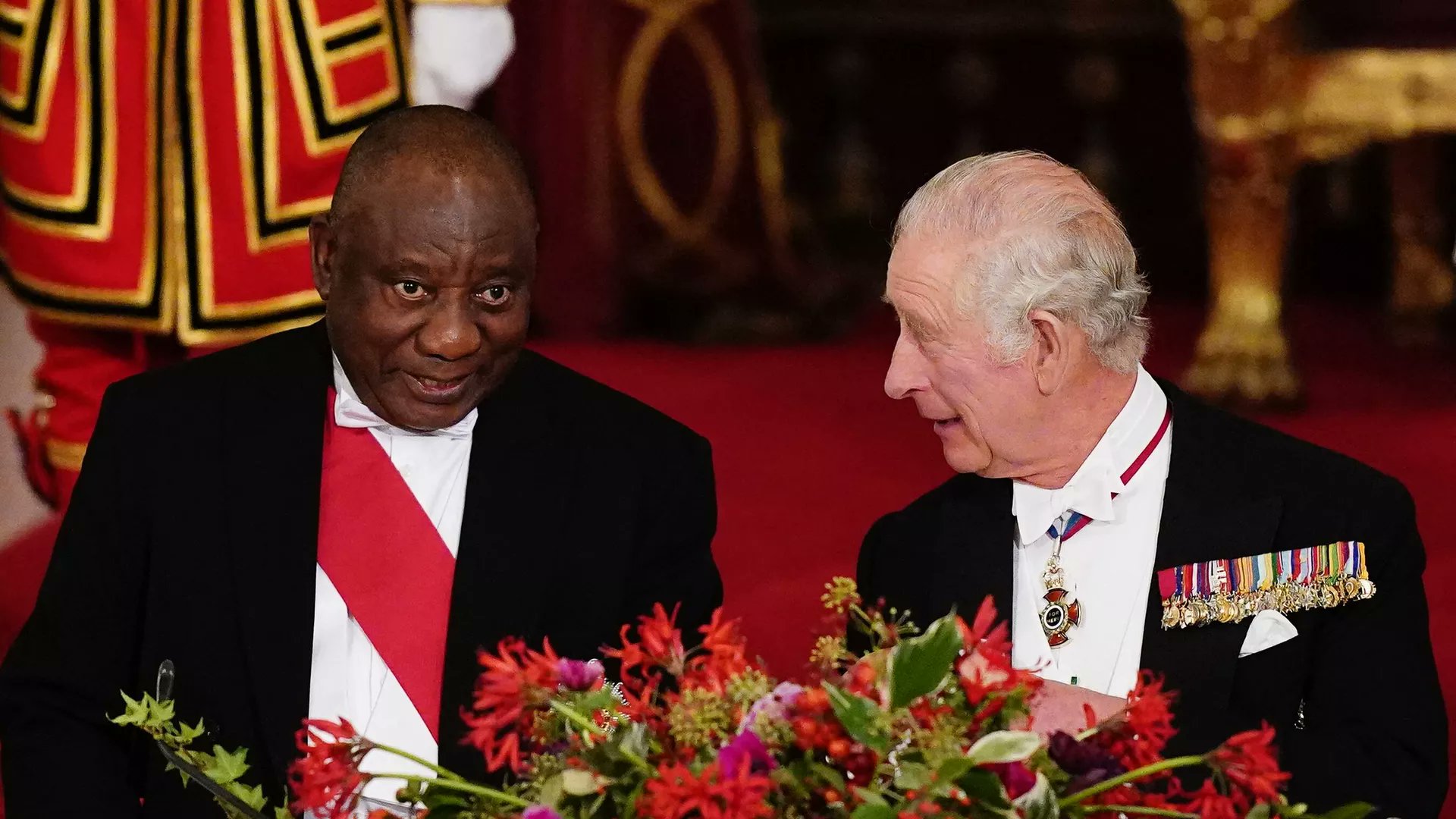
South Africa’s President Cyril Ramaphosa and King Charles III at past meeting. PHOTOS/RSA Presidency.

FacebookTwitterLinkedInRedditWhatsApp
Advertisement

The New Faces of an Old Enemy: From Cape Town to Cairo, the dream of African unity has been recited in speeches, sung in liberation songs, and written into treaties. Yet today, across parts of our continent, we see Africans turning against fellow Africans—not in a spirit of competition or healthy debate, but in the ugly, destructive form of xenophobia.

In South Africa, scenes of non-South African Africans being hounded out of hospitals, beaten in the streets, or driven from their businesses have shocked the continent. The irony is stark: many of the same nations whose citizens are now targeted once sheltered, armed, and bled for South Africa’s liberation. Entire families in Botswana, Mozambique, Angola, Zambia, and beyond were left without fathers, sons, or brothers because they fell in the fight against apartheid.

Was that fight to liberate South Africa for South Africans, or to liberate that part of Africa for Africans?

The answer, of course, is the latter. But the cancer of colonial thinking—carefully seeded through boundaries drawn on foreign maps and economic systems designed to breed inequality, and amplified through an education system that entrenches self-hate, self-disdain, and selfishness —threatens to turn our liberation into a mockery.

Colonialism’s Most Successful Trick – The Manufactured “Other”

Before colonialism, African societies were not organized around individualistic ownership of land or wealth. A man tilled land as a custodian for his community, not for personal profit. Children belonged to the extended family and clan, not to a nuclear household. One’s identity was anchored in the community and defined in kinship terms—so-and-so, son of so-and-so, of the clan of such-and-such. Tribal battles were short-lived and had a low impact, often leading to further assimilation of tribes through the adoption of sons and daughters and through marriage. Conflicts were the typical hiccups found among siblings, not of the deeply entrenched xenophobic scale seen during and after colonialism.


Also Read: Trump Govt Calls for Emergency UN Security Council Meeting Over DRC

ADVERTISEMENT

Colonial powers knew that a united Africa—rooted in communal solidarity—would be impossible to conquer. Their solution was a masterstroke of manipulation: divide the continent into artificial states, draw borders without regard for shared histories or cultures, privatize land, and sow a mentality of ownership and exclusion.

Where once land and resources were a collective trust, they became commodities for the few, leaving the majority landless and assetless. Today, the pattern repeats: a small elite owns vast tracts of land and luxury homes, while the masses scrape by in informal settlements, sometimes within sight of their dispossession.

This legacy has laid the perfect groundwork for xenophobia: we are taught to see a fellow African not as kin, but as a competitor for scarce opportunities—a “foreigner” on land that, in truth, belongs to us all.

Failed Unity – When the Dream Was Undermined

African unity has long been the antidote to such division. Leaders like Kwame Nkrumah, Julius Nyerere, and Haile Selassie envisioned a United States of Africa—one economy, one voice, one destiny. But these visions repeatedly stumbled, sabotaged by Cold War politics, internal leadership rivalries, and, most of all, neo-colonial interference.

The Organisation of African Unity, formed in 1963, was a step forward, but it often defaulted to protecting sovereignty over pursuing deeper integration. The African Union later expanded the vision, birthing frameworks like the African Continental Free Trade Area (AfCFTA) to dismantle trade barriers between states.

Yet, xenophobia is a direct threat to these efforts. How can AfCFTA flourish when borders are policed not just by immigration officers, but by mobs inflamed with hostility toward African traders and workers? How can Regional Economic Communities (RECs) like SADC, EAC, and ECOWAS survive when political opportunists stir resentment against “foreign” Africans to mask governance failures?

ADVERTISEMENT

Every xenophobic attack is more than an assault on individuals—it is an attack on the pillars of African integration.

The New Colonialism – Neo-Extractivism and the Mirage of Prosperity

Today’s colonialism doesn’t arrive in ships with flags—it comes as “investment” tied to exploitative contracts, foreign-owned mines, agribusiness concessions, privatization of state-owned properties through proxies, and luxury estates built for non-Africans [or superior – alienated Africans] on prime African soil. The same economic order that keeps millions in poverty benefits when Africans distrust each other. It is a scheme driven through and “apartheid masqueraded as the wallet” – a liberal economy which segregates people willingly. A few “special” Africans are exposed to the luxurious tastes of high-end vehicles, accommodations, fine dining, and refined, high-class conversation, all steeped in a vocabulary associated with wealth and sophistication.


Also Read: How Trump Plans to Use Kenyan Workers for Refugee Mission in South Africa


Why? Because a divided Africa cannot negotiate as one bloc for fair trade, equitable resource sharing, or environmental justice. Instead, we are kept busy fighting among ourselves for crumbs while the real wealth—our minerals, our fisheries, our forests—is siphoned away.

Reclaiming the African Lens – From “Foreigner” to “Fellow”

The antidote to xenophobia will not be achieved through law enforcement or public awareness alone —it requires a complete decolonization of the African mind. We must reject the individualistic, exclusionary mindset implanted by colonialism and return to the philosophy that sustained us for millennia: Ubuntu—I am because we are.

This means seeing every African not as a threat, but as part of one extended family. It means remembering that the fisherman from Mozambique, the trader from Nigeria, and the doctor from Zimbabwe are not interlopers—they are us. Our liberation movements understood this; our current politics must remember it.
Unity is Not a Luxury—It’s Survival

Climate change, global economic shifts, and a scramble for Africa’s resources are intensifying competition. If we face these challenges as 54 isolated states, each suspicious of its neighbors, we will be picked apart—politically, economically, and culturally—and ultimately erased from the face of relevance.

The colonial playbook is still in use: keep Africans divided, and control is easy. Xenophobia is simply the latest edition. Resisting it transcends charity toward foreigners—it requires us to safeguard our collective survival, our economic independence, and our dignity as a people.

If we do not close ranks, our grandchildren may inherit a continent where Africans are strangers everywhere, even in their birthplace. But if we stand together—across borders, cultures, and languages—the dream of African unity can still be rescued from the ashes of betrayal.

Because an injury to one African is an injury to all Africans.

About the Author

This article was written by Dr. Mwenda Mbaka. Dr. Mbaka is a veterinarian with over 40 years of experience and a former Animal Welfare Expert with the African Union–IBAR. He has been at the forefront of advancing Africa’s animal welfare and sustainable development agenda. Beyond his professional career, he is deeply committed to ecophilosophy—exploring the moral and spiritual dimensions of humanity’s relationship with animals, ecosystems, and the planet. Inspired by African Traditional Culture, which emphasizes Ubuntu, kinship, and coexistence, his writings honor Africa’s philosophical heritage and resist colonial legacies of division and exploitation—calling instead for unity, justice, and a world where humanity lives beyond race, creed, and greed.

Follow our WhatsApp Channel and X Account for real-time news updates.

Tags: AfCFTANelson MandelaSouth AfricaXenophobia
The Kenya Times - Opinion Desk

The Kenya Times - Opinion Desk

The Kenya Times Opinion Desk publishes independent commentary and analysis from contributors and invited voices. Views expressed are those of the authors and do not represent the newsroom’s reporting or editorial positions.

Related Posts

Binge-Eating Among College Students With Abundant Junk Food, A Common Setting Linked To Binge-Eating Risks.

How Globalization and Food Insecurity Fuel Disordered Eating Behavior in Young Adults

October 14, 2026
From Knowledge To Impact: A New Era Of Kenya–Uk Science Diplomacy

From Knowledge Sharing to Innovation: A New Chapter in Kenya–UK Science Diplomacy

October 10, 2026
Kenyan Teaching And Teachers Received Awards For Outstanding Contributions On October 5, At The Kasarani Indoor Arena During National World Teachers’ Day.

What Would a Truly Professional Teaching Profession Look Like in Kenya?

October 7, 2026
Beyond Borders: Why Science Diplomacy Must Drive The Next Era Of Development

Why Science Diplomacy Must Drive the Next Era of Development

October 5, 2026
ADVERTISEMENT

The Kenya Times Facebook

LATEST NEWS

  • Investors Bid Over Six Times Amount Offered for CBK’s 91-Day Treasury Bill
  • Kabarnet Stadium Nears Year-End Completion as Baringo Expands Sports Infrastructure
  • KSh1.8 Billion Road Project Launched to Link Chepkorio and Kipsaina
  • Oburu Celebrates Birthday at Nairobi Hospital Sends Message to His Wives
  • EPRA Signals Possible Fuel Price Increases in the Coming Months
  • KPSEA 2026 Timetable: Key Dates Parents and Candidates Need to Know
  • Where to Access SHA-Covered Treatment in Lamu County [Full List]
  • KRA Clarifies Invoice Systems Accepted for Government Payments
  • Winnie Odinga Declares Bid for Nairobi Senate Seat
  • Mama Ida Issues Update on Oburu After Chants
  • Win for Sifuna as Equitable Party Becomes Linda Mwananchi
  • Mystery Surrounds Control of Murang’a Health System After Ministry’s Revelation
  • New Bolt Plus Subscription Offers Customers Cashbacks and Free Deliveries from KSh 280 Per Month
  • India Offers to Supply KDF New Armoured Military Vehicles
  • KNEC Withholds Teacher Training Exam Results for Some Students
ADVERTISEMENT

Company

About Us

Our Authors

Our Experts

Social Media

Policies

Privacy Policy

House Rules

Standards and Policies

Terms and Conditions

Subscription

My Account

Contact Us

Contact Us

Join Our Team

Advertise With Us

© Copyright 2026 | The Kenya Times | All Rights Reserved

Welcome Back!

Sign In with Facebook
Sign In with Google
Sign In with Linked In
OR

Login to your account below

Forgotten Password? Sign Up

Create New Account!

Sign Up with Facebook
Sign Up with Google
Sign Up with Linked In
OR

Fill the forms below to register

All fields are required. Log In

Retrieve your password

Please enter your username or email address to reset your password.

Log In
Your Privacy and Cookies
We use cookies on our website to give you the most relevant experience by remembering your preferences and repeat visits. By clicking “Accept”, you consent to the use of ALL the cookies.
Do not sell my personal information.
Cookie settingsACCEPT
Privacy & Cookies Policy

Privacy Overview

This website uses cookies to improve your experience while you navigate through the website. Out of these cookies, the cookies that are categorized as necessary are stored on your browser as they are essential for the working of basic functionalities of the website. We also use third-party cookies that help us analyze and understand how you use this website. These cookies will be stored in your browser only with your consent. You also have the option to opt-out of these cookies. But opting out of some of these cookies may have an effect on your browsing experience.
Necessary
Always Enabled
Necessary cookies are absolutely essential for the website to function properly. This category only includes cookies that ensures basic functionalities and security features of the website. These cookies do not store any personal information.
Functional
Functional cookies help to perform certain functionalities like sharing the content of the website on social media platforms, collect feedbacks, and other third-party features.
Performance
Performance cookies are used to understand and analyze the key performance indexes of the website which helps in delivering a better user experience for the visitors.
Analytics
Analytical cookies are used to understand how visitors interact with the website. These cookies help provide information on metrics the number of visitors, bounce rate, traffic source, etc.
Advertisement
Advertisement cookies are used to provide visitors with relevant ads and marketing campaigns. These cookies track visitors across websites and collect information to provide customized ads.
Others
Other uncategorized cookies are those that are being analyzed and have not been classified into a category as yet.
SAVE & ACCEPT
LOGIN | REGISTER
  • Login
  • Sign Up
  • Cart
No Result
View All Result
  • News
    • Latest News
    • Breaking News
    • Investigations
    • Explainers
    • Fact Check
  • Politics
    • Global Politics
    • Conflicts & Security
    • Elections
    • Diplomacy
    • Government & Policy
    • Political Analysis
  • Business
    • Global Economy
    • Markets
    • Technology
    • Startups
    • Energy
    • Finance
  • World News
    • Americas
    • Asia
    • Asia Pacific
    • Africa
    • Europe
    • Middle East
  • Africa
    • East Africa
    • West Africa
    • Southern Africa
    • Central Africa
  • Health
    • Global Health
    • Public Health
    • Health Policy
    • Medical Research
    • Diseases & Conditions
    • Mental Health
    • Nutrition
    • Climate & Health
    • Health Explainers
  • Sports
    • World Cup 2026
    • Athletics
    • Basketball
    • Boxing
    • Cricket
    • Football
    • Formula 1
    • Golf
    • Rugby
  • Weather
    • Climate Business
    • Climate Change
    • Climate Solutions
    • Living Green
  • Culture
    • Arts
    • Film & TV
    • Food and Recipes
    • Lifestyle
    • Music
    • People
    • Travel
  • Opinion
    • Editorials
    • Letters
  • Behind The Brand
  • Contact Us

Not enough quota to unlock this post
Unlock left : 0
Are you sure want to cancel subscription?