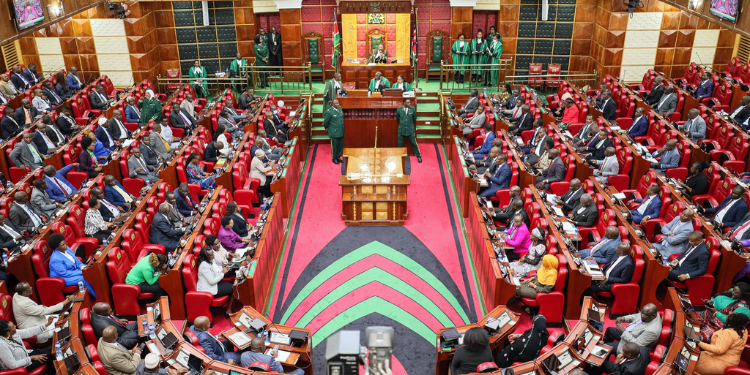
On March 5, Members of Parliament (MPs) passed the National Infrastructure Fund Bill, 2026, which is set to mobilize Ksh5 trillion for priority development projects.
The Bill, which establishes the NIF, is expected to pave the way for the mobilization of resources for priority projects across key sectors, including transport, energy, water, and digital infrastructure.
The Fund is set to support development across national highways, railways, ports, energy, water, irrigation, digital connectivity, agribusiness, and other strategic projects.
Compared to earlier models that relied heavily on borrowing, the National Infrastructure Fund (NIF) is designed to attract investment from both public and private sectors.
Majority Leader Kimani Ichung’wah hailed the legislation as the most significant since the 1965 Sessional Paper No.10, saying it solidifies Kenya’s journey toward Singapore and lays out a roadmap to first-world status.
The Bill now awaits the President’s assent.
What Amendments Were Made to the National Infrastructure Fund Bill, 2026?
The bill, which was read for the third time on Thursday, faced opposition from some Members of Parliament.
Some legislators had expressed concerns over oversight and the risk of excessive Executive influence, particularly involving the Treasury Cabinet Secretary.
To address these concerns, amendments were introduced to bolster parliamentary oversight of the Fund.
Expanding Parliament’s role in monitoring its operations was a key recommendation from stakeholders and the public during consultations on the Bill.
The Departmental Committee on Finance and National Planning, led by MP Kuria Kimani, also proposed a series of safeguard measures to enhance transparency, accountability, and professional management of the Fund.
MPs Updated on the Establishment of the Governing Council
Another amendment was the establishment of a Governing Council, a high-level body tasked with providing overall guidance and safeguarding the Fund’s assets.
The Council will include the Cabinet Secretary for the National Treasury as Chairperson, the Governor of the Central Bank of Kenya, and the Attorney-General.
It will also feature six non-public members with proven expertise in finance or public policy, appointed by the President for a three-year term.
To further shield the Fund from political influence, the Board of Directors was restructured: four independent directors must now be competitively selected by the Governing Council.
According to the National Infrastructure Fund 2026 Bill, the fund will be managed by a Board of Directors and a Chief Executive Officer (CEO), with clear roles and responsibilities to ensure accountability and efficiency.
The Board will be made up of an independent chairperson, the Cabinet Secretary for the National Treasury (or a designated representative), four independent directors, and two experts with senior leadership experience in development banking.
All members must have at least 15 years of senior management experience.
The CEO will be competitively recruited by the Board, will serve a four-year term, renewable once, and will oversee the Fund’s day-to-day operations.
In addition, the Cabinet Secretary will designate an Administrator to handle key financial duties, including maintaining bank accounts and ensuring that the Fund does not exceed its available resources.
Also Read: Govt Clears Road Contractors Bills after Securitization, Boosting Jobs and Infrastructure in Kenya
The Board has extensive powers to achieve the Fund’s objectives. It can invest in projects through equity or other project financing mechanisms, acquire and manage financial securities and real estate as needed, and oversee project preparation.
This includes conducting feasibility studies that cover technical, legal, social, economic, and environmental considerations, as well as negotiating investment agreements for strategic infrastructure projects.
Additionally, Parliament’s oversight has been enhanced as the Treasury Cabinet Secretary is now required to submit the Fund’s Investment Policy to the National Assembly, which will have 90 days to approve, amend, or reject it.
Also Read: 15,000 New Jobs for Youth as Ruto Launches Nairobi-Nakuru-Mau Summit Project
Sources of Funding
The National Infrastructure Fund will draw its resources from multiple channels, including:
- Proceeds from the privatization or sale of government assets
- Funds appropriated by Parliament
- Fees, revenues, or assets generated through the Fund’s operations
- Donations, loans, or any other contributions provided to the Fund
Follow our WhatsApp Channel and X Account for real-time news updates.