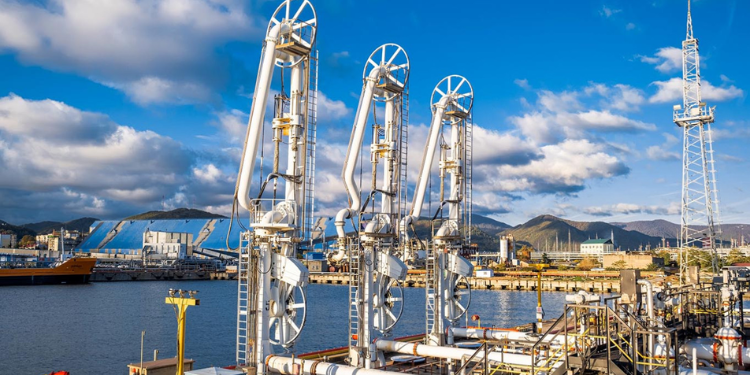
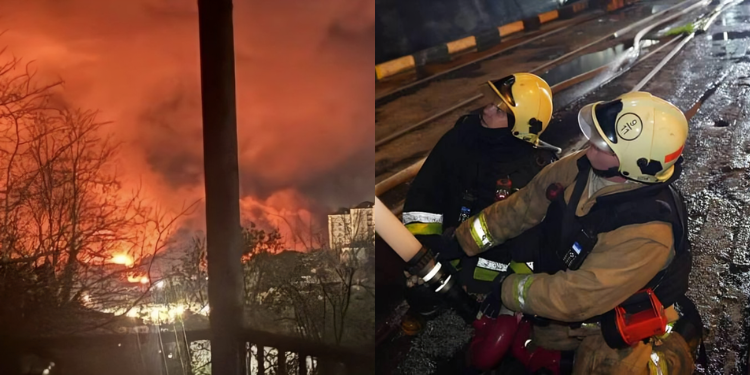
Ukraine has hit Russia’s key Tuapse oil refinery for the third time in days, setting off another fire at one of Moscow’s most important fuel export hubs on the Black Sea and deepening pressure on the country’s energy sector.
Russian authorities said Ukrainian drones struck the Rosneft‑owned refinery early on Tuesday, April 28, triggering a large fire at the site.
The Tuapse refinery, located in the southern Krasnodar region, has been shut down since April 16 after an earlier drone attack, according to industry sources.
The refinery is among Russia’s top ten oil‑processing facilities and the only major refinery on the country’s Black Sea coast.
It has the capacity to process about 12 million metric tonnes of crude oil a year, producing diesel, fuel oil, naphtha, and other products mainly destined for export.
Ukrainian War on Russia’s Energy Sector
The attack is the latest in a series of Ukrainian strikes targeting Russian oil and fuel installations in recent weeks as the war drags on.
Regional governor Veniamin Kondratiev said falling drone debris sparked the blaze, a description Russian governors and officials have repeatedly used following similar attacks.
Also Read: Govt Introduces Mandatory Registration for Irrigation Professionals with Set Academic Qualifications
Emergency crews were sent to the scene, with more than 120 firefighters and dozens of vehicles deployed to contain the fire.
Governor Veniamin Kondratiev said there were no immediate reports of injuries.
The April 28 attack by Ukraine on the Tuapse refinery follows two earlier strikes on the same facility on April 16 and April 20, marking the third hit in less than two weeks.
Those earlier attacks caused major fires, damaged storage tanks, and forced a full halt to operations at the plant.
One of the previous strikes also led to an oil spill at sea near the Tuapse port terminal, which is closely linked to the refinery’s export operations.
The Russian government reported that fuel shipments from the port have been disrupted, dealing a blow to Russia’s ability to send refined products to overseas markets.
Russian officials ordered the evacuation of nearby streets after the latest blaze, citing concerns the fire could spread.
Temporary flight restrictions were also imposed at airports in Krasnodar, Gelendzhik and Sochi as air defences were activated in response to the drone attack.
Also Read: Safaricom Increases Fuliza Limits for Thousands of Customers in New Rate Adjustment
Ukraine has sharply increased strikes on Russian oil refineries, depots, and pipeline infrastructure since March.
Their aim is to cut fuel supplies to Russia’s military, reduce export revenues, and strain the wider economy by hitting high‑value targets far from the battlefield.
Russia has accused Ukraine of targeting civilian infrastructure, while Kyiv argues that energy facilities supporting the war effort are legitimate military targets.
Anger Amidst Environmental Damage
Beyond the immediate impact on fuel supplies, the repeated attacks on Tuapse have sparked growing environmental concerns along the Black Sea coast.
Russian authorities previously admitted that oil spills from earlier strikes had polluted long stretches of coastline near Tuapse, and that cleanup crews had collected thousands of cubic meters of contaminated soil and oily water.
Residents have complained of strong petroleum smells, black residue after rainfall, and worsening air quality following the fires.
Local monitoring stations have recorded elevated levels of hazardous substances such as benzene and soot during and after previous blazes.
Residents in nearby resort areas, including Sochi and Anapa, reported smoke drifting over their towns, while social media users shared images they described as “oil rain”.
Environmental groups and residents have also reported dead dolphins, fish, and birds washing ashore in affected areas, raising fears of longer‑term damage to marine life in the Black Sea.