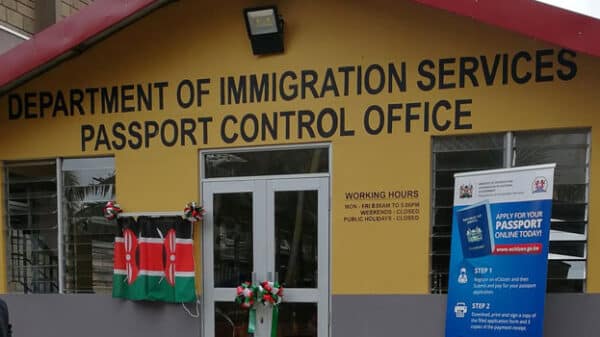

Foreign nationals intending to live and work in Kenya must obtain a valid work permit issued by the Director of Immigration Services under the Kenya Citizenship and Immigration Act, 2011.
The permit is mandatory for anyone engaging in employment, business, investment, or professional activities in the country.
Applications are made online through the government’s eFNS portal.
They are then reviewed by the Department of Immigration Services and, following recommendations from the Permit Determination Committee, are subject to final approval by the Director of Immigration Services.
Classes of Work Permits in Kenya
Kenya issues different categories of work permits depending on the nature of activity a foreign national intends to undertake in the country.
Class A: Prospecting and Mining (KEP/A)
Issued to persons engaging in mining activities, either individually or in partnership.
Class B: Agriculture and Animal Husbandry (KEP/B)
Issued to individuals involved in farming or animal husbandry operations in Kenya.
Class C: Prescribed Profession (KEP/C)
Issued to members of recognized professions intending to practice in Kenya.
Class D: Employment (KEP/D)
For persons offered specific employment by a Kenyan employer or approved organization, requiring skills not readily available locally.
Class F: Specific Manufacturing (KEP/F)
Issued to individuals engaging in specific manufacturing activities.
Class G: Specific Trade, Business or Consultancy (KEP/G)
For foreign nationals intending to operate a business, consultancy, or non-prescribed professional activity.
Class I: Religious or Charitable Activities (KEP/I)
Issued to missionaries and persons engaged in approved religious or charitable work.
Class K: Ordinary Residents (KEP/K)
For individuals aged 35 and above with assured annual income from outside Kenya and no intention to work locally.
Class M: Refugees (KEP/M)
Issued to recognized refugees and their spouses who intend to engage in lawful employment or business.
Also Read: KICC Venue Booking Guide: Prices, Halls and How to Book in Nairobi
Work Permit Application Steps
Register and Access the eFNS Portal
Applicants are required to begin by creating an account on the eFNS system under the eCitizen platform.
Once registered, users can log in and navigate to the Directorate of Immigration Services section to access permit applications.
The official application portal allows foreign nationals to select the relevant permit category and begin the process.
After logging in, applicants choose “Submit Application” and proceed to the work permit section depending on their intended activity in Kenya.
Select Permit Class and Fill Application Form
Kenya offers different categories of work permits, including employment, business, agriculture, mining, and professional services.
Applicants must select the correct class before completing the online form. The form requires detailed personal and professional information, including:
- Full identification details and passport information
- Purpose of stay in Kenya
- Employer or business details
- Educational and professional qualifications
- Supporting declarations and compliance statements
Incorrect classification or incomplete information may lead to rejection of the application.
Upload Documents, Pay Fees and Await Approval
After completing the application form, applicants must upload supporting documents. These typically include:
- Valid passport biodata page
- Passport-size photographs
- Cover letter from the employer or the applicant
- Academic and professional certificates
- Business registration documents (for investors or entrepreneurs)
- Any required regulatory approvals depending on the permit class
Once documents are submitted, the system generates a payment invoice.
Applicants must pay the prescribed processing fees through the integrated government payment channels.
The applications are then reviewed by the Department of Immigration Services, followed by an assessment by the Permit Determination Committee, before final approval by the Director of Immigration Services.
Successful applicants are issued an electronic work permit, which can be downloaded from the eFNS portal and endorsed by immigration authorities.
Once approved, the work permit allows the holder to legally reside and engage in the approved activity in Kenya.
Applicants are notified via their eFNS accounts and email updates about the progress of their applications.
Also Read: How to Renew Your Kenyan Passport While Abroad
Kenya Work Permit Fees
| No. | Category | Processing Fee (KSh) | Issuance Fee (KSh) |
| 1 | Work permit processing fees (all classes except Class I) | 10,000 | 20,000 |
| 2 | Work permit processing fees – Class I (Religious activity) | 1,000 | 5,000 |
| 3 | Class A – Mining | 20,000 | 500,000 |
| 4 | Class B – Agriculture | 20,000 | 250,000 |
| 5 | Class C – Professional | 20,000 | 250,000 |
| 6 | Class D – Employment | 20,000 | 500,000 |
| 7 | Class F – Manufacturing | 100,000 | 250,000 |
| 8 | Class G – Investor | 20,000 | 250,000 |
| 9 | Class I – Religious activity | 5,000 | 50,000 |
| 10 | Class K – Retiree | 20,000 | 250,000 |
| 11 | Express Work Permit | 20,000 | 100,000 |
| 12 | Reprocessing fees for Work Permit Appeals | – | 20,000 |