The United States has deployed nuclear-powered aircraft carriers, stealth bombers, and advanced fighter jets as part of an expanding military operation against targets in Iran.
The U.S. Central Command (CENTCOM) in a new operational update on March 12, 2026, said that since Operation Epic Fury began on February 28 after authorization from U.S. President Donald Trump, American forces have struck around 6,000 targets across Iran.
According to the update, the strikes have targeted a wide network of Iranian military facilities including command-and-control centers, ballistic missile launch sites, weapons manufacturing plants, and air defense installations.
CENTCOM said many of the facilities are linked to the Islamic Revolutionary Guard Corps, the powerful military branch that oversees much of Iran’s missile and regional operations.
Iranian military infrastructure targeted
The U.S. military reported its campaign focuses on reducing Iran’s capacity to coordinate attacks and manufacture weapons for use in regional conflicts.
Targets listed in the update include:
- IRGC headquarters and intelligence sites
- Ballistic missile bases and launch systems
- Integrated air defense systems
- Anti-ship missile installations
- Military communications infrastructure
- Drone and missile manufacturing facilities
- Surface-to-air missile sites
CENTCOM reported the strikes aim to weaken Iran’s operational command networks and reduce its ability to threaten U.S. forces and maritime traffic in the region.
Also Read: Obama Era Again? How Iran Is Forcing Trump to Pay Billions to End the War
The Central Command also said that more than 90 Iranian vessels have been damaged or destroyed, including over 60 ships and more than 30 minelaying vessels.
Minelayers were among the highest-priority targets due to concerns about threats to global shipping lanes.
The region includes the Strait of Hormuz, a narrow waterway through which roughly one-fifth of the world’s oil supply typically passes.
Iran has repeatedly stated that the strait could be closed if the war continues.
Advanced U.S. military assets deployed
The campaign has involved a large array of American air, naval, and missile defense capabilities.
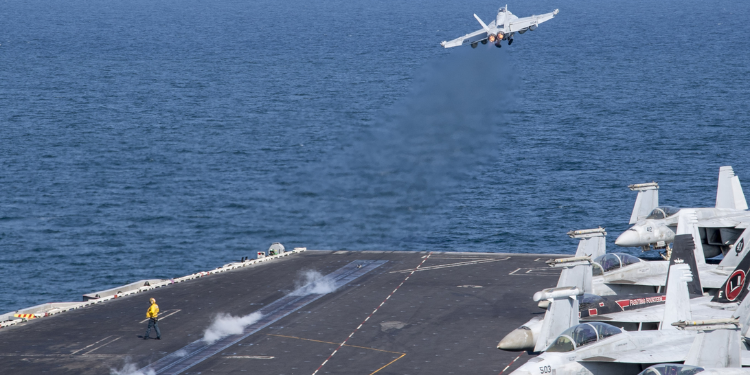
CENTCOM confirmed that nuclear-powered aircraft carriers are supporting the campaign. This allows the U.S. Navy to launch strike aircraft deep into Iranian territory and maintain a persistent presence in regional waters.
Long-range bombers used include the B‑2 Spirit stealth bomber, the B‑52 Stratofortress, and the B‑1B Lancer.
Fighter aircraft supporting the operation include the stealth-capable F‑22 Raptor and F‑35 Lightning II, as well as the F‑15 Eagle, F‑16 Fighting Falcon, and F/A‑18 Super Hornet.
Ground-attack aircraft such as the A‑10 Thunderbolt II have also been deployed to support strike missions.
CENTCOM’s update further listed reconnaissance and surveillance platforms, including the U‑2 Dragon Lady and P‑8 Poseidon maritime patrol aircraft.
Unmanned systems, including the MQ‑9 Reaper drone, are also involved in identifying targets and tracking Iranian military movements.
Defensive systems are also being used to protect American forces and allied infrastructure.
CENTCOM said the operation includes the deployment of the Patriot missile defense system and the THAAD missile defense system to intercept incoming missiles and drones.
Guided-missile destroyers, counter-drone technology, aerial refueling tankers, and cargo aircraft are also supporting the mission. Officials added that the campaign includes “special capabilities” that were not disclosed in the public briefing.
Iran war expands across the Middle East
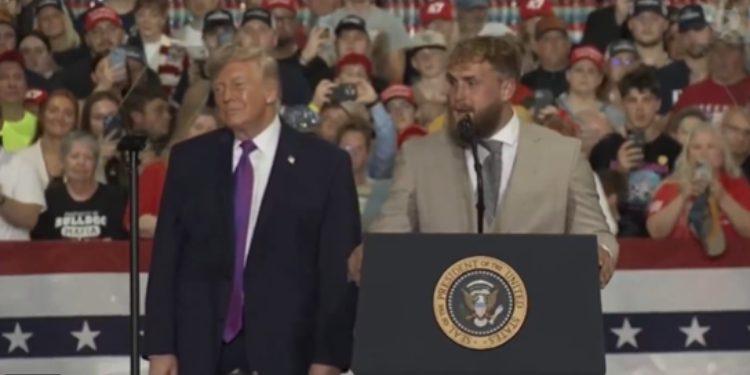
The update comes amid rapidly escalating fighting across the region. Speaking at a rally in Kentucky, Trump said the United States had already inflicted heavy damage on Iranian forces.
“We knocked out their leadership twice,” the president said, without providing further details.
Trump also stated that the U.S. military had taken significant actions against Iran’s navy.
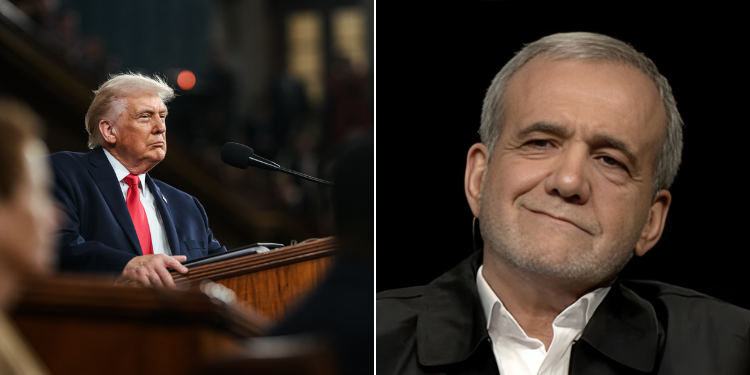
Iranian President Masoud Pezeshkian on his part said Tehran remains committed to regional peace but warned that the war can only end if the country’s “legitimate rights” are recognized.
Also Read: Iran’s New Supreme Leader Threatens Trump in First Address After Appointment
Meanwhile, the Islamic Revolutionary Guard Corps said attacks on American military bases in the Middle East would continue.
IRGC spokesman Ebrahim Zolfaghari said on state television that Iranian forces would expand missile and drone strikes targeting U.S. positions.
“A large number of American forces have been killed and wounded in attacks on U.S. bases,” Zolfaghari said, without providing independent verification.
He also warned that Iran continues to monitor the Strait of Hormuz.
“Our enemies have no right to pass through it,” he said.
Global reaction and rising oil prices
The conflict has triggered major disruptions to global energy markets.
The United Nations Security Council on Wednesday approved a resolution sponsored by the Gulf Cooperation Council (GCC) calling on Iran to halt attacks against Gulf states.
At the same time, Gulf countries, including Saudi Arabia, Qatar, and Kuwait, reported intercepting incoming drones and missiles.
Oil prices have surged amid fears of supply disruptions. The International Energy Agency said member nations agreed to release 400 million barrels of oil from strategic reserves to stabilize markets.