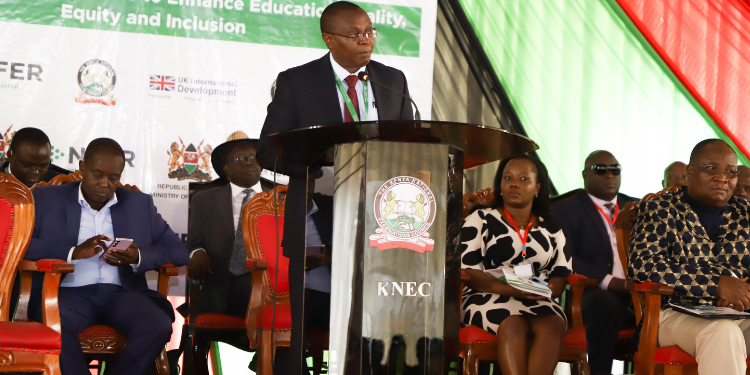

Kenya’s Junior Secondary School (JSS) system is set for major restructuring following resolutions made at the National Conference on Education held from 7th to 9th May 2026 at Lake Naivasha Resort.
“Deliberations during the Conference focused on key issues affecting the education sector, including access, equity, inclusion, quality assurance, teacher development and management, foundational learning, university education, and Technical and Vocational Education and Training,” read part of the statement.
The forum brought together education stakeholders, including government officials, Parliament’s education committee, the Teachers Service Commission (TSC), teachers’ unions, development partners, and education leaders to discuss on reforms aimed at strengthening the implementation of the Competency Based Education (CBE).
Key Junior Secondary Reforms
The government proposed integrating Junior Secondary School into a comprehensive school system, in which primary and junior secondary education will operate under a single institutional framework.
Also Read: KNEC Sets New Directives for Principals on Grade 10 Assessment Centres
Under this model, schools will be governed by a single Board of Management led by a Head of Institution, supported by two deputy headteachers: one overseeing the primary section and the other responsible for JSS.
The restructuring is intended to improve coordination between the two education levels, reduce administrative inefficiencies, and strengthen learner transition from primary to junior secondary.
During the meeting, Stakeholders noted that the current separation between primary and JSS has created challenges in resource sharing, infrastructure use, and staffing balance.
Additionally, the conference resolved that capitation and school fee structures within comprehensive schools should be rationalized and harmonized under a unified framework.
The unified framework is aimed at ensuring the equitable distribution of resources, improved financial planning, and consistent funding in both primary and JSS levels within the same institution.
Teacher Deployment, Training, and Welfare Reforms
The conference resolved that teacher training should not only respond to immediate staffing shortages but also align with long-term national education and development needs.
This approach is expected to strengthen the supply of qualified teachers for JSS subjects under the Competency-Based Education curriculum.
Stakeholders agreed that teachers should be equitably distributed across the country to address regional disparities in staffing.
It was also resolved that the country should adopt standardized school uniforms across all levels of education, including Comprehensive and Senior Schools, to promote uniformity, equity, and affordability. Schools shall, however, be permitted to maintain a distinct identity through specific uniform badges.
The conference also addressed teacher employment terms, resolving that individuals previously referred to as “teacher interns” will now be designated as “teachers on contract.” These teachers are expected to transition to Permanent and Pensionable (P&P) employment upon successful completion of a two-year contract.
Also Read: TSC Orders Teachers’ Transfers in Major Shake-Up
Governance, Data Systems, and Institutional Support
To strengthen governance and planning within JSS, the conference emphasized the central role of the Kenya Education Management Information System (KEMIS) as the primary national data platform.
All JSS-related planning, staffing, and resource allocation will be guided by data collected through KEMIS.
The conference also proposed the consolidation of bursary and scholarship systems into a unified national framework covering basic education, TVET, and university levels.
This system will be digitized and managed through KEMIS to improve transparency and equitable access.
Schools that fail to attract Grade 10 learners after JSS and are non-viable will be converted into satellite or extension schools to optimize infrastructure use.
Stakeholders also called for enhanced sensitization on CBE to improve implementation at the JSS level, alongside strengthened collaboration between education institutions and agencies such as the National Authority for the Campaign Against Alcohol and Drug Abuse (NACADA) to support learner welfare and discipline.