




![Number Of Students Enrolled For Bachelor’s, Master’s And Phd Degrees In 2024 [List]](https://cdn.thekenyatimes.com/uploads/2025/04/Graduates-during-the-7th-Graduation-Ceremony-of-Kirinyaga-University-held-on-Friday-October-13-2023.-PHOTO-Kirinyaga-University.png "Number Of Students Enrolled For Bachelor’s, Master’s And Phd Degrees In 2024 [List]")























































The State Department for Youth Affairs and the Creative Economy has issued an urgent call for applications for co-investment funding under the Kenya Jobs and Economic Transformation (KJET) Project, targeting micro, small, and medium enterprise (MSME) clusters engaged in value addition.
The KJET Project is a five-year Government of Kenya initiative running from 2024 to 2029 and is funded by the World Bank. Its overall objective is to increase private sector investment, improve access to markets and sustainable finance, and create and enhance jobs across the country.
In a statement on Thursday, December 18, the State Department for Youth Affairs said that the application deadline for the project is 15 days away.
Call for KJET applications
Stakeholders have been urged to widely circulate the opportunity among cooperatives, associations, self-help groups (SHGs), community-based organisations (CBOs), cluster-based entities, and limited companies involved in value addition activities.
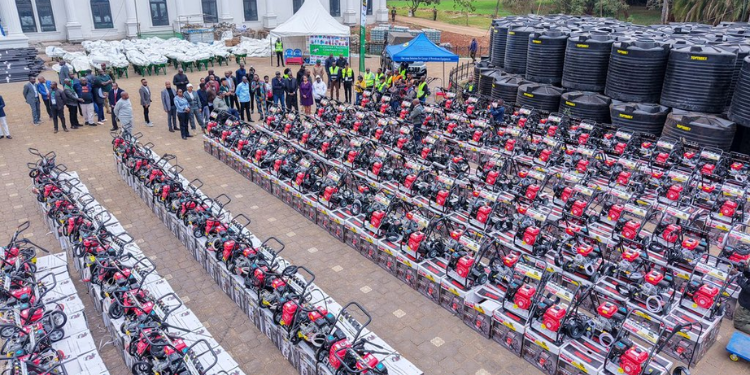
The funding seeks to support eligible MSME clusters that require Business Development Services (BDS) and co-investment assistance to acquire value-added machinery. Under the programme, the government will cover up to 70 per cent of the machinery cost, with the total value of supported machinery capped at Ksh20 million per cluster.
Also Read: How Kenyan Youth Can Check and Apply for Nationwide Opportunities Via New Govt Portal
Priority will be given to clusters operating within key value chains, including building and construction, edible oils, cotton, tea, coffee, the blue economy (fisheries, aquaculture and marine resources), leather, dairy, rice and textiles, as well as other relevant agricultural and industrial value chains.
“This is a time-sensitive opportunity under the *Kenya Jobs and Economic Transformation (KJET) Project* to enhance processing capabilities, boost productivity, and drive economic growth in these sectors. Please share this message far and wide within your networks today to ensure no eligible group misses out!”
How to apply
In its website, the KJET Project has outlined key guidelines to help applicants prepare for the ongoing call for applications under its co-investment and BDS support programme. Applicants are advised to review all requirements carefully before beginning the application process to ensure compliance.
Clusters applying for support must first confirm that they meet the eligibility criteria set out in the call for applications. All sections of the application form must be completed, and applicants must upload clear, accurate supporting documents. Incomplete applications will not be considered, and only one application per cluster is permitted.
Interested applicants are advised to review the application requirements, eligibility criteria and submission guidelines through the official KJET portal at https://kjet.msea.go.ke.
Through its interventions, the project aims to support up to 1,200 MSMEs and create approximately 45,000 jobs across all 47 counties. The initiative seeks to boost productivity, strengthen competitiveness, and improve livelihoods, with a focus on inclusive growth that benefits women and other underserved groups.
KJET is structured around four main components. The first focuses on strengthening business and investment-enabling reforms and is implemented by the State Department for Investment Promotion in collaboration with the Kenya Investment Authority.
The second component, implemented by the Micro and Small Enterprises Authority (MSEA), aims to enhance MSME cluster competitiveness through BDS and co-investment support.
The third component supports green financing and climate resilience for SMEs and is implemented by the Kenya Development Corporation. On its part, the fourth component covers project management, monitoring, and evaluation and is overseen by the State Department for Micro, Small and Medium Enterprises Development.
How Kenya Jobs & Economic Transformation will work
Under component two, selected MSME clusters receive targeted support to improve productivity, efficiency, and job creation. A total of 1,200 clusters will benefit from free general and specialised training through BDS, while 600 clusters will receive co-investment support to acquire machinery. The co-investment model covers 70 per cent of the machinery cost, with clusters contributing the remaining 30 per cent.
Also Read: Platforms Where Kenyan Youth Can Find Remote Job Opportunities
The programme prioritises value chains identified under the Bottom-Up Economic Transformation Agenda, including edible oils, building materials, textiles, tea, coffee, dairy, leather, the blue economy, and minerals, among others.
Cluster selection follows a structured and transparent process. Applications are first screened for completeness and eligibility, followed by on-site data validation and eligibility checks. Clusters are then evaluated through a technical scoring process using predefined criteria, with independent quality assurance conducted before final approval by a selection committee. For the first cohort of BDS training support, two clusters per county were selected, resulting in 94 clusters identified nationwide.
Eligible cooperatives, associations, and cluster-based entities seeking to scale operations, innovate, and access new markets have been invited to apply through the official KJET portal while the call remains open.
Follow our WhatsApp Channel and X Account for real-time news updates.