














































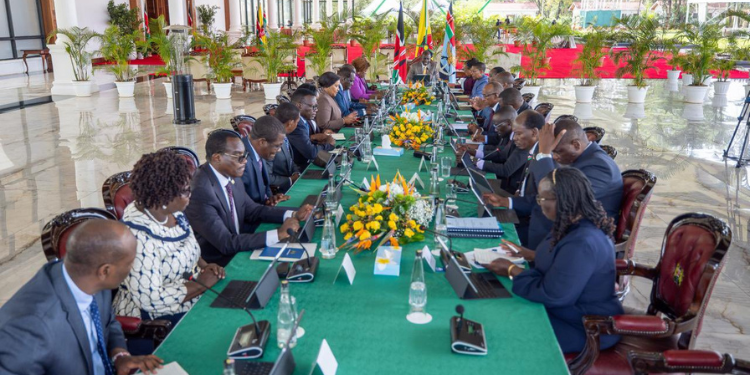


In the year under review, the country’s security landscape was generally tense, with the defining feature being the death of a prominent political figure, Raila Amollo Odinga (RAO). A carryover from the 2024 Gen Z protests led to violent civil unrest mid-year. Hitmen exterminated two prominent Kenyans in the capital city. The Al Shabaab continued with surprise attacks mainly in the North Eastern counties, while two militia-linked attacks from across the Ethiopian border were also reported.
Banditry and cattle rustling were also common occurrences in four counties. A multiagency law enforcement disrupted wildlife trafficking, a counterfeit gold network, and the recovery of a massive drug haul in the Indian Ocean. Overall, the country’s domestic stability remained intact amid evolving regional, political, and governance transitions.
Neighbouring Tanzania experienced periods of unrest following general elections, and from Uganda, the country’s commander-in-chief made a baffling announcement, tottering on an almost open military threat against Kenya.
Internationally, a massive fraud in the USA, mainly attributed to the immigrant Somali community, was unearthed, which is bound to have repercussions on Kenya.
Raila- Death of an enigma
The country experienced a period of national reflection following the death and burial of former Prime Minister Raila Odinga. (RAO). Despite the scale of the mourning crowds during his memorial and burial, national and county security agencies managed to contain the peace leading to limited casualties and injuries.
Comment: The death of the political enigma has the following security implications:
- RAO had proven himself as a stabilizing influence several times during periods of national tension.
- His larger-than-life persona and huge following always acted as a restraint to some probable excesses of the national government.
- The political party he led is now in turmoil with the top honchos fighting for supremacy and relevancy. The immediate impact of his demise was visible during the conduct of by-elections, where violence led to fatalities.
- RAO’s role as a regional mediator played a critical role in peace making in the region.
Terrorism- Hail to our uniforms
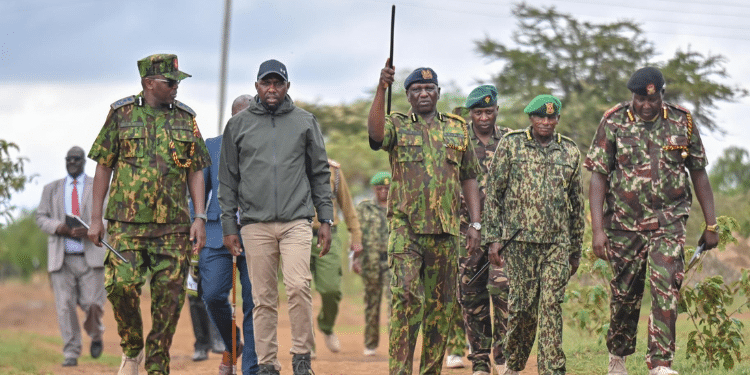
In the year under review, Al Shabaab launched 8 major terrorist incidents, which involved three IED attacks and an assault on a KPR camp, leading to 8 NPS officers, 6 NPR and two civilians losing their lives, among other serious injuries. Information not entirely open to the public, though, indicates that the multi-agency security teams successfully interdicted several other AS attempted attacks with significant losses to the jihadists.
Comments: The reduced attack frequency reflects improved interdiction and better intelligence sharing among the multi-agency teams. The potential for regrouping and retaliatory operations by the jihadist group remains a clear and present danger.
Sniff, Sniff, Drugs!
Late in the year, the Kenya Navy led a multi-agency operation intercepting a stateless vessel 630 km in the Indian Ocean and seizing 124,253 kg of methamphetamine valued at KSh 8.2 billion (USD 63 million). Six Iranian nationals aboard were arrested and are assisting investigations into the drugs’ origin and destination. This operation, is among Kenya’s largest narcotics seizures and a confirmation that the country could be a major transit drug route.
Ah! Again those bandits…
Elgeyo Marakwet, Samburu, West Pokot, Turkana, and Baringo counties have always been accepted as banditry-prone areas, with the genre of banditry tied to historical inter-community conflict, cultural norms, and cattle re-stocking. The recent and present form of banditry though has now spilled over to neighbouring Meru, Laikipia, Isiolo and Narok. Counties. What is even more worrisome is that it is getting added gravitas, like the shocking killing of a priest and adoption and use of more sophisticated weapons, grenades and communication gadgetry. Several pleas from government machinery and even community dialogues led by the National Cohesion and Integration Commission (NCIC) have received scant success.
Unrelated, but of interest, armed militia from neighbouring Ethiopia made an incursion into the country on three different occasions along the common border. Still, it were successfully repulsed by their own country’s forces.
Comment: With the cultural norms still strong in the psyche, it will take time before the last bandit bullet is fired. It is, however, comforting that the government has adopted other lines of operations like opening up roads and shopping centres in the bandit-prone areas to build ethnic trust.
Butcher’s bill? Kenya’s soldiers of fortune,
Social media has been awash with cases of Kenyans duped into travelling to Russia and injected into the war front to support the war effort for Russia against Ukraine. Reportedly, up to 200 Kenyans have so far joined this recruitment pipeline, with several believed killed in action and some injured.
Also Read: How Kenyans Are Recruited to Join Ukraine, Russia Military – Combat Veteran Explains
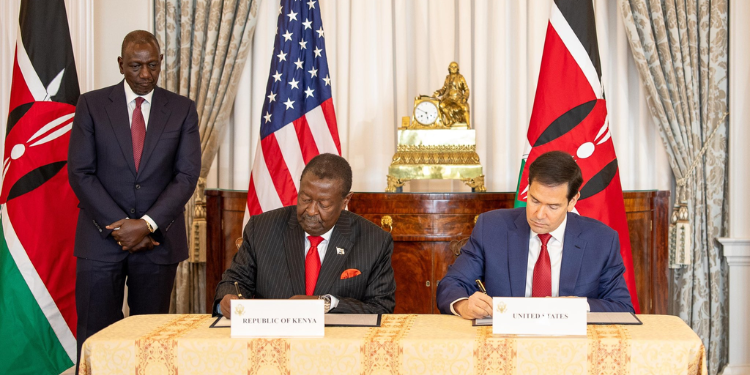
The government has owned up to the claims and is in close liaison with the Russian authorities for the allegedly duped one-time mercenaries to be repatriated back home.
Comments: Soldiers of fortune have always been a factor in wars, and the Russo-Ukraine conflict is no exception. As claimed, many of the would-be mercenaries likely made the desperate move to Russia willingly and knowingly, citing frustrations and a lack of opportunities. This matter, however, has so many entanglements and is therefore likely to remain on the national front page for a long time.
Maandamano loading! – In June and early July, the country again experienced another bout of low-level civil unrest led by the Gen Z, billed as a remembrance of the “comrades” lost in the demonstrations of 2024. The government security apparatus efficiently but ruthlessly quelled the demonstration. In their annual report, the Kenya National Human Rights report documented 57 Killings, 15 abductions, and 661 cases of torture, arbitrary detentions, and enforced disappearances within this period. The KNHCR report further alleges that the citizenry remains concerned by a disturbing wave of abuses perpetrated by those meant to protect them.
Meanwhile, in Kakamega County, violent protests erupted during a citizen participation over the planned relocation of residents from Shanta village for a mining project in Ikolomani. Four people died from the violent demonstrations, with several having multiple injuries. The residents were opposed to the move, fearing the government would short-change them over the relocations.
Comments:
The Gen Z is a vocal and influential constituency in the political landscape of the country. Their perceived silencing following the latest civic unrest should be a big cause for worry and study. On the Ikolomani unrest, it is worrisome that an attempt at citizen participation in a far-flung back-town village leads to civil unrest and fatalities, which point to the massive level of poverty in the land and confirm that the administration and the populace are not on the same wavelength.
Famine Beckons? The country experienced bouts of heavy rains, yielding bountiful harvests. Ironically, select areas of the country are headed for famine especially in the arid zones. Mandera County has reported livestock losses and called for emergency relief measures. Wajir County also issued a drought alert and urged the central government to implement rapid interventions. The lack of adequate food could be replicated across the country early next year.
Tanzania
Those meddlesome noisy neighbours!
The country held a general election on October 29, which the ruling party suspiciously won by over 97% of the votes cast. The declaration of the results led to massive demonstrations, leading to lockdowns in the major urban centres.
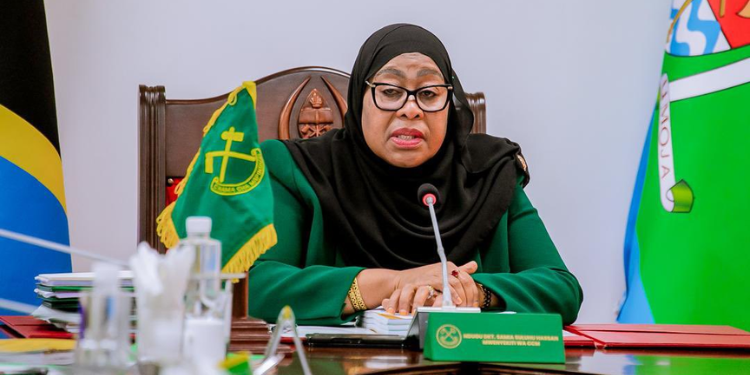
The security forces came hard on the mainly youthful demonstrators, leading to allegedly massive fatalities. Self-styled Human rights activists and some top legal practitioners who crossed over from Kenya to be in solidarity with their TZ counterparts were also manhandled by the country’s security apparatus.
While observers have declared the election not free and fair, the country’s political honchos have accused Kenya of being the source of the chaos.
Comment: The unrest that followed the October 29 General Election was unprecedented and spontaneous. The strong counter-reactions by the security forces were probably mismanaged, highlighting their inexperience and unfamiliarity with modern global best practices in crowd management. Blaming neighbouring Kenya’s human rights defenders seems mere scapegoating, lacking any substance. The aftermath of the elections is leaving deep emotional and psychological scars across the country and sets the stage for further civil unrest, dragging the country into political restiveness. The country’s leadership must climb down from its high chair and seek compromise with the opposition and civil society.
UGANDA-
Banange!! Lakes are not Oceans!
Ugandan President Museveni sparked a regional controversy by claiming that landlocked Uganda is entitled to direct ownership and access to the Indian Ocean, warning that “future wars” could break out if this access was denied. The out-of-the-blue statement from the region’s most senior leader has been deemed undiplomatic and unwarranted.
Museveni’s son and the country’s top soldier also amplified the statement by supporting his father’s unqualified remarks. Meanwhile, Uganda is set for general elections in mid-January; the presidential campaigns have, however, been very intimidating for crowds, with a strong security presence and high-handed actions.
An attempt by several civil society officials from Kenya crossing over to the country in solidarity with the leading opposition candidate was curtailed after they were arrested and locked incommunicado for several weeks leading to a strain in the two neighbours. The matter has since been sorted out amicably.
Comments: Admiringly, Kenya’s Ministry of Foreign Affairs downplayed President Yoweri Museveni’s remarks, which were probably intended for Uganda’s local audience, within the overall campaign game plan. It could also have been intended to gain some leverage with Kenya. In the forthcoming elections, the incumbent is expected to comfortably retain his seat, though the aftermath of the election is likely to extend well into the future.
International
Minnesota! – we have a problem!
The Somali community in Minnesota are under investigation for allegedly being involved in massive fraud estimated to be worth 9 billion USD. Most of the corrupt funds have reportedly been remitted outside the strict banking cycles and have mainly found their way to the Middle East, Somalia, and Kenya.
In Somalia, it is claimed the money could have trickled in to support the Al Shabaab jihadists. The USA president, in his characteristic crude language, argued that the corruption and crime in the Somali community in the USA is far above the national mean for one immigrant community, defining the community as a national security concern.
As a consequence of this, the US Federal government has ordered investigations and subsequent deportations of all Somalis with doubtful immigration status.
Comments
The impact of what is happening in Minnesota could have several comebacks on the Kenyan security landscape; as follows:
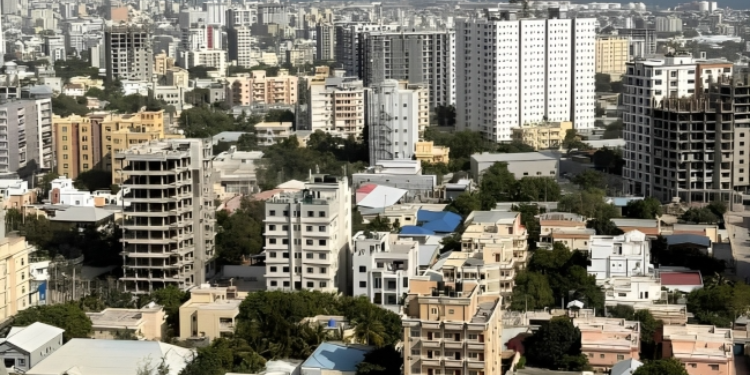
- Many of the Somali immigrants now in the USA were once refugees in Kenya; their attachment to the country is therefore understandable and considering that Kenya has better investment opportunities, it is a lead that the significant economic upsurge within the real estate sector within Nairobi Eastleigh area and some towns could be traced to the Minnesota fraud. Probably. The boom is expected now to end, and with it the accruing benefits hitherto enjoyed.
- The leading congresswoman in the country and the face of the Somali diaspora community has been under pressure following this exposure, and feeling cornered, she has pulled out the “racist” card, she has also pulled the “Muslim” card and lastly called out on the “greater” Somalia concept. This is bound to cause Political tension in the country. Somewhat.
- The trickle-down remittances from the massive fraud are suspected to have been supporting the Al-Shabaab Jihadi effort. Hopefully, the Jihadist activities will be dimmed following the shutdown of this fraud.
- Like Somalia, Kenya is bound to be blacklisted and lose some diplomatic standing, curtailing the ease with which many Kenyan professionals have been getting job openings in the USA.
- With the massive fraud pipeline plugged, the impact is likely to be felt economically across the subsequent job losses and meltdown.
Look forward
The security landscape is bound to be dominated by three issues;
- The political tensions are bound to persist as the general elections date draws near and the shadow of RAO continues to shape the political narratives.
- The Al Shabaab, as always, are likely to make a surprise attack against the country.
- Inter-communal banditry under the guise of cattle rustling is bound to continue.
- Gen Zee are presently quiet but could be bubbling beneath. They are capable of disrupting national peace through civil unrest on short notice.
- The Somali debacle in the USA is likely to be the primary security issue with the repercussions reverberating all across the globe.
Conclusion
Gazing at the crystal ball, 2026 is likely to be a tumultuous year on the security front.
Col (Rtd) Joseph Owuoth wrote this article. He is the author of Somalia: Voices from the front, available on Amazon and at all leading bookshops.
Follow our WhatsApp Channel and X Account for real-time news updates.